
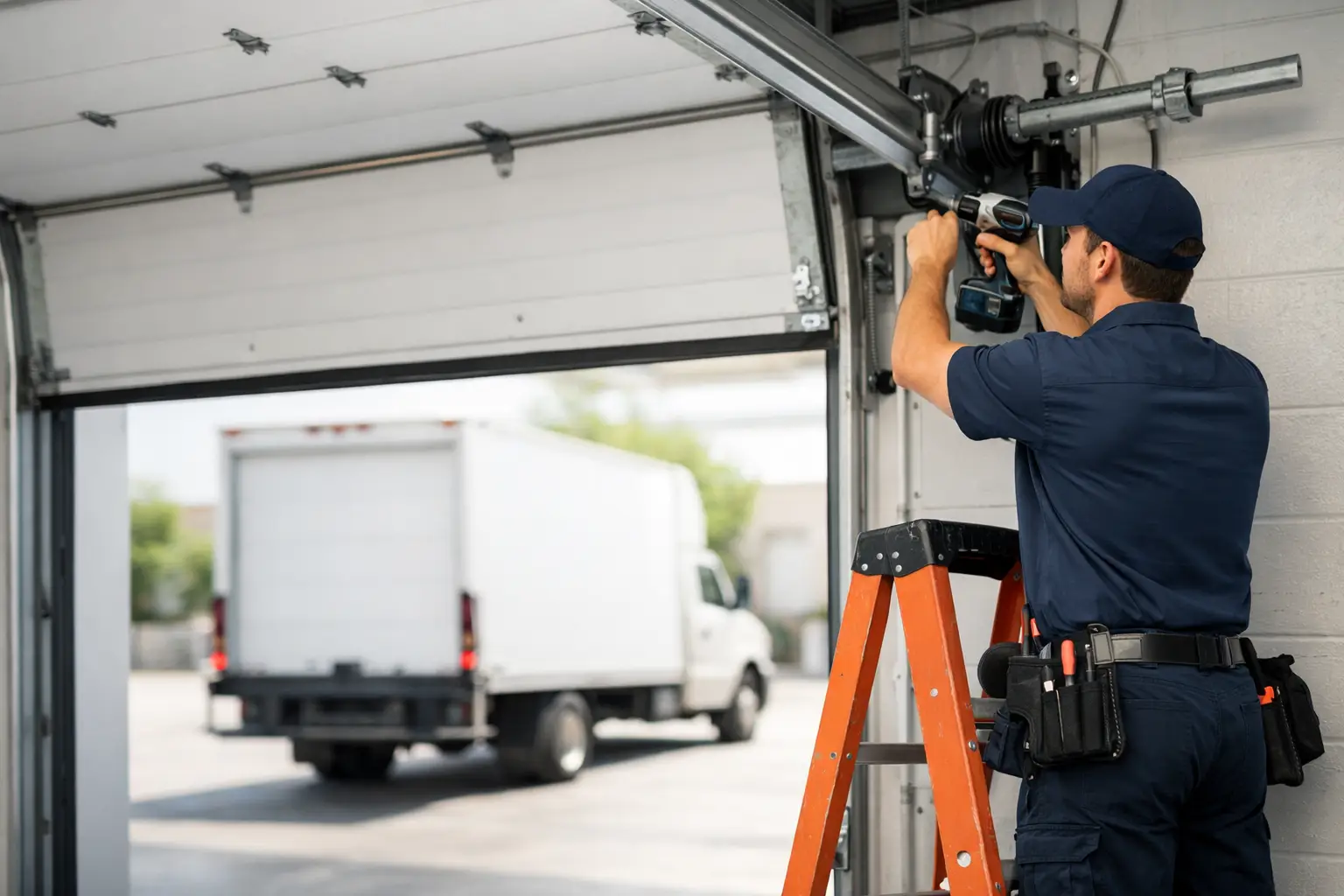
A loading door that will not open at 7 a.m. can put the whole day behind schedule. Deliveries wait, employees lose access, and a door left partly open creates a security problem fast. Commercial overhead door repair is not just about getting a door moving again. It is about protecting your building, your equipment, and your ability to keep serving customers.
For shops, warehouses, storage facilities, agricultural buildings, auto service bays, and small commercial properties, the right response depends on what failed and how the door is used. A noisy door may be able to wait for scheduled service. A door hanging off its track, stuck open overnight, or refusing to close safely needs immediate attention.
When a Commercial Door Problem Needs Same-Day Service
Commercial doors work harder than most residential doors. They may open dozens of times a day, handle larger openings, and operate in wind, dust, temperature swings, and vehicle traffic. Small wear issues can turn into a shutdown when they are ignored.
A door that is stuck open should be treated as a priority. It can expose inventory, tools, vehicles, and the building itself. A door that will not open is equally disruptive when it blocks deliveries, traps equipment inside, or prevents your crew from starting work.
Call for prompt commercial overhead door repair if the door is crooked, dragging, making loud grinding sounds, or stopping before it reaches the floor. The same goes for broken cables, loose hardware, bent tracks, damaged rollers, a failed opener, or a spring that has snapped. Do not keep running the opener to force a damaged door through a cycle. That often turns a contained repair into damage to panels, tracks, or the operator.
If the door is off track or a cable is loose, keep people clear of the opening. Commercial doors are heavy, and their springs and cable systems carry serious stored tension. This is not a repair for a maintenance employee with a ladder and a basic tool kit.
What Usually Fails on Commercial Overhead Doors
The visible symptom is not always the actual problem. A door that will not move may have an opener issue, but it may also be binding because of worn rollers, a damaged track, or a broken spring. A technician should inspect the full system before recommending a repair.
Springs and cables
Torsion springs do much of the lifting. When one breaks, the door can become extremely heavy, move unevenly, or refuse to open at all. On high-cycle commercial doors, spring selection matters. Installing the wrong spring may get the door working temporarily, but it can shorten the life of the repair.
Cables can fray, slip from their drums, or lose tension when a door binds. Once a cable comes loose, the door may hang at an angle. Trying to operate it can bend the track or pull additional components out of place.
Rollers, hinges, tracks, and panels
Worn rollers and hinges create noise, vibration, and rough travel. Bent tracks often come from a vehicle bump, a forklift strike, or a door that was operated after a cable or roller problem started. Damaged panels may be mostly cosmetic, but a badly bent section can affect how the door seals, moves, and locks.
The practical choice depends on the damage. Replacing one section can make sense when the door is otherwise in good condition and a matching panel is available. If multiple sections are bent, hardware is worn, and the door has a history of problems, replacement may be the more cost-effective option over time.
Openers and operators
Commercial openers are built for heavier doors and more frequent cycles, but they still wear out. A failed operator may be caused by a bad motor, worn gears, electrical issues, damaged controls, or a safety device that is out of alignment.
Before replacing an operator, the door itself should be checked for balance and smooth movement. An opener that has been fighting a heavy, poorly balanced door may fail again if the underlying mechanical problem is not corrected. Repairing the door and replacing the operator only when necessary is the straightforward way to avoid paying for work you do not need.
A Quick Check Before You Call
You do not need to diagnose the system, but a few details help speed up the visit. Note whether the door is stuck open, stuck closed, or moving unevenly. Listen for grinding, popping, or a motor that hums without moving the door. If there was a recent impact, power outage, or storm, mention that too.
Take a look from a safe distance for an obvious loose cable, broken spring, bent track, or damaged panel. Do not touch the springs, cables, drums, or bottom brackets. Those parts can release force unexpectedly.
It also helps to know the door type. Sectional doors, rolling steel doors, high-lift systems, and commercial operators do not all use the same components or repair approach. A properly stocked service truck makes a difference because common springs, rollers, cables, and hardware can often be replaced in one visit rather than leaving your opening out of service while parts are ordered.
Repair or Replace? Make the Call Based on Downtime
A quality repair is usually the right move when the door is structurally sound and the issue is isolated. Replacing a broken spring, cable, roller, hinge, sensor, or operator component can restore dependable operation without the cost of a new door.
Replacement deserves consideration when the door has repeated breakdowns, significant rust, badly damaged sections, poor insulation, or hardware that no longer matches the demands of your operation. A door used heavily every day may benefit from a high-cycle spring setup or a more capable operator. That upfront cost can be worthwhile if it reduces interruptions and service calls later.
For businesses that store temperature-sensitive goods or use heated work areas, insulation and weather sealing matter as well. A door that does not close squarely can let in cold air, wind, moisture, and dust. In Northern Colorado, that can affect comfort, energy use, and the condition of what is stored inside.
The best answer is not always the cheapest immediate repair or the biggest replacement package. It is the option that safely supports your door's workload and your budget, with clear pricing before work begins.
Prevent Breakdowns Before They Stop Business
Maintenance is often skipped because a door still opens and closes. The trouble is that commercial door parts rarely fail at a convenient time. Rollers wear gradually, fasteners loosen, springs lose tension, and opener components work harder as the system falls out of balance.
A scheduled service visit can catch those problems early. A technician can check spring tension, cable condition, rollers, hinges, tracks, safety devices, mounting hardware, and operator performance. Lubrication and adjustments help, but maintenance is more than spraying a noisy hinge. It is an opportunity to find a worn part before it becomes an emergency call.
The right schedule depends on usage. A door used a few times a week may need less attention than a service-bay door that cycles all day. Property managers should also consider the cost of a door failure across multiple tenants or units. Routine service is easier to schedule than a security issue after hours.
What to Expect From a Local Commercial Door Technician
When your door is down, you should not have to work through a call center that cannot tell you when help is coming. A local team should ask the right questions, explain the likely issue in plain language, and arrive prepared to inspect the complete system.
After the inspection, you should receive a clear explanation of the problem and the repair options. Good service means no pressure to replace equipment that can be repaired safely, and no vague pricing after the work is already underway. If a replacement is the better choice, you should understand why, what it includes, and how it will affect downtime.
Greeley Garage Door Repair by Mike provides commercial service with the same straightforward approach local owners and property managers expect: fast response, upfront pricing, and workmanship backed by a lifetime warranty. Whether the issue is a broken spring, a failed operator, or a door knocked off track, the goal is to get your opening safe and working without unnecessary delays.
A commercial door does not need to be completely broken to deserve attention. If it is getting louder, slower, rougher, or less reliable, schedule service while you can choose the timing instead of letting the door choose it for you.