
A garage door that is noisy, dented, drafty, or unreliable can become more than an eyesore. It can affect home security, indoor comfort, curb appeal, and whether you can get your vehicle out when you need it. This garage door replacement guide helps Northern Colorado homeowners decide when replacing the whole door makes sense, what to expect from the process, and which choices are worth paying for.
When Replacement Makes More Sense Than Repair
Many garage door problems can be repaired the same day. A broken spring, worn rollers, damaged cable, misaligned sensor, or failing opener does not automatically mean you need a new door. In most cases, a solid door with one mechanical problem is a repair job.
Replacement becomes the better call when the door itself is in poor condition. Multiple bent or cracked panels, widespread rust, rot on a wood door, repeated off-track issues, or damage from a vehicle can make repairs add up quickly. If matching replacement panels are unavailable, replacing one section can also leave your garage with an obvious mismatch.
Age matters, but condition matters more. A well-maintained door can serve a home for many years. On the other hand, an older door with weak hardware, poor insulation, and several recurring repairs may be costing more than it is worth. A technician should be able to explain the difference clearly, without pushing a replacement when a straightforward repair will solve the problem.
If your door is stuck open, hanging crooked, or has a broken spring, do not force it down or try to disconnect heavy spring components yourself. Secure the area and arrange service. A door can often be made safe first, then you can make a calm decision about repair versus replacement.
What a New Garage Door Actually Changes
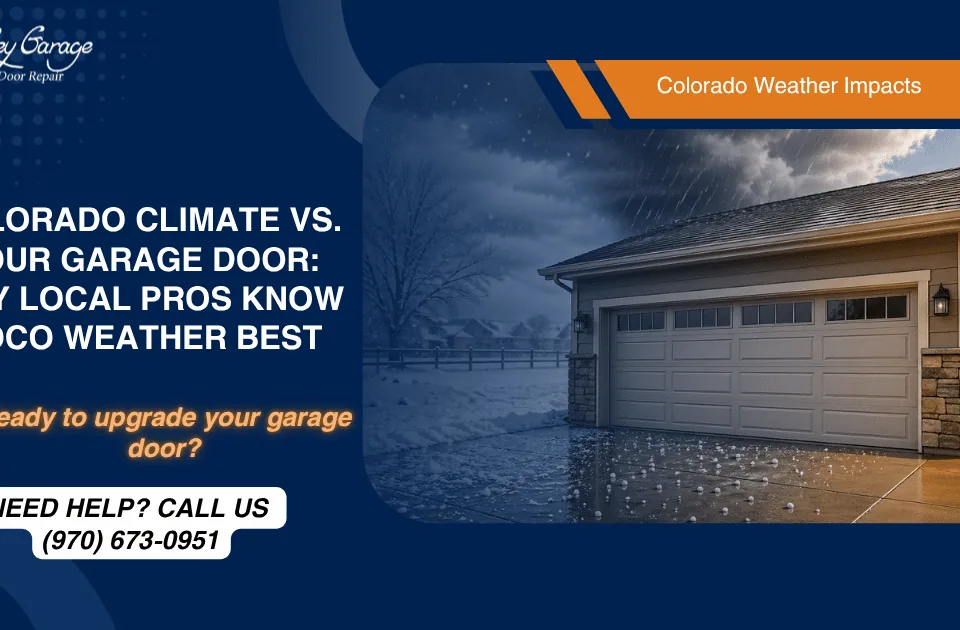
A replacement door is not only a cosmetic upgrade. In Greeley, Evans, Windsor, and Ault, winter cold, wind, hail, and summer temperature swings can expose the weak points in an older garage door.
An insulated door can make the garage less extreme in temperature, particularly when there is a bedroom, living space, or workshop above or beside it. It will not turn an unheated garage into a fully conditioned room, but it can reduce cold drafts and heat transfer. Insulation also tends to make the door sturdier and quieter.
A new door also gives you the chance to replace tired tracks, rollers, cables, seals, and hardware as part of a complete system. That matters because a quiet, dependable door relies on more than panels. The tracks must be aligned, the springs must be properly sized, and the opener must be adjusted to the door's weight.
For resale value, garage doors are one of the first things buyers see from the street. A clean steel door that fits the home's style can improve curb appeal without taking on a major remodeling project. Still, the best choice is usually one that works for your home and budget, not simply the most decorative model on the showroom floor.
Garage Door Replacement Guide: Choosing the Right Door
The right material depends on how you use the garage, the look of your home, and how much maintenance you want to take on.
Steel: The practical choice for most homes
Steel sectional doors are popular because they are durable, widely available, and available in a broad range of colors and panel styles. They can be simple and budget-friendly or insulated with realistic wood-look finishes and upgraded windows. For most Front Range homes, steel offers a strong balance of price, durability, and low maintenance.
Look at the gauge and construction, not just the color. Thinner steel is more likely to dent. A door with insulation bonded between steel layers is generally more durable than a basic single-layer door, especially if the garage gets regular use.
Insulated doors: Worth considering in Colorado
Insulation is commonly measured by R-value. Higher numbers provide better resistance to heat flow, but the right level depends on the garage. If the space is detached and used only for parking, moderate insulation may be plenty. If the garage is attached, contains a workspace, or sits below a finished room, stepping up to a better-insulated door is often worthwhile.
Pay attention to weather sealing too. Bottom seals, perimeter seals, and a properly fitted door help keep out wind-blown dust, snow, and cold air. Insulation helps, but gaps around the door can undermine its benefit.
Wood, faux wood, aluminum, and glass
Wood offers a classic, high-end appearance, but it requires ongoing maintenance and can be affected by moisture and sun. Faux wood steel doors provide a similar look with less upkeep, which is why they are often a practical alternative.
Aluminum and glass doors bring a modern style and natural light. They can be a good fit for contemporary homes, though privacy, insulation, and budget should be considered before choosing large glass sections. Window placement matters as well. Windows can brighten the garage, but they should complement the home's exterior and not create an unwanted view into storage areas.
Plan the Budget Without Guesswork
Garage door replacement costs vary because every opening, material, insulation level, and hardware setup is different. A basic non-insulated steel door may cost significantly less than an insulated, custom-color, wood-look, or full-view glass model. Size makes a difference too. A double garage door uses more material and requires heavier-duty components than a single door.
The installation estimate should clearly state what is included. That generally means the door sections, tracks, springs, rollers, cables, installation labor, removal of the old door, and basic safety adjustments. An opener may be separate if your current unit is compatible and in good condition.
Be cautious with a quote that seems unusually low but does not explain the hardware, insulation, warranty, or labor. A garage door is large, heavy, and used several times a day. Saving a small amount upfront is rarely worthwhile if the installation uses undersized springs, low-grade rollers, or incomplete weather sealing.
Ask for an upfront price before work begins and make sure you understand whether the estimate covers hauling away the old door. Straight answers are more useful than vague promises or surprise add-ons after the installation is underway.
Do You Need a New Opener Too?
Not always. If the opener is relatively new, properly sized, and operating reliably, it may work with a replacement door. The installer will need to check the balance and weight of the new door, then adjust the opener settings and safety system.
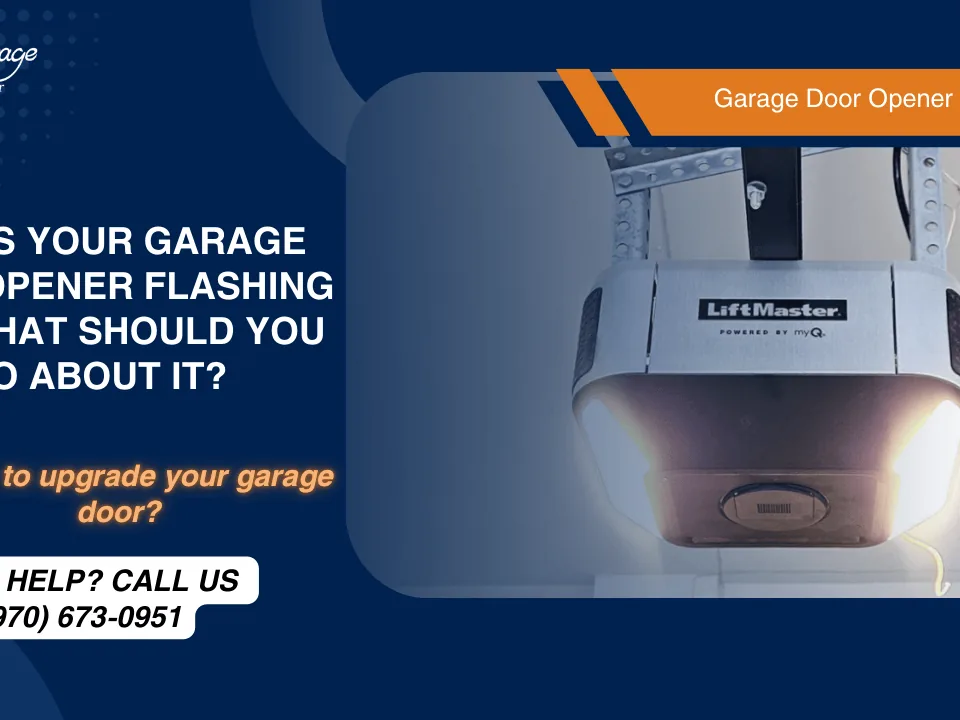
However, replacement is a good time to consider an opener upgrade if yours is loud, lacks modern safety features, struggles to lift the door, or has become unreliable. Belt-drive openers are usually quieter than chain-drive units, which can be helpful when living space is near the garage. Battery backup can also be useful during a power outage, especially when the garage is your main way into the house.
Whatever opener you choose, the photo-eye safety sensors and auto-reverse function need to be tested before the job is complete. Those are not optional extras. They are basic safety features that protect people, pets, vehicles, and property.
What Professional Installation Should Include
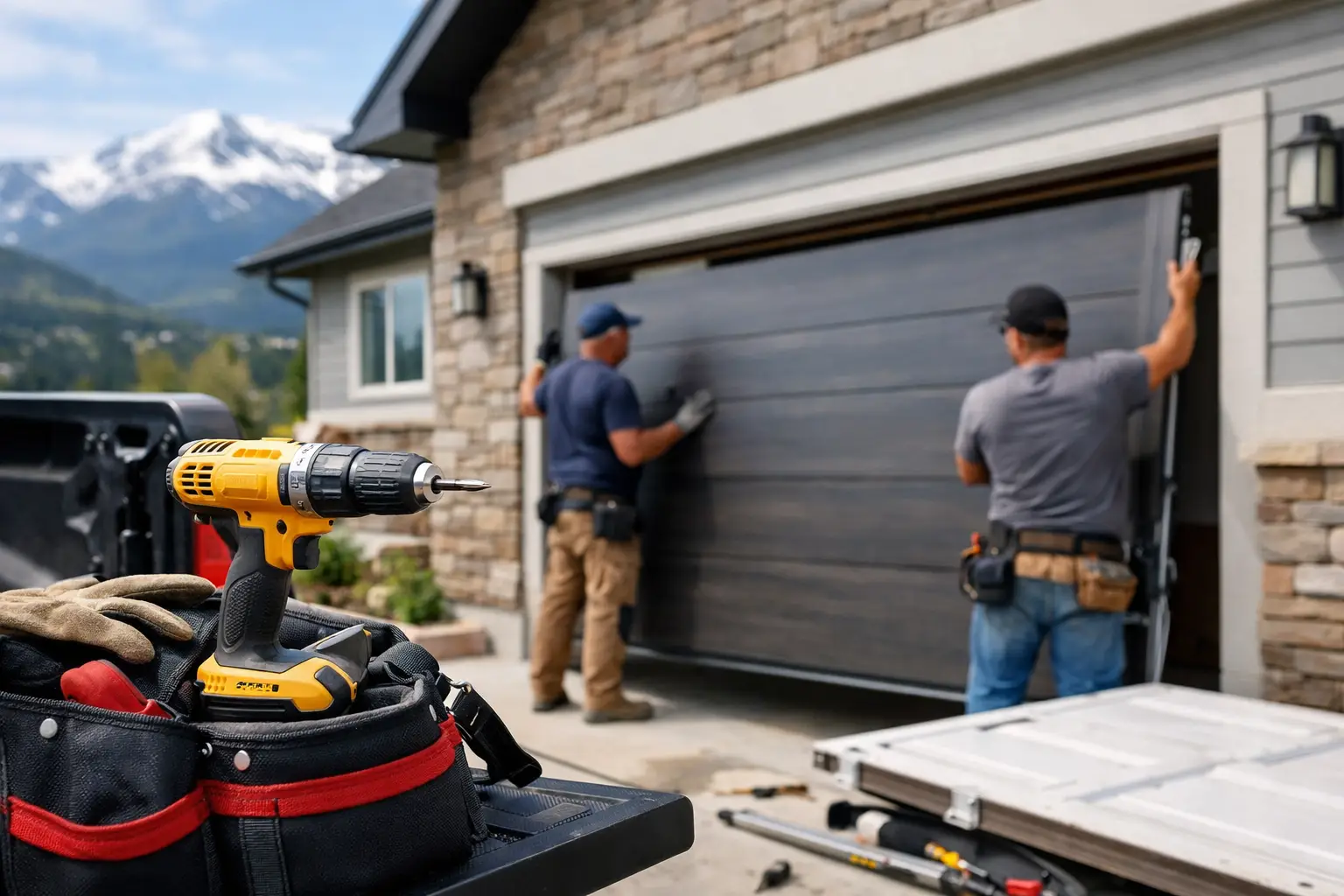
Garage door installation is not a good DIY project for most homeowners. The panels are heavy, and torsion springs store enough force to cause serious injury when handled incorrectly. Professional installation also helps ensure the door is balanced, secured, and covered by applicable product and workmanship warranties.
A properly installed door should move smoothly by hand when disconnected from the opener. It should sit evenly in the opening, seal against the floor, and reverse correctly when the safety system is tested. The tracks should be firmly mounted, rollers should travel without grinding, and the door should not shake, slam, or strain the opener.
Before the crew leaves, ask how to operate the emergency release, what basic maintenance is recommended, and what warranty applies to the door and labor. A local company should be available if you have questions after the install, not send you through a national call center.
Keep the New Door Working Like New
A few simple checks can prevent avoidable trouble. Keep the photo-eye sensors clear, watch for loose hardware, and listen for new scraping, popping, or grinding sounds. Do not spray heavy grease on every moving part. Garage door components need the right lubricant in the right places, and too much product can collect dirt.
Schedule service if the door begins moving unevenly, will not stay open halfway when disconnected, or makes a sudden loud bang. That bang may be a broken spring, and continuing to run the opener can create a larger repair.
A new garage door should make daily life easier, not give you another home project to worry about. Choose a door that fits your home's needs, insist on clear pricing and safe installation, and work with a local team that will still answer the phone when you need help.