
A garage door that suddenly will not open is more than an inconvenience, especially when your vehicle is stuck inside. So, are garage springs dangerous? Yes. Garage door springs hold a serious amount of stored energy, and a failed or improperly handled spring can cause injuries, damage property, or turn a routine repair into an emergency.
The good news is that homeowners can stay safe without becoming garage door experts. Knowing what the springs do, what failure looks like, and when to stop using the door gives you a clear path forward.
Are Garage Springs Dangerous? Yes, Because of Stored Energy
Garage door springs are the counterbalance system for the door. A standard residential garage door can weigh well over 100 pounds, while insulated wood-look doors and commercial doors may weigh considerably more. Springs make that weight manageable for the opener and for anyone lifting the door by hand.
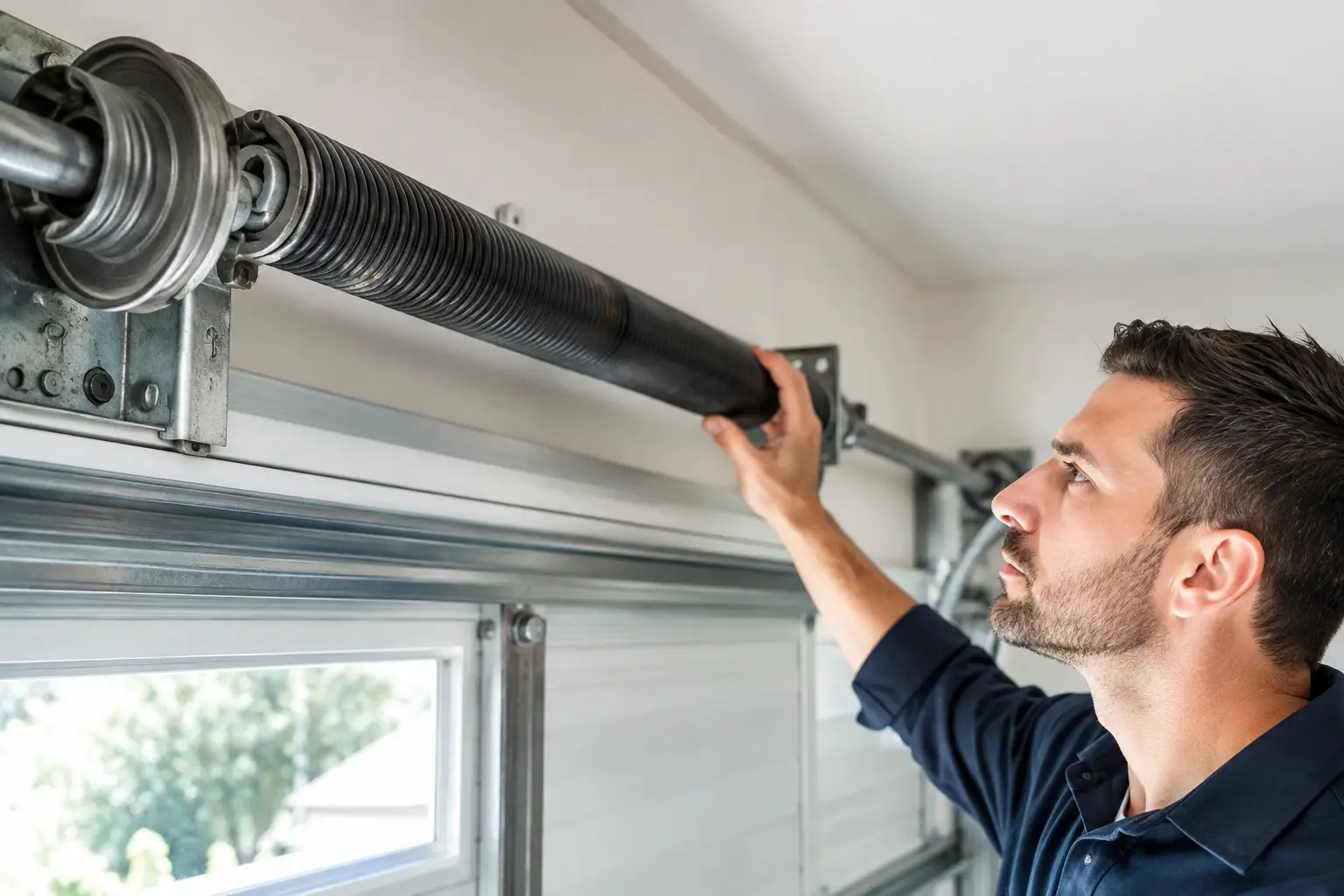
That assistance comes from tension. Torsion springs, which sit on a steel shaft above the garage door opening, are tightly wound. Extension springs, usually found along the sides of the horizontal tracks, stretch as the door closes. Either type can release energy violently if it breaks, comes loose, or is adjusted incorrectly.
A broken torsion spring may make a sharp bang that homeowners sometimes mistake for something hitting the garage or a loud firework outside. When it breaks, the door often becomes too heavy for the opener to lift. Trying to force the opener to keep working can burn out the motor, strip gears, or pull the door farther out of alignment.
Extension springs carry risks of their own. If an extension spring breaks and does not have a properly installed safety cable running through it, it can become a fast-moving piece of metal. That is one reason an older garage door system deserves a professional safety inspection, even if the door still appears to work.
The Door Itself Can Become the Hazard
The spring is not the only danger. Once a spring breaks, the door may no longer stay balanced. It can slam shut, hang unevenly, or become difficult to control. Cables may come off their drums, rollers can leave the track, and the full weight of the door can shift unexpectedly.
Never stand or walk under a door that is partially open after a spring failure. Keep children, pets, and anyone not involved in the repair away from the garage. If the door is open and will not close safely, treat it as a security and safety issue, not a project to put off until the weekend.
Common Signs a Garage Door Spring Has Failed
A broken spring is not always obvious at first glance. The door and opener may simply behave differently. Watch for a door that opens only a few inches and stops, a motor that hums without lifting the door, or a door that feels extremely heavy when disconnected from the opener.
Other warning signs include a visible gap in a torsion spring, loose or hanging cables, an uneven door, or a loud bang from the garage followed by an inoperable door. You may also notice the opener straining, the door moving more slowly than usual, or the top section bending as the opener tries to pull an unbalanced door upward.
Do not assume the opener is the problem just because the remote no longer opens the door. The opener may be doing exactly what it should do by stopping when it senses too much resistance. Replacing an opener will not fix a broken spring, and operating an opener against a failed spring can add unnecessary repair costs.
Springs can also wear out before they break. Most standard springs are rated for a set number of door cycles, meaning one complete opening and closing. A door used several times a day will reach that limit sooner than a door used only once or twice daily. Cold Northern Colorado weather can also expose an aging spring that was already close to failure.
What to Do When You Suspect a Broken Spring
Start by stopping use of the garage door. Do not keep pressing the wall button or remote to see if the opener will eventually lift it. Repeated attempts put extra stress on the opener, cables, tracks, and door sections.
If the door is closed, leave it closed until a technician can inspect it. This is usually the safest situation because the garage remains secured and the door is supported by the floor. If your car is trapped, it is frustrating, but trying to lift a heavy, unbalanced door alone can cause a hand, back, or crushing injury.
If the door is stuck open, keep people away from the opening and do not park beneath it. Avoid pulling on cables, loosening brackets, or trying to clamp the door into place unless you have been specifically directed by a qualified garage door technician. A door that looks stable can shift without warning.
For a safe response, take these steps:
- Turn off the opener or unplug it so no one accidentally activates the door.
- Keep the door area clear, including children, pets, vehicles, and stored items.
- Do not touch the spring, center bracket, cable drums, or lifting cables.
- Call a trained garage door repair technician and explain whether the door is open, closed, or off track.
A clear description helps the technician arrive prepared. Mention any loud noise you heard, whether one side of the door is lower than the other, and whether cables or rollers are visibly out of place.
Why Spring Replacement Is Not a Typical DIY Repair
There are plenty of home repairs a careful homeowner can handle. Lubricating hinges with garage-door-rated lubricant, replacing remote batteries, and keeping photo-eye sensors clean are reasonable maintenance tasks. Replacing or adjusting a loaded garage door spring is different.
Spring work requires the right winding bars, correct replacement spring size, secure ladder placement, and an understanding of door balance and cable tension. Using improvised tools, such as screwdrivers or socket extensions, is especially dangerous. Those tools can slip out of the winding cone under load.
There is also a practical reason to bring in a pro: the spring must match the door. Spring size is based on factors including door weight, height, drum type, and desired cycle life. An incorrect spring can make a door too heavy, cause it to fly up too quickly, shorten opener life, or lead to another failure sooner than expected.
A qualified technician checks more than the broken part. They can inspect cables, bearings, rollers, tracks, hinges, the opener settings, and the door balance. That matters because a spring often breaks after years of normal use, and other moving parts may be worn as well.
For homeowners in Greeley, Evans, Windsor, or Ault, Greeley Garage Door Repair by Mike can inspect the full system, explain the repair before work begins, and replace the right spring without guesswork. A stocked service truck can also make a same-day repair possible when the correct parts are available.
A Few Safety Questions Homeowners Ask
Can I open the door manually with a broken spring?
Sometimes, but it is usually not recommended. A single-car door may still be extremely heavy, and a double garage door can be far beyond what one person can safely control. If the door is open, manually moving it can be even riskier because it may fall quickly. Wait for a technician unless there is an immediate emergency and you have been given safe, situation-specific instructions.
Is one broken spring enough reason to replace both?
It depends on the setup. Many two-spring torsion systems use springs installed at the same time, so if one has reached the end of its cycle life, the other may not be far behind. Replacing both can avoid a second service call and keeps the door more evenly balanced. If the springs are different ages or the system has a specific configuration, a technician can recommend the sensible option.
Can a garage door opener cause springs to break?
Usually, no. Springs generally break from normal metal fatigue after thousands of cycles. However, an improperly balanced door can make the opener work harder, while an opener that is set incorrectly can worsen damage after a spring or cable issue begins. Regular maintenance helps catch those problems before the door stops working at the worst possible time.
A broken garage spring calls for caution, not panic. Leave the door alone, keep the area clear, and get a trained local technician involved before a small mechanical failure becomes an injury or a damaged door.