

A garage door opener can be working perfectly and still be the wrong fit for your home. The usual belt drive vs chain opener decision comes down to one question: how much noise are you willing to live with? But noise is only part of it. Your door's weight, your garage layout, your budget, and the condition of the door itself all matter.
For homeowners in Greeley, Evans, Windsor, and Ault, the right choice should handle regular use, cold mornings, and the reality of a garage that may sit directly below a bedroom or beside a living area. Here is what separates these two common opener types and how to make the call without paying for features you do not need.
Belt Drive vs Chain Opener: The Main Difference
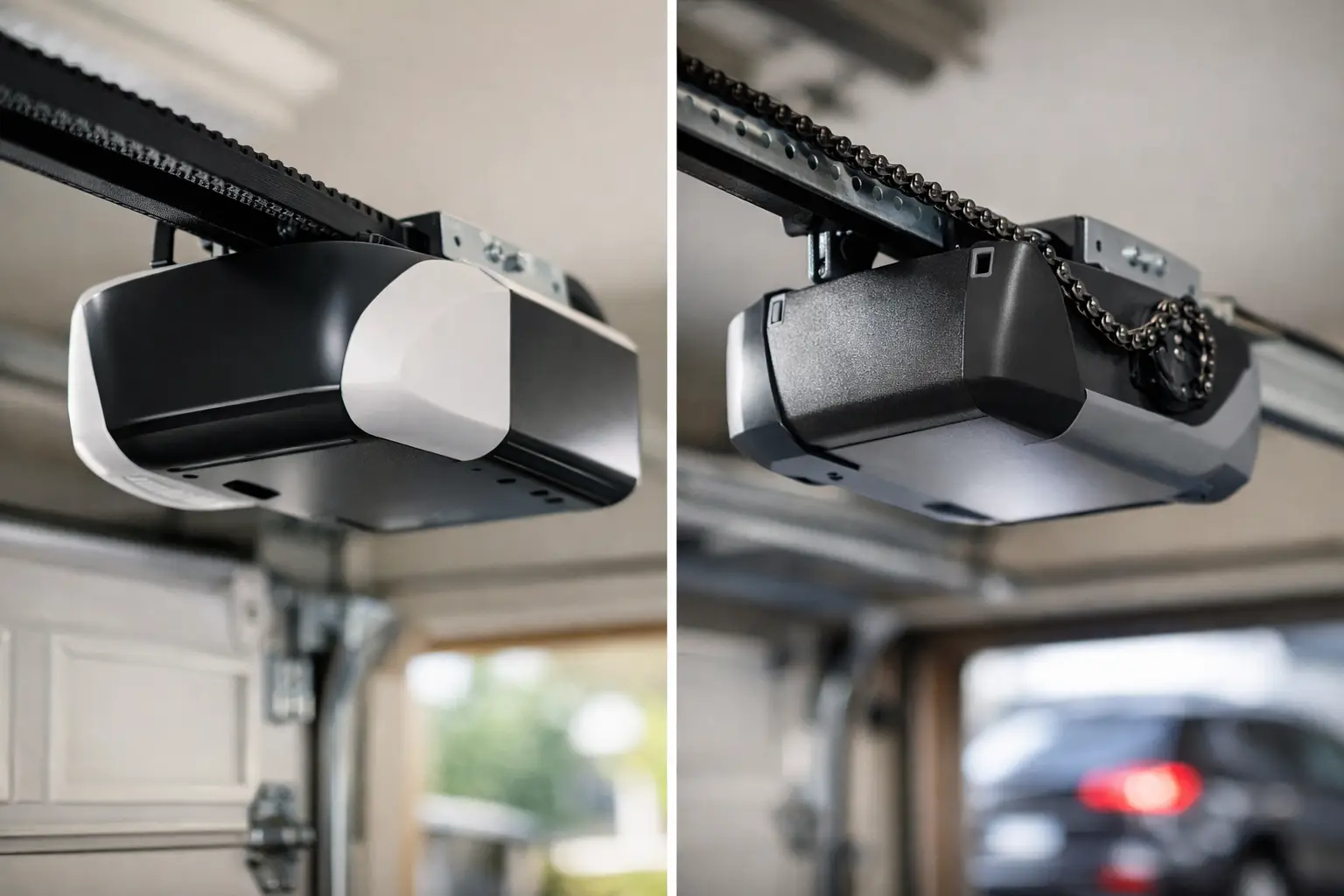
Both systems use a motor unit and a moving trolley to open and close a sectional garage door. The difference is the part that moves the trolley along the rail.
A chain-drive opener uses a metal chain, much like an oversized bicycle chain. It is dependable, widely available, and traditionally the go-to option for heavier doors. A belt-drive opener uses a reinforced rubber belt, usually strengthened with steel cords. It does the same job with less vibration and far less operating noise.
Neither type fixes a door that is out of balance, has worn rollers, or has a weak spring. That point gets missed often. The opener guides the door, but the springs carry most of its weight. If a door feels heavy when disconnected from the opener, replacing the opener alone is not the answer.
When a Belt-Drive Opener Is Worth the Cost
A belt-drive opener is the quiet choice. When it runs, you generally hear the door rollers and hinges more than the opener rail itself. That makes a real difference in homes with a bedroom above the garage, a nursery near the garage wall, or a home office close by.
The smoother operation also means less vibration transferred through the ceiling and framing. For many attached garages, that is reason enough to choose a belt drive.
Belt-drive units typically cost more upfront than comparable chain-drive models. The price difference varies by horsepower, smart controls, battery backup, camera features, and installation needs, but it is often a few hundred dollars once the unit and labor are considered. For a quiet attached garage, most homeowners feel that upgrade is money well spent.
Modern reinforced belts are durable. They are not flimsy rubber straps, and a quality belt-drive opener can handle standard insulated steel doors, carriage-house-style doors, and many heavier residential doors when the opener is correctly matched and the door is properly balanced.
Best situations for a belt drive
Choose a belt-drive opener when quiet operation is your priority, especially if the garage is attached to the home. It is also a strong option when you want a smoother-feeling opener with modern features such as Wi-Fi control, a battery backup, and soft start and stop operation.
A belt drive is not automatically the best choice for every door. An oversized solid-wood door or a very heavy custom door may need a specific heavy-duty opener setup. The door weight, spring system, track condition, and daily cycle count should be checked before selecting any opener.
Why Chain-Drive Openers Still Make Sense
Chain-drive openers have a long reputation for durability because the drive mechanism is simple and tough. They cost less in many cases, and their parts are familiar to garage door technicians. If your garage is detached, the extra sound may not matter much at all.
A chain opener makes practical sense for a detached garage, workshop, storage building, or a homeowner who wants a reliable opener without paying extra for quiet operation. The familiar rattle and hum are not a problem when no one is sleeping on the other side of the wall.
Chain drives can also be a good fit for heavier doors, but the common claim that chains are always stronger is too simple. A properly sized belt-drive opener can handle many heavy residential doors. What matters is choosing a unit with the right lifting capacity and making sure the door is balanced and mechanically sound.
Chain systems do need occasional attention. The chain tension should be correct, and the rail and moving components should be inspected during routine maintenance. A loose chain can slap against the rail and create extra noise. An overtightened chain can place unnecessary stress on the opener.
Best situations for a chain drive
A chain drive is often the right call when the garage is detached, the budget is tight, or the door gets frequent use in a shop or rental property. It is a straightforward choice for homeowners who care more about dependable daily operation than keeping the garage nearly silent.
The trade-off is simple: chain drives are louder. If the current opener wakes people upstairs, a new chain-drive model may improve reliability but may not solve the noise complaint.
Noise Is Not Always the Opener's Fault
If your garage door sounds like it is shaking the whole house, do not assume the opener is solely responsible. A belt-drive opener on worn steel rollers can still be noisy. Loose hinges, dry bearings, a bent track, an unbalanced door, and vibration at the motor mounting brackets can all add to the racket.
Before replacing an opener for noise alone, inspect the whole system. Nylon rollers with sealed bearings can reduce door noise significantly. Tightening hardware, lubricating the right moving parts, and correcting a door that is binding in the tracks can make an older system noticeably quieter.
Do not spray everything with general-purpose oil. Garage door springs, hinges, rollers, and bearings need products suited for garage door hardware. The opener rail, chain, and other components have manufacturer-specific maintenance requirements. A quick service visit can identify what is creating the noise instead of guessing.
Consider the Door, Not Just the Opener
An opener should be selected after looking at the garage door. A lightweight single steel door has different needs than a double insulated door with windows. So does a wood-overlay door, a high-lift track system, or a door that opens and closes dozens of times each day.
A properly balanced door should stay near the halfway point when disconnected from the opener and moved by hand. It should not crash down, shoot upward, or feel like dead weight. Testing and adjusting springs is hazardous work, so leave spring adjustments to a trained technician.
If your door is hard to lift manually, sticks halfway, or reverses for no clear reason, address that problem before installing a new motor. A new opener forced to pull a failing door may wear out early, and it can create a safety issue.
Features That Matter More Than Drive Type
Once you have narrowed the decision to belt or chain, look at features that make daily use safer and easier. Battery backup is especially useful during a power outage, allowing you to get your vehicle out when you need it. This is a practical feature during Colorado storms, not just a nice extra.
Wi-Fi control lets you check whether the door is closed and operate it from a phone. It is handy for families, deliveries, and property managers, although it should never replace good security habits. An integrated camera can add visibility, while motion-activated lighting helps when you enter through a dark garage.
For homes with limited ceiling space or an unusually shaped garage, a wall-mounted jackshaft opener may be a better fit than either a standard belt or chain rail system. These units mount beside the door rather than overhead, but they require the right track and side-room setup.
What Installation Should Include
A professional opener installation is more than hanging a motor from the ceiling. The technician should inspect spring balance, cables, rollers, hinges, tracks, and the existing mounting structure. They should install and align safety photo eyes, set travel limits and force settings, test auto-reverse, and explain how to use the emergency release.
For an opener replacement, ask whether the quoted price includes removal of the old unit, new safety sensors, keypad or remotes, and programming. Clear pricing matters because an opener install can involve needed repairs that are separate from the opener itself, such as worn rollers, damaged brackets, or an unsafe spring system.
At Greeley Garage Door Repair by Mike, the goal is to look at the complete door system first and give you a straight answer on what needs attention. Sometimes that means a quiet belt drive. Sometimes a dependable chain drive is the sensible choice.
If your garage is under a bedroom or the current opener has become the loudest appliance in the house, put the belt drive at the top of your list. If the garage is detached and you want proven performance at a lower upfront cost, a chain drive may serve you well for years. Either way, start with a balanced, well-maintained door, and the opener you choose will have a much better chance of doing its job quietly, safely, and reliably.