
A power outage is a bad time to learn that your garage door will not open. If your vehicle is inside, the kids need to get to school, or you need to leave for work, a battery-equipped opener can keep one of your main home exits working. The best garage door backup batteries are not necessarily the highest-capacity batteries on the shelf. They are the ones designed to work with your specific opener, installed correctly, and still holding a charge when Northern Colorado weather gets rough.
For most homeowners, the smartest purchase is an OEM battery backup made for the opener brand and model already installed in the garage. That sounds less exciting than buying a universal backup system, but it prevents the most common problem we see: a battery that fits physically but will not communicate with the opener or charge properly.
What a Garage Door Backup Battery Actually Does
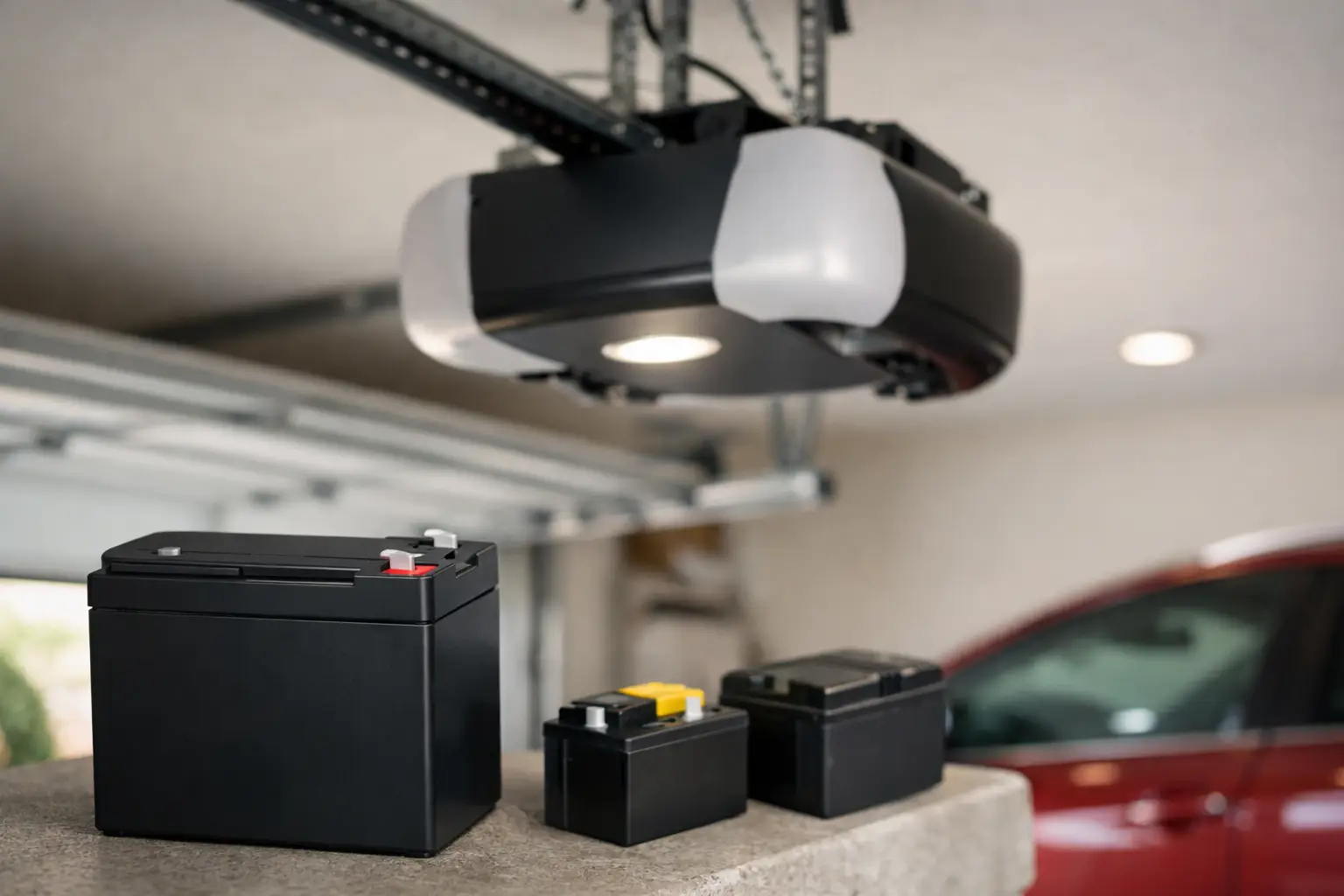
A backup battery is built into or connected to a compatible garage door opener. When household power goes out, the opener switches to battery power so you can raise and lower the door with the wall button or remote. Most systems are intended for a limited number of cycles, not days of normal use.
Expect enough reserve power for getting vehicles out, securing the garage afterward, and handling a few additional openings. The exact number of cycles varies by opener, door weight, temperature, battery age, and whether the door is properly balanced. A well-maintained, balanced door puts far less strain on both the opener and the battery.
A battery backup does not fix a broken spring, damaged cable, off-track door, or seized roller. If the door is heavy, crooked, or struggling to move, do not keep running it on backup power. That can turn a smaller repair into a damaged opener or a door stuck halfway open.
Best Garage Door Backup Batteries by Opener Type
The right choice starts with the label on the opener motor head. Look for the manufacturer, model number, and any existing battery compartment. If you cannot find the model, a technician can usually identify it quickly from the unit and its control board.
LiftMaster and Chamberlain openers
For compatible LiftMaster and Chamberlain openers, the OEM 485LM-style replacement battery is often the right answer. These openers commonly use a 12-volt, 5 Ah sealed lead-acid battery designed to sit in the opener's battery compartment and recharge through the unit.
The key word is compatible. LiftMaster and Chamberlain have made many opener generations, and not every model accepts a battery backup. Some openers were sold with battery backup already included, while others cannot be upgraded without replacing the opener. Check the opener manual or the model number before ordering a replacement.
This is a solid choice for homeowners who already have a compatible belt-drive or chain-drive LiftMaster or Chamberlain unit. It is familiar, straightforward to replace, and supported by the opener's existing charging system.
Genie openers
For Genie battery-backup-equipped models, use the Genie replacement battery specified for that opener, commonly sold as a 12-volt backup battery assembly. Genie systems use their own connection and housing arrangements, so trying to substitute a generic battery can lead to fitment problems, warning lights, or a backup feature that never charges correctly.
If your Genie opener has a battery backup indicator or a dedicated battery door, replacement is generally simple. Still, inspect the terminal connections for corrosion and make sure the compartment closes completely. A loose connection may look like a dead battery when the real issue is the wiring.
Craftsman and private-label openers
Craftsman openers are a little less straightforward because they have been manufactured by different companies over the years. Many older Craftsman units share parts with Chamberlain-built openers, but you should never assume that makes every battery interchangeable.
Use the opener model number, not the name on the remote, to identify the correct replacement. If the unit does not list battery backup capability, adding a random 12-volt battery is not a safe workaround. The opener needs a proper charging circuit and control setup to use backup power safely.
Commercial and heavy-duty doors
Small businesses, property managers, and shops should look beyond a homeowner-style backup battery. A commercial overhead door may be larger, heavier, used more frequently, or connected to an operator with different power requirements. Battery backup options for commercial operators are often model-specific and may require a dedicated emergency power system.
For a business that cannot afford a blocked loading area or an inaccessible service bay, a backup plan should include manual operation procedures, trained staff, and scheduled operator maintenance. Battery backup is helpful, but it should not be the only plan for keeping a commercial entrance available during an outage.
How to Choose Between OEM and Generic Batteries
A generic sealed lead-acid battery may cost less, but savings disappear if its dimensions, terminals, capacity, or connector do not match. The best replacement has the same voltage, compatible capacity, correct terminal type, and proper physical size for the opener compartment.
OEM batteries are usually the safer choice because they are built around the manufacturer's charging system and connector design. A quality third-party equivalent can work when it matches every specification exactly, but it is not a place to guess. Never force a connector, reverse terminals, or modify the opener housing to make a battery fit.
Lithium batteries are another area where homeowners should be careful. They can offer advantages in the right system, but you cannot simply swap a sealed lead-acid battery for lithium unless the opener manufacturer specifically approves it. Charging profiles differ, and the wrong battery type can damage equipment or create a safety concern.
Runtime, Cold Weather, and Real-World Expectations
Manufacturers may advertise a set number of door cycles on battery power, but those numbers are best-case estimates. A backup battery loses capacity over time. Cold garage temperatures can reduce available power, too, especially during a Greeley winter cold snap.
If your garage door is insulated, wind-loaded, oversized, or poorly balanced, expect fewer cycles than the brochure suggests. A door that makes grinding sounds, jerks while moving, or reverses unexpectedly should be serviced before you rely on the opener during an outage.
Most garage door backup batteries last roughly one to two years, though heat, cold, frequent outages, and poor charging conditions can shorten that life. Replace a battery when the opener displays a battery warning, beeps repeatedly, fails a backup test, or is approaching the age recommended by the manufacturer. Waiting until the power is already out is the expensive way to find out it has failed.
Simple Battery Backup Maintenance
You do not need to take apart your opener every month. A little attention once or twice a year makes a difference. Test the backup feature according to your opener manual, usually by disconnecting power briefly and confirming that the door operates normally on battery power.
While you are there, look for a swollen battery case, damaged wires, loose terminals, or corrosion. Listen to the opener during operation. A healthy backup battery will not compensate for a door with worn rollers, weak springs, or a failing gear inside the motor unit.
Keep the photo-eye sensors aligned and the tracks clear, but do not lubricate the opener rail with heavy grease. More importantly, have the door balance checked if it feels unusually heavy when operated manually. The opener should guide the door, not fight its full weight every time it moves.
When Replacement Is Not the Right Fix
Sometimes the battery is fine and the opener is not charging it. A failed control board, bad transformer, damaged wiring, or a worn-out opener can produce the same low-battery warning. Replacing batteries repeatedly without testing the charging system wastes money and leaves you unprepared for the next outage.
If your opener is older, lacks modern safety features, or was never designed for battery backup, replacement may be the better long-term call. Current battery-backup openers can be especially valuable for homes where the garage is the primary entrance. They also make daily access less stressful when storms or utility outages hit.
At Greeley Garage Door Repair by Mike, we help homeowners identify whether a battery replacement, opener repair, or a new battery-backup opener makes the most sense. The practical goal is simple: when the lights go out, your garage door should still give you a safe way to get out and get back in.