


A garage door that will not budge on a cold Northern Colorado morning can turn a normal commute into a real problem. So, can garage doors freeze shut? Yes. Moisture can freeze between the bottom weather seal and the concrete, locking the door to the floor. It is common after snow, freezing rain, slush brought in by a vehicle, or a quick temperature drop overnight.
The good news is that a frozen door is often fixable without major repairs. The bad news is that forcing it open can damage the bottom seal, opener, cables, or springs. A little patience usually costs less than a rushed decision.
Why garage doors freeze shut
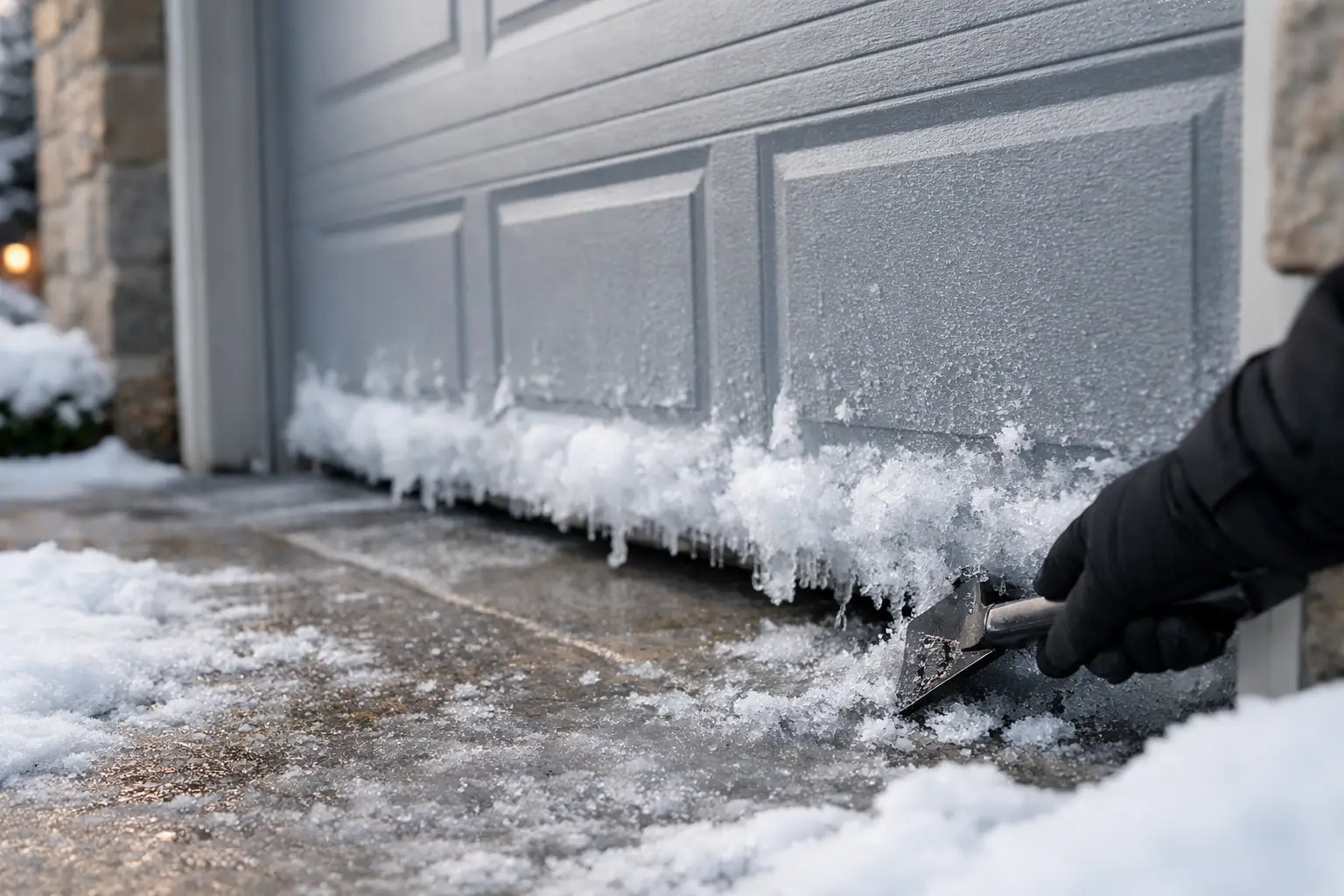
Most frozen garage doors are not frozen inside the tracks. The issue is usually at the bottom of the door, where the rubber weather seal meets wet concrete. Water collects under the seal, then freezes into a thin but stubborn bond. Even a small amount of ice can hold a heavy sectional door in place.
This happens most often when snow melts off a parked car, when rain blows into the garage, or when the driveway slopes toward the door. Concrete also holds cold temperatures for a long time. A sunny afternoon may melt snow outside, but the garage floor can still be cold enough to refreeze that water after dark.
A door may also seem frozen when the real problem is different. Cold weather can make old rollers stiff, thicken grease in the opener or moving parts, expose a weak garage door spring, or cause an opener that was already struggling to fail. If the door will not lift after the ice is cleared, do not assume the weather is the only issue.
How to tell whether ice is the problem
Start by looking along the bottom edge of the closed door. If you see frost, a visible line of ice, pooled water, or packed snow near the weather seal, the door may be frozen to the floor. Try lifting the door manually only if the opener is disconnected and the door feels reasonably balanced. Do not put your fingers under the seal or between door sections.
If the door starts to lift but feels stuck only at the first inch or two, ice is likely the cause. If it will not move at all, hangs crookedly, makes a loud bang, or feels extremely heavy, stop. Those signs can point to a broken spring, cable trouble, or an off-track door.
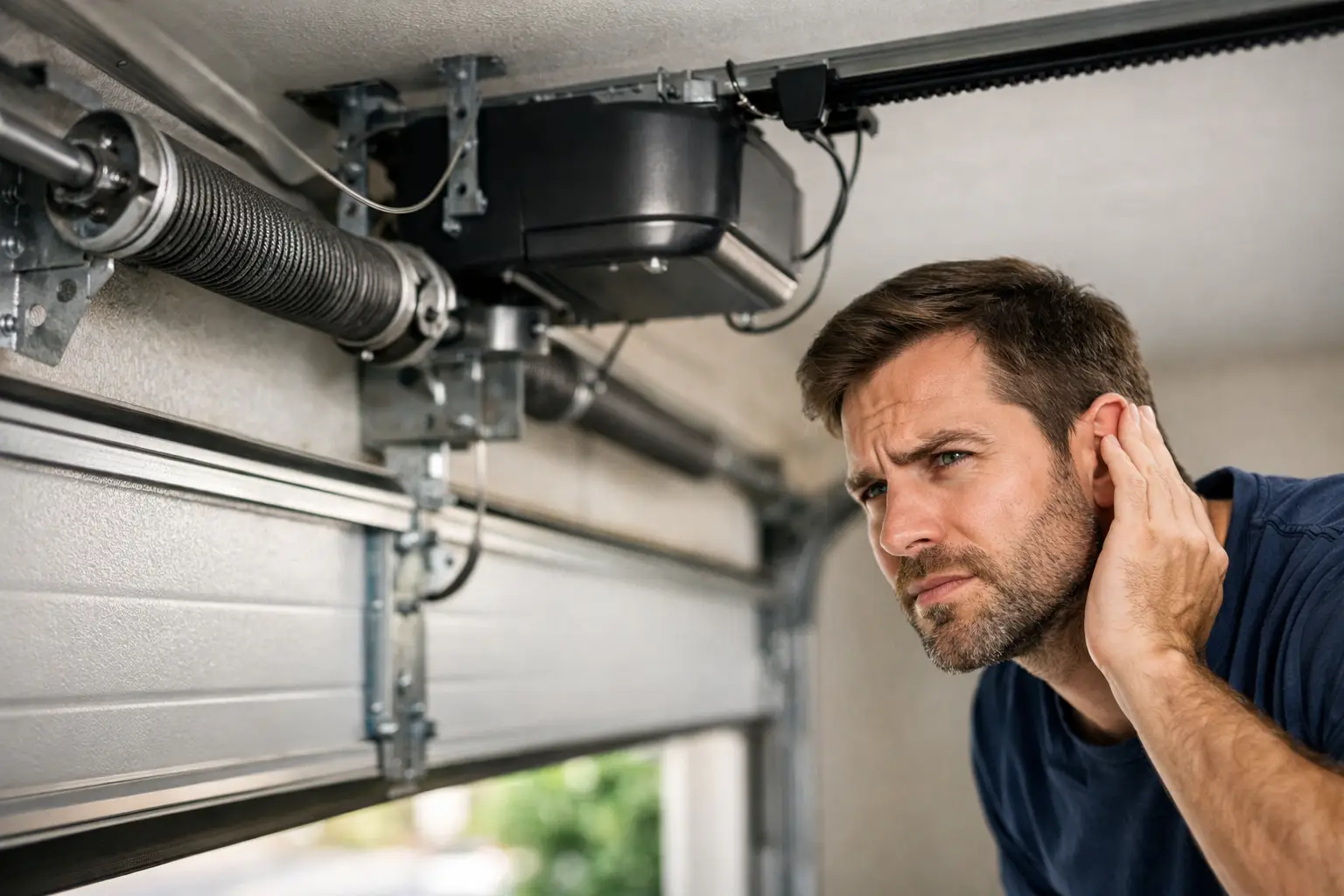
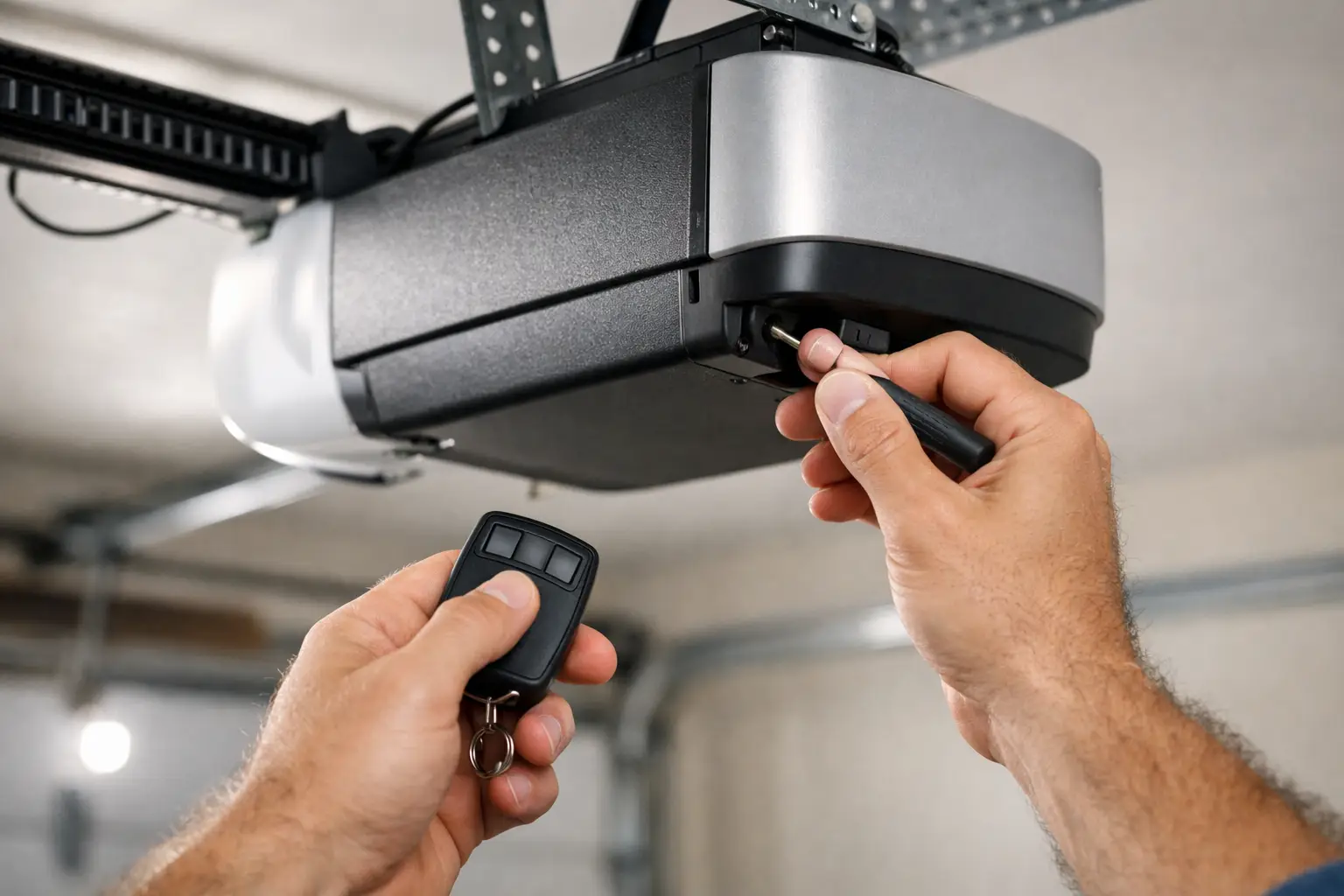
An opener may hum or make a brief attempt to raise a frozen door, then reverse. That safety reversal is helpful, but repeated attempts are not. The opener is designed to move a properly operating door, not break an ice bond. Continued use can strip internal gears, loosen the arm, or burn out the motor.
What to do when a garage door is frozen shut
First, stop using the opener. Pressing the wall button again and again will not melt the ice, and it may turn a simple winter nuisance into an opener repair.
Clear loose snow and ice from the outside of the bottom seal using a plastic shovel, broom, or ice scraper. Work carefully around the door. Metal shovels and sharp tools can cut the rubber seal or scratch the lower panel.
Next, use warm water, not boiling water, along the frozen area. A small bucket or watering can works well. Warm water helps loosen the ice without exposing cold glass, metal, or seals to an extreme temperature change. Use only enough water to release the seal, then remove the water and ice so it does not refreeze in the same spot.
A hair dryer can also work if you have a safe electrical setup and can keep the cord away from standing water. Aim heat at the seal and floor line rather than the door panels. This method takes longer, but it avoids adding more water to the concrete.
Once the ice has released, open the door manually a few inches if it is safe to do so. Look for ice still clinging to the seal. Then run the door through one complete open-and-close cycle with the opener while you watch for jerking, grinding, or uneven movement. If it operates smoothly, wipe up remaining moisture near the opening.
What not to do
A frozen garage door can be frustrating, especially when your vehicle is trapped. Still, avoid shortcuts that create a bigger repair bill. Do not:
- Yank up on the door with excessive force or use a vehicle to push it open.
- Keep cycling the opener when the door will not lift.
- Chip aggressively at the seal with a screwdriver, axe, pry bar, or metal shovel.
- Pour boiling water on the door, glass windows, or concrete in freezing temperatures.
- Try to adjust springs, cables, or brackets yourself.
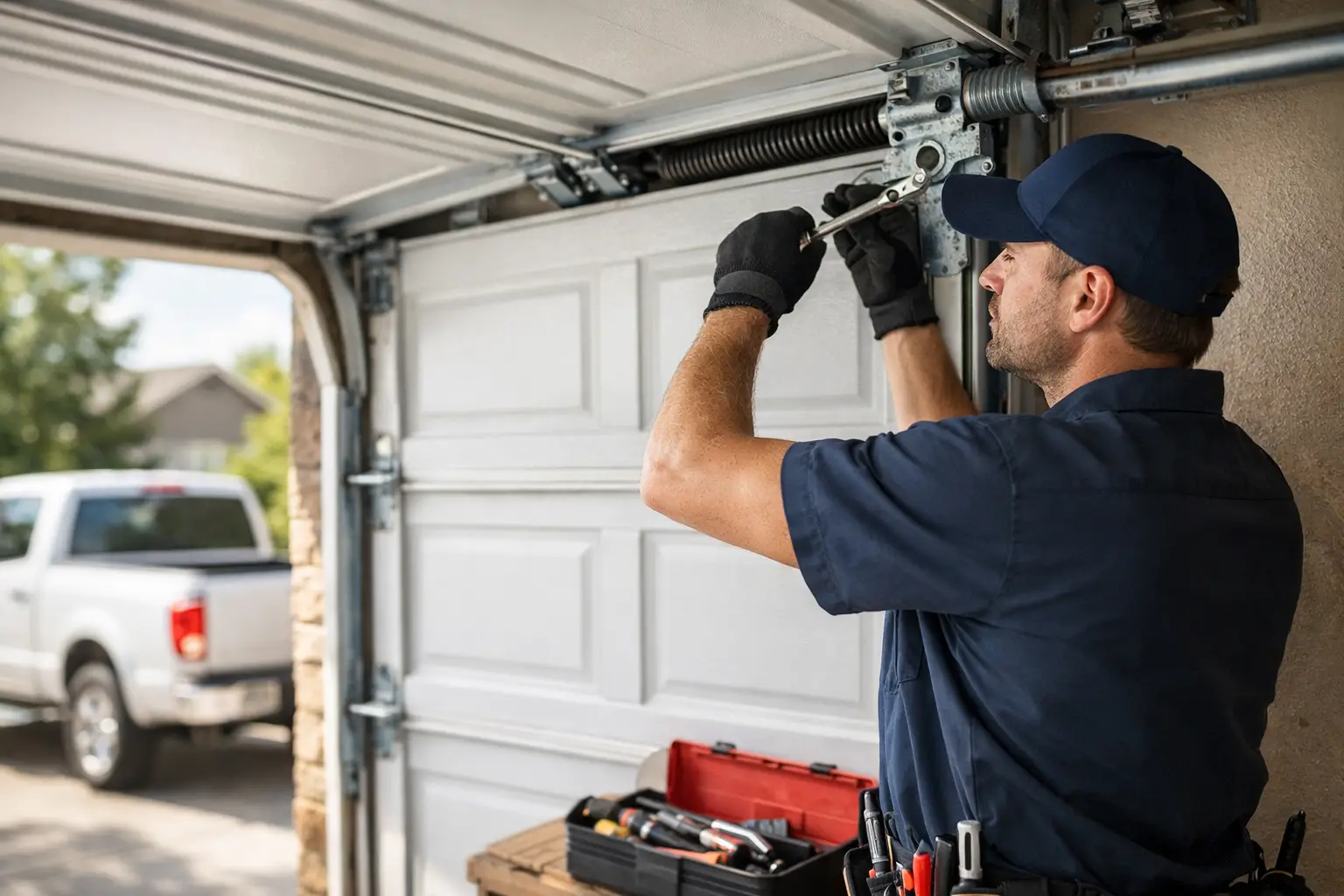
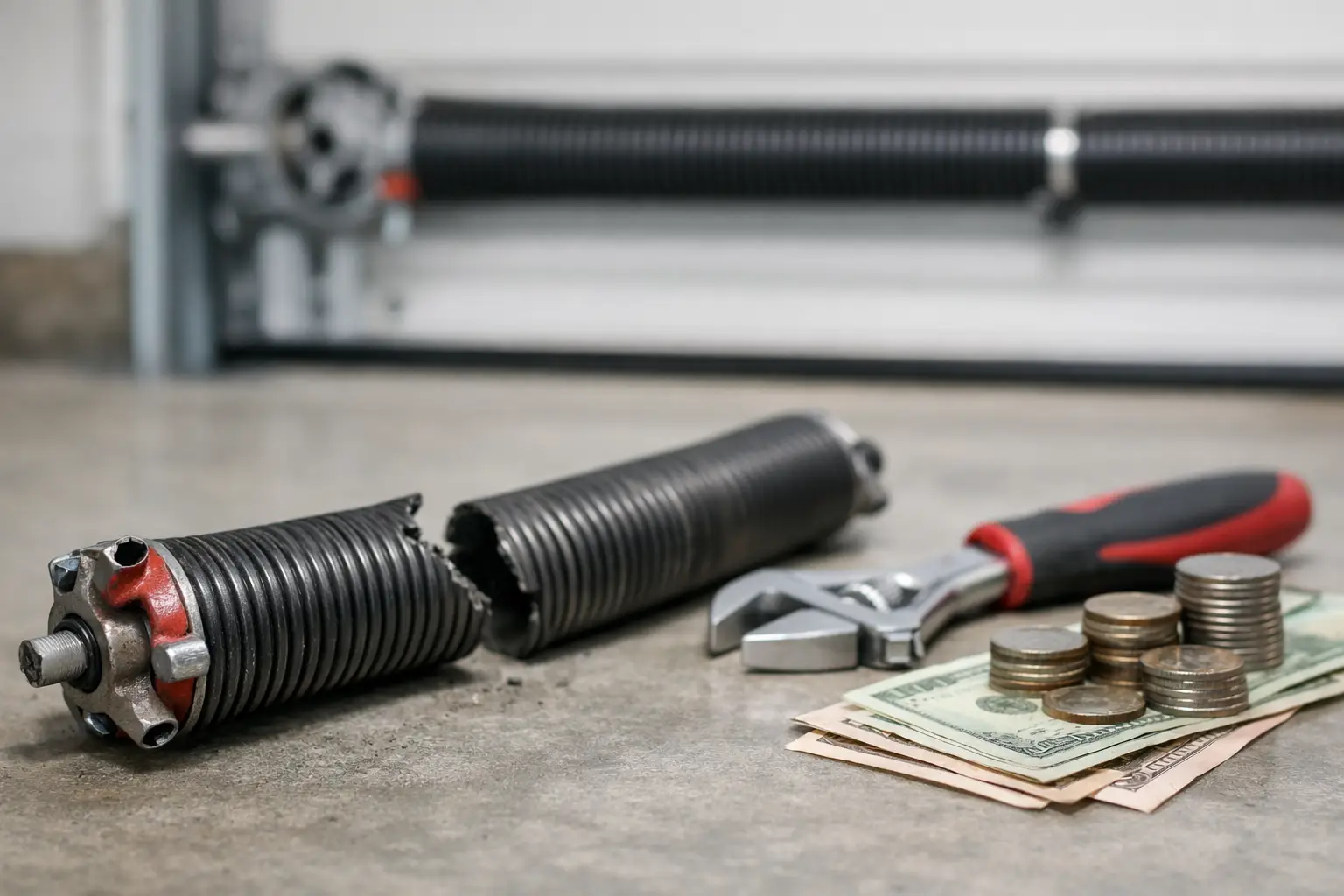
The last point matters most. Garage door springs carry enough stored force to cause serious injury. If a spring has broken during a cold snap, the door may look like it is simply frozen. Spring replacement is a job for a trained technician with the right tools.
When a frozen door needs professional repair
Call for garage door repair if the ice is gone but the door still will not open, the opener makes unusual noises, or the door moves unevenly. A door that is crooked, off its tracks, or hanging on one side should stay closed if possible until it can be inspected.
You should also get help if you hear a loud snap from the garage, see a loose cable, notice a gap in the torsion spring above the door, or find that the door feels far heavier than normal when operated manually. Those are common signs of a broken spring or cable issue, not just a frozen weather seal.
For a business with deliveries, staff access, or equipment inside, a stuck overhead door can interrupt the whole day. Commercial doors can freeze at the threshold too, but they also face heavier use and more complex hardware. Do not keep running a commercial operator against resistance. It can damage the operator and create a safety risk for anyone nearby.
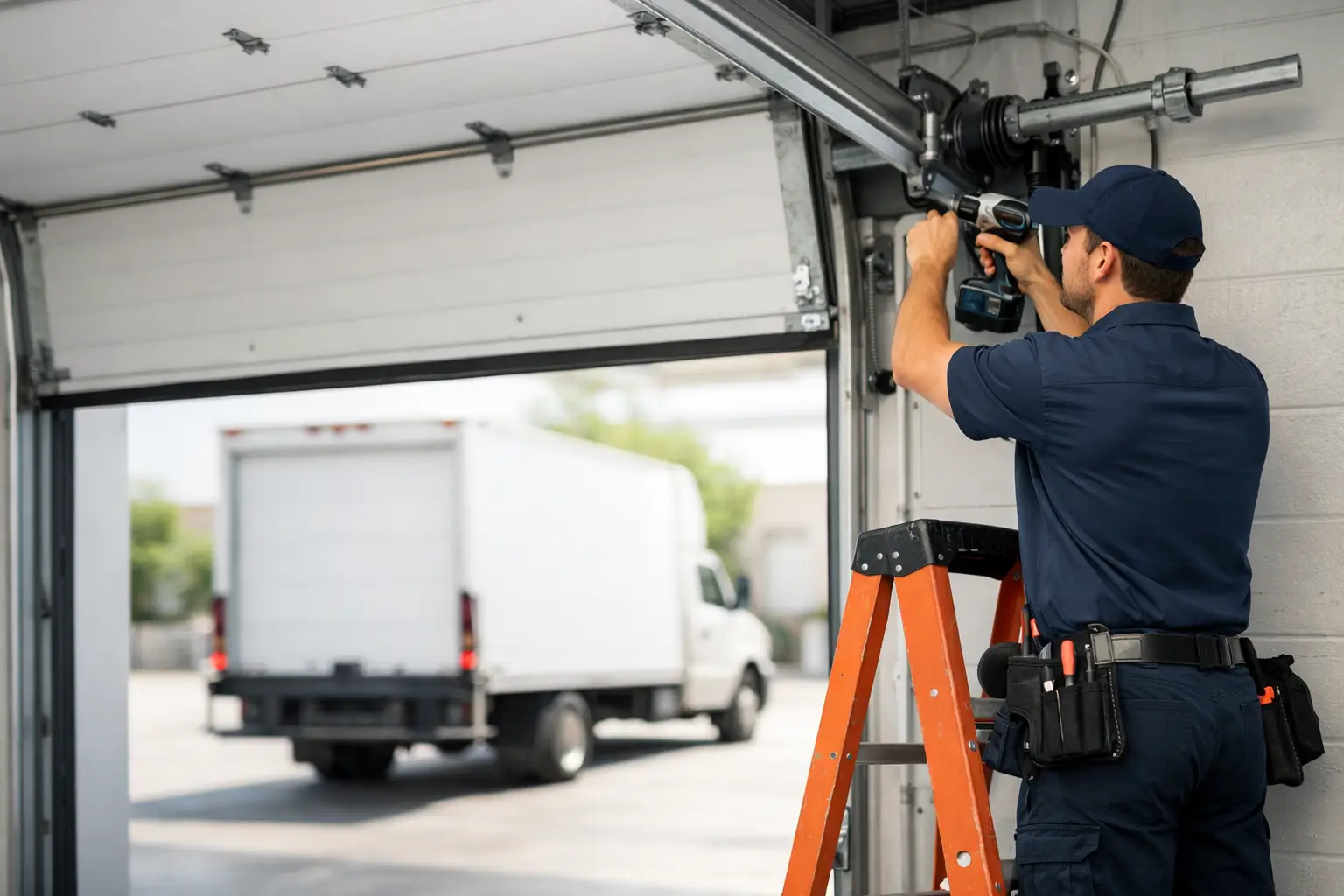
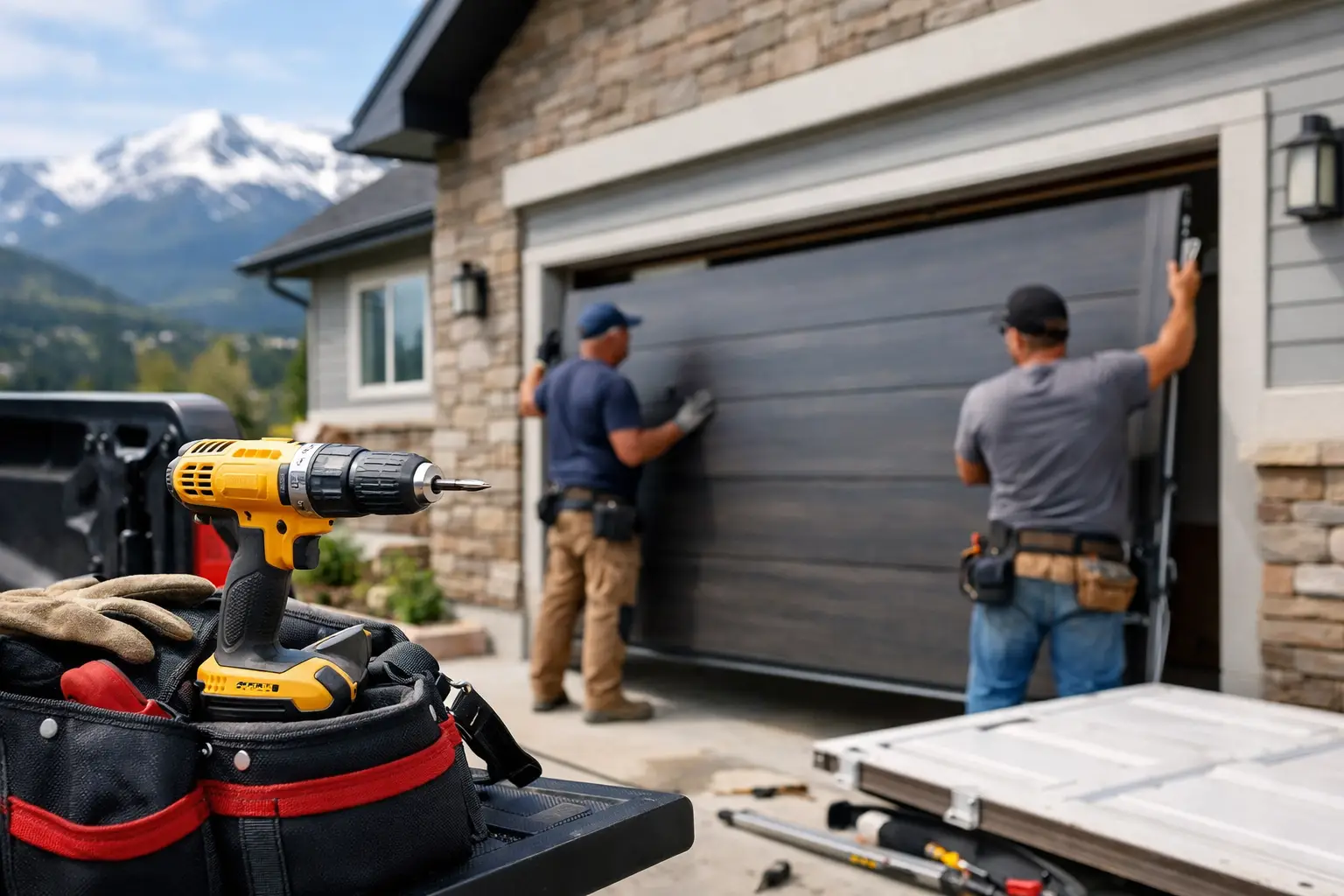
Greeley Garage Door Repair by Mike provides same-day service for homeowners and businesses when a winter door problem is more than ice. A local technician can identify whether the issue is the seal, tracks, rollers, opener, spring system, or another worn part, then explain the repair before work begins.
How to keep your garage door from freezing again
Prevention is mostly about keeping water away from the bottom seal. After parking a snow-covered vehicle inside, remove slush and standing water near the door before temperatures drop. A broom or floor squeegee is often enough. If the garage floor regularly stays wet, look for a drainage or grading issue outside the opening.
Check the bottom weather seal before winter. A seal that is cracked, flattened, torn, or pulling away from the retainer can trap water in uneven spots. Replacing a worn seal improves the barrier against wind and snow while helping the door sit more evenly on the floor. It will not solve every freezing issue, but it can make a noticeable difference.
A small amount of silicone-based garage door lubricant on rollers, hinges, and springs can help moving parts work better in cold weather. Avoid coating the tracks with heavy grease. Tracks should generally stay clean so rollers can move freely, while lubrication belongs on the moving components themselves.
A seasonal maintenance visit is worth considering if your door is older, noisy, or slow. Cold weather tends to expose weak springs, worn rollers, loose hardware, and openers near the end of their service life. Catching those issues before the first hard freeze is easier than dealing with a stuck door when you need to leave for work.
A stuck door does not always mean a major repair
Ice at the threshold is usually a manageable problem when handled carefully. Clear it, release the seal gently, and give the opener a chance only after the door can move freely. If the door still resists, do not force it. A fast inspection can protect the door, keep your vehicle accessible, and spare you a much more expensive problem on the coldest morning of the year.