

A garage door opener usually gets attention at the worst possible moment: when the door will not move, the car is trapped, or the whole house hears it rattling awake at 6 a.m. If you are replacing an opener, the chain drive vs belt decision is one of the first choices you will face. Both can reliably lift a residential garage door, but they feel very different in day-to-day use.
For many homes in Greeley and nearby Northern Colorado communities, the right answer comes down to where the garage sits, how much noise your household can tolerate, the door’s weight, and what you expect from the opener over the next decade. Here is the plainspoken breakdown.
Chain Drive vs Belt: The Main Difference
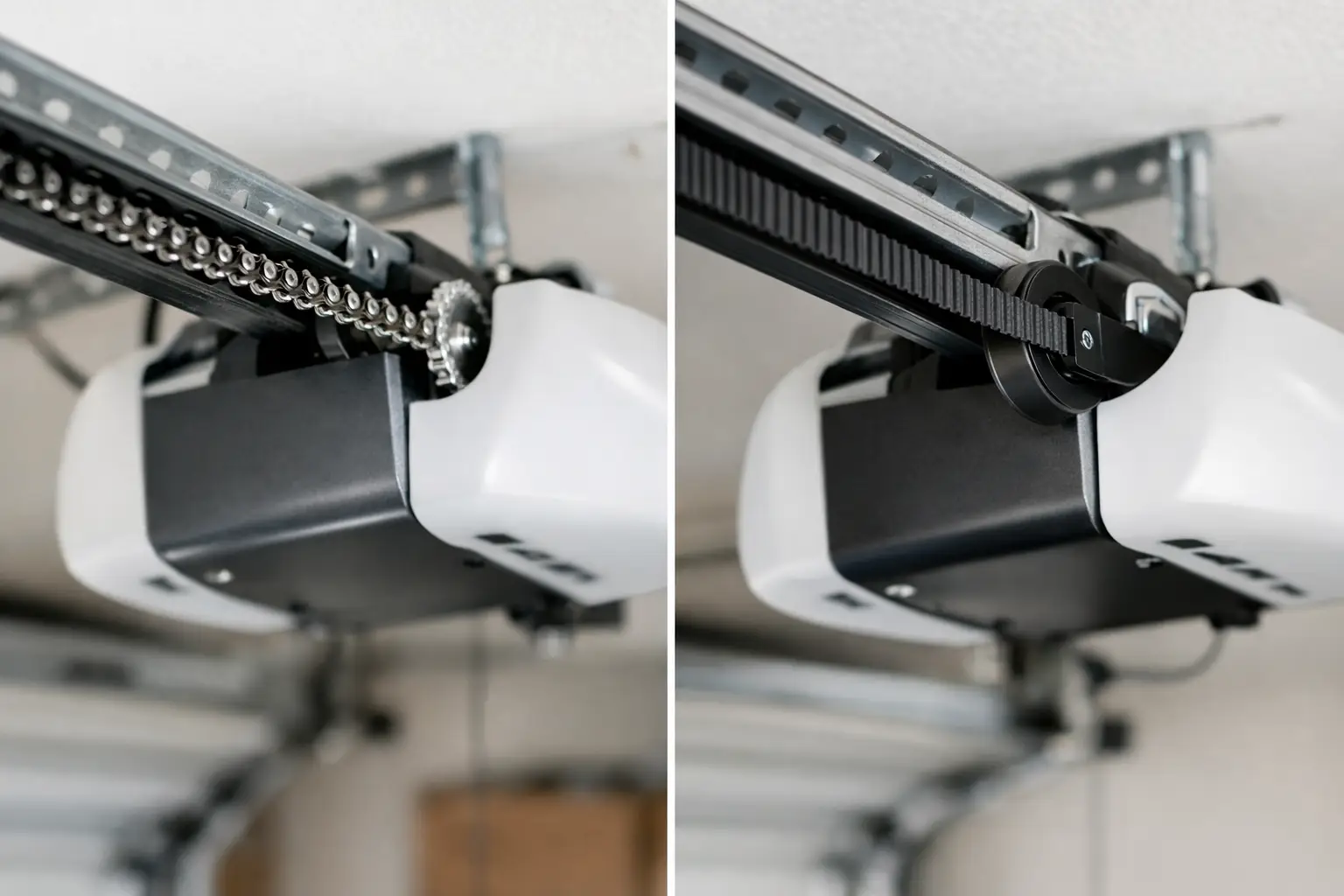
A chain-drive garage door opener moves the trolley with a metal chain, much like a bicycle chain. A belt-drive opener uses a reinforced rubber belt, often made with steel or fiberglass cords inside it. Both systems connect to the same basic opener components: a motor, rail, trolley, safety sensors, and door arm.
The chain is metal-on-metal, so it naturally makes more sound and vibration as it runs. The belt is designed to move smoothly and quietly. That difference may sound minor in a showroom, but it is obvious when someone opens the garage beneath a bedroom, nursery, home office, or living space.
Neither style is automatically better in every garage. A properly installed and maintained chain-drive opener can run for years. A quality belt-drive unit can handle a standard insulated sectional door without trouble. The best choice depends on the job, not a sales pitch.
When a Chain-Drive Opener Makes Sense
Chain-drive openers have a long track record because they are tough, familiar, and generally cost less upfront than comparable belt-drive models. They are often a practical choice for detached garages, workshops, barns, storage buildings, and many commercial or heavy-use settings.
If your garage is separate from the house, the extra operating noise may not matter much. In that case, a chain drive can be a sensible way to get dependable lifting power without paying for quiet operation you will not really notice.
A chain-drive opener can also be a good fit for a heavier door, especially when it is paired with the right motor and a properly balanced spring system. The key phrase is properly balanced. The opener is not supposed to do all the lifting. Springs carry most of the door’s weight, while the opener guides it up and down.
That matters because a heavy, poorly balanced door can strain any opener - chain or belt. If the door feels difficult to lift manually when disconnected from the opener, or it will not stay halfway open, the springs may need adjustment or replacement. Replacing the opener alone will not fix that problem and can lead to another service call sooner than expected.
The trade-off with a chain drive is noise. You may hear a noticeable rattle, a metal-on-metal pull, and vibration through the ceiling or walls. Some sound is normal. Excessive banging, jerking, squealing, or a chain that looks loose is not something to ignore.
When a Belt-Drive Opener Is Worth It
A belt-drive opener is usually the better choice for attached garages, especially when there is a bedroom or frequently used room above or beside the garage. The belt absorbs much of the vibration that a chain transfers into the rail and framing. The result is a smoother, quieter open and close cycle.
For a family that leaves early, comes home late, or has sleeping children near the garage, that quieter operation is more than a luxury. It can make the garage door far less disruptive. Belt drives are also popular with homeowners who use their garages as entry doors several times a day.
Modern belt-drive openers are not weak. A reputable unit with the correct rating can operate most residential steel, insulated, and carriage-style doors very well. The door still needs good springs, rollers, tracks, and cables. But for a normal residential setup, a belt is fully capable of providing dependable service.
The main downside is price. Belt-drive units typically cost more than comparable chain-drive models. That upfront difference may be worth it if quiet operation matters in your home. If your garage is detached and rarely used, it may not be.
Belt drives also tend to have fewer lubrication needs than chain systems. That does not mean they are maintenance-free. The door hardware still needs periodic inspection, rollers may wear out, photo eyes need to stay aligned, and the opener’s safety reversal feature should be tested. But homeowners generally appreciate the cleaner, lower-noise operation.
Noise Is Not Always an Opener Problem
It is easy to blame the opener when a garage door gets loud. Sometimes the opener is the issue, but the door itself is often the bigger source of the racket.
Worn metal rollers can grind through the tracks. Loose hinges can click and pop. Dry springs can creak. A bent track, frayed cable, or door that is coming off track can create serious noise and should be repaired promptly. Replacing a chain-drive opener with a belt-drive model will help with motor and rail noise, but it will not make damaged door hardware disappear.
Before choosing a new opener, have the entire door system checked. A good technician should inspect the springs, cables, rollers, hinges, tracks, balance, safety sensors, and mounting points. This prevents you from spending money on a new opener while the real problem remains above the door.
Strength, Door Weight, and Daily Use
Homeowners often ask which is stronger: chain drive or belt drive? The more useful question is whether the opener and spring system are correctly matched to your door.
A basic single-car steel door has different needs than a wide, insulated double door with windows. Wood-look composite doors and solid wood doors can be significantly heavier. A garage that opens and closes once or twice a day has different demands than one used by a busy family, rental property, or small business.
For a heavy door or high-use application, motor capacity, rail quality, cycle expectations, and spring condition all matter. Chain drives remain a common choice where durability and value are the top priorities. For many residential doors, though, a quality belt drive offers plenty of lifting ability with less noise.
If your garage door has begun reversing unexpectedly, stopping partway, moving unevenly, or requiring repeated remote clicks, do not keep forcing it. Those symptoms can point to a door balance issue, sensor trouble, a failing opener gear, worn rollers, or a problem with the track. A quick diagnosis is safer and usually less expensive than waiting for a full breakdown.
Cost: Look Beyond the Opener Price
The purchase price is only one part of the decision. Chain-drive openers are often less expensive to buy, which makes them attractive when you need a practical replacement quickly. Belt-drive openers cost more upfront but can deliver a noticeable quality-of-life benefit in attached garages.
Installation costs can also vary based on the condition of the existing setup. A new opener may require a new rail, reinforced door bracket, electrical work, new safety sensors, keypad programming, remote setup, or adjustments to the door itself. If the old opener was installed incorrectly, fixing the mounting and support can be part of doing the job safely.
Be cautious with quotes that sound unusually cheap but do not explain what is included. Ask whether the price covers the opener, rail, remotes, installation, removal of the old unit, safety testing, and warranty. Clear pricing upfront is better than finding extra charges after the work has started.
Features Matter as Much as Drive Type
The drive system is important, but it is not the only feature worth comparing. Many homeowners now want battery backup so they can get the car out during a power outage. This can be especially useful during Colorado storms or outages that happen at the wrong time.
Wi-Fi controls are another popular feature. They allow you to check whether the door is open, receive activity alerts, and operate the door from a phone. For some households, that is convenient. For others, a dependable wall button and remote are all they need.
Also consider lighting, camera options, remote range, keypad access, and warranty coverage. A quiet belt-drive opener with poor installation is still a poor investment. The installer should test the photo eyes, force settings, travel limits, emergency release, and auto-reverse function before calling the job complete.
A Practical Choice for Your Garage
Choose a chain drive if you want a proven, budget-conscious opener for a detached garage, workshop, or location where operating noise is not a major concern. It is a practical option when paired with a balanced, well-maintained door.
Choose a belt drive if your garage is attached to the home, there is living space nearby, or you want the smoothest and quietest daily operation. The higher initial price is often worthwhile for homeowners who use the garage as a main entrance.
If you are unsure, start with the condition of the door rather than the label on the opener. Greeley Garage Door Repair by Mike can assess the full system, explain the options in plain language, and help you avoid paying for an opener that is not matched to the door. A garage door should open quietly, close safely, and work when you need it most - that is the standard worth choosing.