


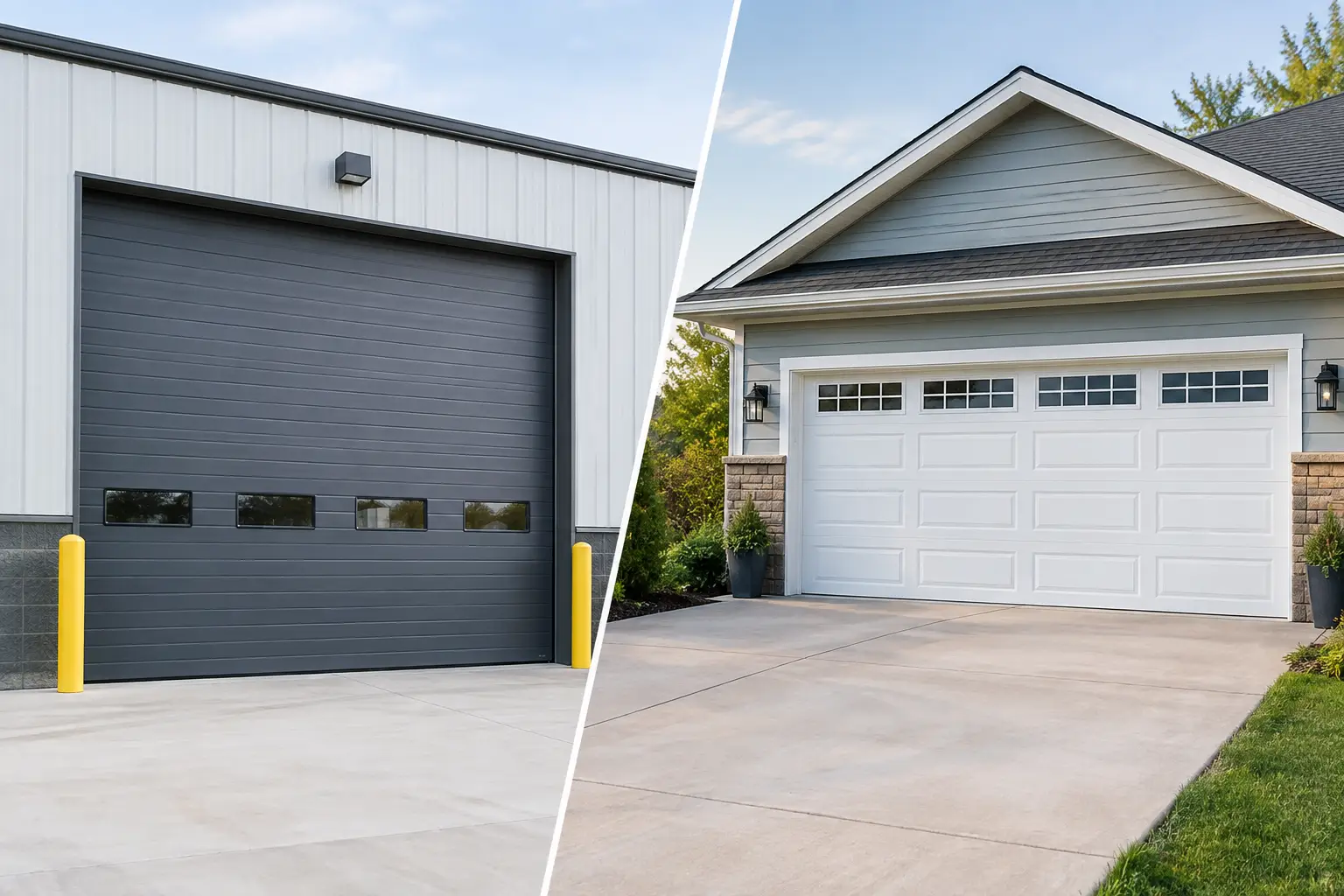
A garage door that works perfectly on a detached home garage may be the wrong choice for a busy shop, warehouse, or apartment property. When comparing commercial vs residential garage doors, the difference is not just appearance. It comes down to how often the door runs, how much it weighs, what it protects, and what happens when it fails.
For a homeowner, the right door needs to be safe, weather-ready, quiet enough for daily life, and a good match for the home. For a business owner or property manager, the priority is usually uptime. A door stuck halfway open can delay deliveries, expose inventory, block vehicles, and create a security problem fast.
Commercial vs Residential Garage Doors: The Main Difference
Residential garage doors are built for lower daily use. Most homes open and close the garage door a few times per day, so a standard door, opener, springs, rollers, and track system are designed around that type of cycle count. They come in many styles, from raised-panel steel doors to carriage-house designs, full-view glass doors, and insulated options.
Commercial doors are made for heavier work. A service bay, storage facility, agricultural building, loading area, fire station, or auto shop may open its doors dozens of times a day. That calls for heavier-duty hardware, stronger tracks, high-cycle springs, commercial operators, and door materials suited to the building's use.
The best choice is not automatically the strongest or most expensive door. It is the one that fits the opening, traffic level, security needs, insulation goals, and budget without creating unnecessary repair costs later.
How Residential Garage Doors Are Built
A residential sectional garage door is usually made of several horizontal panels that travel up tracks and rest overhead when open. Steel is the most common material because it is durable, practical, and available in a wide range of finishes. Homeowners can also choose wood, aluminum, fiberglass, or glass, depending on the look they want and how much maintenance they are comfortable handling.
Most residential doors use torsion springs mounted above the opening or extension springs along the horizontal tracks. The springs carry most of the door's weight, while the opener guides the movement. That is why a door with a broken spring may leave a vehicle trapped inside even when the opener still makes noise.
For homes in Greeley and nearby Northern Colorado communities, insulation deserves more attention than many people give it. An insulated garage door can help reduce temperature swings, especially when the garage connects to living space, contains plumbing, or serves as a workshop. It will not turn an unheated garage into a conditioned room, but it can make the area more comfortable and help protect what is stored there.
Residential doors also put a premium on curb appeal. A replacement door can change the front of a home more than many owners expect. Still, appearance should come after fit and function. The door must be properly sized, balanced, sealed, and paired with an opener that can reliably handle its weight.
What Makes a Commercial Door Different
Commercial garage doors come in several configurations. Sectional steel doors are common for service shops and larger garages. Rolling steel doors coil above the opening and are often used for warehouses, storage spaces, concession areas, and security applications. Full-view aluminum doors are popular where visibility and a cleaner storefront look matter.
The hardware is where the commercial difference becomes especially clear. Commercial doors often use thicker track, larger rollers, stronger cables, heavier gauge steel, and high-cycle springs. A standard residential spring may be suitable for typical household use, but a high-traffic commercial opening may need springs rated for far more cycles.
The operator is another major factor. A commercial opener is not simply a bigger residential opener. Depending on the setup, a commercial door may use a trolley, jackshaft, hoist, or other operator designed for frequent use and greater door weight. It may also need wall controls, keypads, photo eyes, warning devices, timers, or access controls for employees.
Security requirements can be higher as well. A commercial door may protect tools, vehicles, product, equipment, or an entire work area after hours. The right setup may include a stronger door curtain or panels, better locking options, monitored access, and a dependable manual release plan for power outages.
Size, Usage, and Weight Matter More Than Looks
A residential door is commonly sized for one, two, or three vehicles. Commercial openings can be much wider or taller to accommodate vans, box trucks, farm equipment, forklifts, or specialized vehicles. Those larger openings create greater loads on the springs, cables, drums, tracks, and operator.
That added weight is not a reason to treat a commercial door like an oversized home garage door. The system has to be engineered as a complete unit. Installing the wrong spring size, using undersized hardware, or pairing a heavy door with the wrong operator can lead to early wear, poor movement, and unsafe conditions.
Usage matters just as much as size. A small commercial door that cycles 30 times a day can wear out components faster than a larger home door that runs four times a day. Before selecting a new door, estimate real traffic, including employee arrivals, deliveries, customer access, and the number of bays that need to operate at once.
Safety Is Not Optional
All garage doors have moving parts under serious tension. Broken springs, frayed cables, bent tracks, damaged rollers, and doors that come off track are dangerous in both homes and businesses. Trying to force a heavy door closed or replacing springs without the right tools can turn a repair into an injury or a much larger bill.
Residential doors should have properly working photo eyes and auto-reverse protection. Keep the sensors aligned and clear of dust, snow, boxes, and stored items. If the door closes and immediately reverses, stops before reaching the floor, or will not respond consistently, do not ignore it.
Commercial locations need clear safety procedures around the opening. Employees should know not to walk or drive under a moving door, pull on cables, or attempt makeshift repairs. A door that is hanging unevenly, making grinding sounds, or opening slowly should be taken out of service until it can be inspected.
Cost: Think Beyond the Initial Door Price
Residential doors generally cost less because they are smaller, lighter, and designed for lower-cycle use. The final price can rise with insulation, windows, decorative hardware, custom colors, wind-load requirements, and an upgraded opener.
Commercial door costs vary widely because the application varies widely. Door type, opening size, material, insulation, operator style, electrical needs, security features, and required cycle rating all affect the job. A basic commercial sectional door for a small bay is a different project from a rolling steel door for a high-security warehouse opening.
The cheapest option is not always the better value. A low-cycle door installed at a busy business may require repeated spring, roller, and operator repairs. On the other hand, a homeowner does not necessarily need commercial-grade equipment for a normal household garage. Paying for capacity you will never use is not practical either.
When Repair Makes Sense and When Replacement Is Smarter
Many issues can be repaired without replacing the entire door. A broken spring, worn rollers, damaged cable, malfunctioning opener, misaligned photo eye, or dented single panel may have a straightforward fix. Regular maintenance can also catch loose hardware and worn parts before the door stops working at the worst possible time.
Replacement becomes more reasonable when there is widespread panel damage, severe rust, recurring off-track problems, outdated safety equipment, or an opener and door system that no longer match the property’s needs. For commercial properties, repeated downtime is often the deciding factor. For homeowners, energy efficiency, noise, appearance, and reliability may be just as important.
A qualified technician should inspect the whole system rather than focus only on the obvious failed part. A snapped cable, for example, may be the result of a worn drum, broken spring, crooked track, or door that is out of balance.
Choosing the Right Door for Your Property
Start with the daily job the door must do. A home garage may need insulation, quiet operation, and a style that fits the house. A small business may need a dependable sectional door with higher-cycle springs. A warehouse or service operation may need rolling steel, heavier hardware, and an operator built for frequent use.
Measure carefully, but do not choose a door by opening size alone. Headroom, side room, ceiling height, track type, electrical access, wind exposure, and clearance for vehicles all matter. If the door is already failing, take note of when it acts up and what you hear. Those details help a technician find the actual cause faster.
Whether it is a family garage or a working commercial bay, a door should open safely, close securely, and stay out of your way. When it does not, getting the right local repair team involved early can prevent a small hardware issue from becoming a full day of lost access or business interruption.