
A garage door that leaves a strip of daylight along the floor is more than an eyesore. In Northern Colorado, that opening can let in wind, snow, dust, insects, and cold air, while giving mice an easy way inside. The good news is that many homeowners can identify what is causing the issue quickly. The key is knowing when a simple seal replacement will fix garage door gap trouble and when the door itself needs professional adjustment.
Find Where the Garage Door Gap Starts
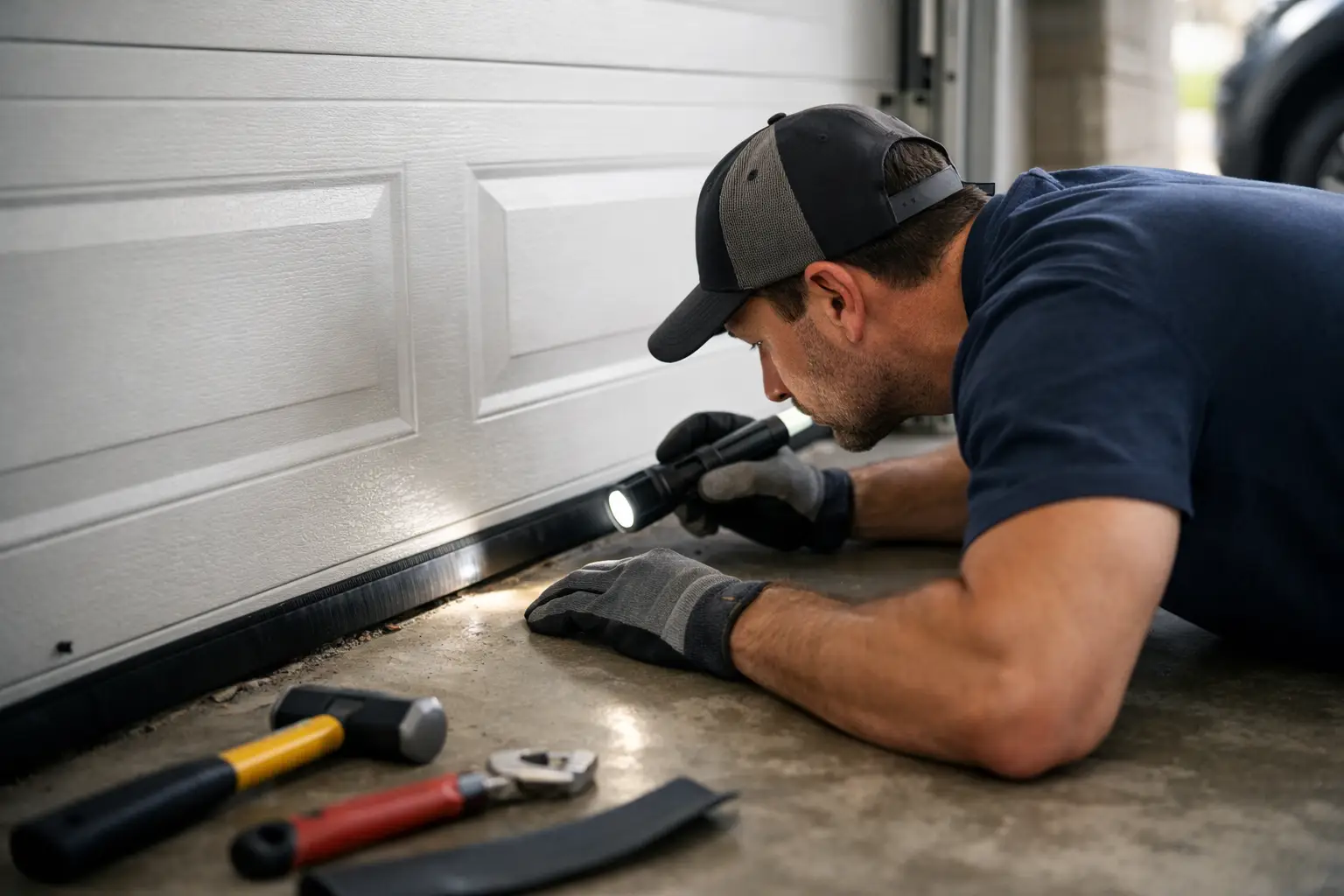
Before buying weatherstripping or trying an adjustment, close the door during daylight and look carefully from inside the garage. Note whether the opening runs along the bottom, one side, the top, or only one corner. The location tells you a lot about the repair.
A uniform gap across the bottom usually points to a worn bottom seal or an uneven concrete floor. A gap on one side may mean the side weather seal is flattened, torn, or mounted too far from the door. If one bottom corner sits higher than the other, the door may be out of level due to a cable, track, roller, or spring-related problem. A top gap can come from worn top weatherstripping, loose hinges, a bent panel, or an opener setting that does not allow the door to close firmly.
Look at the door while it moves, too, but keep your hands clear. Does it shake, bind, scrape, or stop unevenly? Is one cable loose or wrapped incorrectly on its drum? Is a roller out of the track? Those are signs to stop using the door and call for repair rather than trying to force it down.
Start With the Weather Seals
Weather seals are the most common answer when the door operates smoothly but does not block the elements. They are also the most homeowner-friendly repair.
The bottom seal, sometimes called an astragal, slides into a retainer along the bottom edge of the door. Over time, rubber and vinyl seals become hard, split, or flattened. A fresh, flexible seal can fill minor irregularities in the concrete and make a major difference in comfort and pest control.
Measure the door width before purchasing a replacement. With the door fully open and secured according to the opener manufacturer's safety instructions, inspect the existing retainer. Bottom seals come in different shapes, including T-style and bulb-style designs, and the wrong profile may not fit the retainer. Clean dirt from the channel before installing the new material so it slides evenly.
Side and top weatherstripping attach to the wood trim around the opening, not the moving door. The flexible flap should lightly touch the face of the closed door. If it is pressed too tightly, the door can drag against it and strain the opener. If it barely touches or curls away, wind will push right through. Repositioning the trim slightly or replacing cracked sections often solves side and top gaps without touching the door hardware.
How to Fix Garage Door Gap at the Bottom
A bottom gap deserves a closer look because it is not always a seal problem. Start by placing the door in the closed position and checking whether the rubber seal makes contact with the concrete across the full width. If the seal is old, compressed, or visibly torn, replace it first.
If a new seal still leaves a small gap in the same spot, the concrete may have settled or been poured unevenly. This is common in older garages and is not necessarily a sign that the door is failing. A wider bottom seal may compensate for a shallow low area. For a more pronounced dip, a threshold seal adhered to the garage floor can create a raised surface for the bottom seal to meet. The floor must be clean, dry, and properly prepared for the adhesive to hold through changing temperatures.
Do not use loose foam, towels, or wood strips as a permanent fix. They trap moisture, invite pests, and can interfere with safe door operation. A threshold works only when the door still closes evenly and reverses properly when it meets an obstruction.
If one end of the door is noticeably higher than the other, do not try to level it by adjusting the lift cables yourself. Garage door springs and cables are under heavy tension. A slipped cable or incorrectly adjusted spring can cause the door to fall, jam in the tracks, or cause serious injury. That situation needs a trained technician.
Check the Opener's Closing Position Carefully
Sometimes the door is level, the seals look decent, and the door simply stops a fraction of an inch too soon. This can happen when the opener's down-limit setting is off. The exact adjustment method varies by opener model, so use the instructions for your specific unit.
Make only small changes, then test the door from a safe distance. After any adjustment, test the photo eyes and the auto-reverse function using a flat object on the floor beneath the door. If the door does not reverse when it should, stop using the opener until it is corrected. A tighter seal is never worth defeating a safety feature.
When the Gap Means a Mechanical Repair
A garage door is designed to sit squarely in its tracks. When it does not, weatherstripping can hide the symptom for a while, but it will not solve the cause. Mechanical problems are especially likely if the gap appeared suddenly, the door is noisy, or it no longer opens and closes smoothly.
Bent vertical tracks can pull the door away from the opening. Worn rollers may allow a section to lean or chatter. Damaged hinges and bent panels can prevent sections from sitting flush. A frayed cable, broken spring, or loose cable drum can make one side of the door drop lower than the other. These problems can get worse fast, particularly if the door is repeatedly run by the opener while it is binding.
Avoid lubricating the tracks to solve an alignment issue. Tracks need to stay relatively clean so rollers can run in the proper path. If you are doing basic maintenance, use garage-door-rated lubricant sparingly on rollers, hinges, and springs only where appropriate. Never spray lubricant onto a broken cable, a damaged spring, or an electrical opener component.
For a heavy wood door, an insulated steel door, or a commercial overhead door, professional diagnosis is even more important. These systems have different weights, spring configurations, and hardware requirements. A small gap may be the first visible clue that the balance of the door has changed.
What a Professional Repair Usually Includes
A qualified technician should inspect the whole operating system, not just the opening you can see. That includes checking door balance, track condition, rollers, hinges, cables, spring tension, opener travel, photo eyes, and the fit of the seals. The right repair may be as simple as replacing weatherstripping, but it may also involve realigning tracks, replacing worn rollers, repairing a cable issue, or correcting a damaged section.
Costs depend on the cause, the size and material of the door, and whether parts are damaged. Seal replacement is generally less involved than track, cable, spring, or panel work. Ask for upfront pricing before work begins and make sure the technician explains what is causing the gap. You should not have to guess whether you are paying for a needed repair or an unnecessary add-on.
At Greeley Garage Door Repair by Mike, our technicians see plenty of doors affected by Front Range temperature swings, wind, and settling concrete. For homeowners in Greeley, Evans, Windsor, and Ault, a stocked service truck can often mean the right repair is completed in one visit instead of leaving the garage exposed overnight.
Keep Small Gaps From Becoming Bigger Repairs
Check your door seals at the change of seasons, especially before winter. Look for brittle rubber, daylight around the perimeter, loose trim, and debris in the tracks. Run the door once or twice while watching from a safe distance. A door that starts moving crookedly, makes a new grinding sound, or closes with a hard thud is asking for attention.
A clean, well-sealed garage protects more than stored belongings. It helps keep your home more comfortable, keeps unwanted water and pests out, and gives your garage door a better chance of operating reliably when you need to leave for work or get the family home. If the gap is uneven or the door is not moving normally, leave the springs and cables alone and get a local technician to put it back in safe working order.