
Your car is in the driveway, the keypad lights up, and the garage door still will not move. Before you assume the opener has failed, there are several practical ways to fix garage door keypad problems. Most keypad issues come down to a weak battery, a lost opener connection, worn buttons, or a simple programming mistake.
A keypad is a convenience until it becomes the only way into the garage. The good news is that many checks take just a few minutes and do not require taking apart the opener or door. Start with the simple fixes, pay attention to what the keypad is doing, and stop if the garage door itself is acting unsafe.
Start With What the Keypad Is Telling You
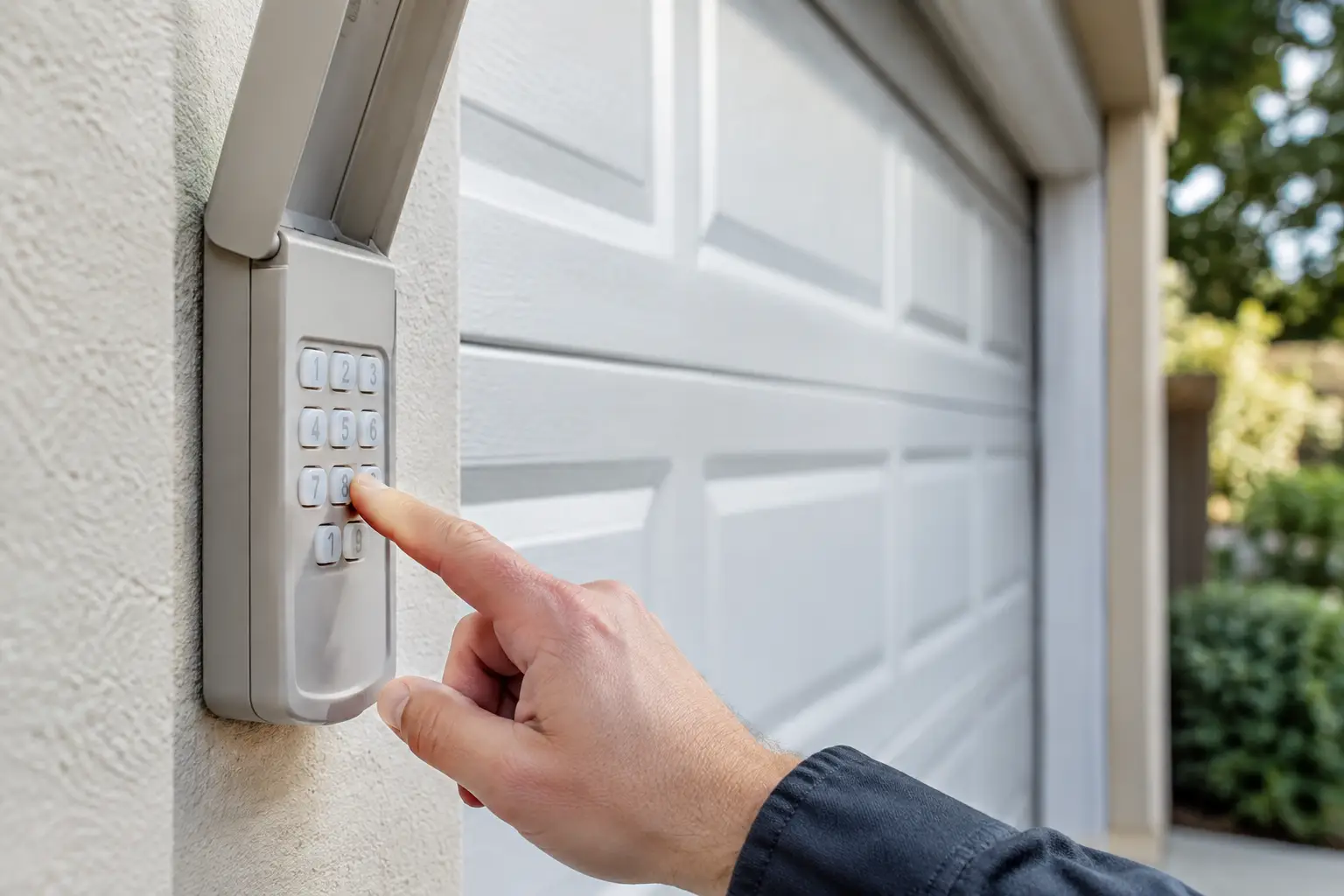
Look at the keypad before entering codes repeatedly. Does it light up when you press a button? Does it beep? Does it flash after you enter your PIN? Those details narrow down the problem quickly.
If there is no light, no sound, and no response at all, the battery or keypad hardware is the likely issue. If the keypad lights up but the opener does nothing, the keypad may have lost its programming or the opener may not be receiving the signal. If the door starts moving and reverses, stops, or makes grinding noises, the problem may be with the door, safety sensors, or opener rather than the keypad.
Do not keep pressing the keypad over and over. Some openers will ignore repeated signals for a short period, and a keypad with failing buttons can make a correct code look incorrect.
Replace the Battery First
A fading keypad battery is the most common and least expensive cause of trouble. Cold Northern Colorado weather can make a weak battery fail suddenly, especially on an exterior keypad that sees freezing temperatures and direct sun.
Open the battery compartment and install a fresh battery of the type listed inside the cover. Many models use a 9-volt battery, but not all do. Check for corrosion on the battery terminals while the compartment is open. A small amount of white or green buildup can interrupt the connection even with a new battery installed.
After replacing the battery, enter your PIN slowly and firmly. If the keypad lights normally but still does not operate the door, move on to reprogramming it.
Reprogram the Keypad to the Opener
Power outages, battery changes, accidental button presses, and aging electronics can cause a wireless keypad to lose its connection to the garage door opener. Reprogramming usually restores communication.
First, find the opener's Learn, Program, or Smart button. It is typically located on the back or side of the opener motor unit, often near the antenna wire or under the light cover. The button color and exact steps vary by brand, including LiftMaster, Chamberlain, Genie, Craftsman, and others.
Press and release the Learn or Program button. You will usually have about 30 seconds to enter your desired PIN on the keypad and press Enter, Send, or the up/down button. The opener light may blink, click, or flash to confirm that it accepted the keypad.
The order matters. Pressing and holding the Learn button too long can erase all remote controls and keypads from the opener's memory. If that happens, the wall button may still work, but every remote and keypad will need to be programmed again. When you are unsure of the button sequence, it is better to pause than create more work.
Check the PIN and Button Condition
A keypad can look fine while individual buttons stop making reliable contact. This is especially common with older units exposed to rain, dust, heat, and years of finger pressure. Try entering your code deliberately. If one number feels soft, sticks, or works only sometimes, the keypad may be worn out.
Also rule out a changed or forgotten PIN. If multiple family members use the garage, someone may have reset the code without realizing it. Once access is restored, choose a PIN that household members can remember but that is not easy for a stranger to guess. Avoid house numbers, birthdays, and obvious sequences such as 1234.
Make Sure the Opener and Door Are Working
A working keypad cannot solve an opener or door failure. Test the garage door from the interior wall button and a handheld remote if you have one.
If neither the wall button nor remote works, check that the opener is plugged in and that the outlet has power. A tripped GFCI outlet, a loose plug, or a breaker issue can make it seem like the keypad is the problem. If the opener has power but only hums, flashes, or will not run, it may need opener service.
If the opener runs but the door will not move, look for obvious signs of a door problem from a safe distance. A crooked door, loose cable, broken spring, bent track, or door that is stuck halfway should not be forced. Garage door springs and cables carry heavy tension and can cause serious injury when handled incorrectly.
You can also check the photo-eye safety sensors near the bottom of the tracks. If their lenses are dirty, blocked, or out of alignment, the door may close partway and reverse. Clean the lenses gently and make sure nothing is crossing the sensor beam. This will not usually prevent the keypad from opening the door, but it can explain why the door will not close after the keypad sends a command.
When a Garage Door Keypad Needs Replacement
Sometimes the best way to fix garage door keypad trouble is to replace the unit. Replacement is often the practical choice when the keypad is more than several years old, its buttons are cracked or intermittent, moisture has gotten inside, or it will not hold programming after a fresh battery and proper reset.
Universal keypads can work with many opener brands, but compatibility is not guaranteed. Older openers, commercial operators, and certain smart opener systems may require a keypad made for that specific model. A keypad that is technically compatible can still require careful programming, so buying the cheapest unit is not always the lowest-cost answer if it leaves you with the same problem.
For homes with multiple garage doors, make sure the replacement keypad supports multiple doors before it is installed. For a detached garage, choose a weather-resistant model and make sure it is mounted where the signal can reach the opener consistently.
Avoid These Common Keypad Mistakes
Do not spray lubricant into a keypad. Garage door lubricant is for moving metal components such as rollers, hinges, and springs, not electronics. Spraying a keypad can trap dirt, damage contacts, and make button problems worse.
Do not open the opener motor housing just to troubleshoot a keypad. Most programming controls are accessible from the outside of the unit. Internal opener repairs involve electrical components and should be left to a qualified technician.
Finally, do not use the emergency release as a routine workaround from outside the garage. The emergency release is designed for emergencies, and exterior-release methods can create a security concern if not handled correctly. If you are locked out or the door is stuck open, get professional help rather than risking damage to the door or the home.
When to Call for Same-Day Help
Call a garage door technician if a new battery and reprogramming do not restore operation, if the keypad works only intermittently, or if the opener does not respond to any control. Service is also the right call when the door is off track, a cable is loose, a spring is broken, or a vehicle is trapped inside.
At Greeley Garage Door Repair by Mike, we check the full system instead of replacing parts blindly. That means confirming whether the issue is the keypad, receiver, opener, safety sensors, or the door itself. You should receive clear pricing before work begins, not a surprise after the repair.
For homeowners in Greeley, Evans, Windsor, and Ault, a keypad problem can be a quick repair or a warning that the opener is starting to fail. A fresh battery and a careful reprogramming attempt are worth trying. If the door is still not responding, or anything looks unsafe, leave the heavy work alone and get it checked before a small access problem becomes a bigger garage door repair.