
A power outage is one thing. A garage door that will not move because a spring, cable, or roller has failed is another. The garage door emergency release gives you a way to disconnect the opener and operate the door by hand, but it is only safe to use when the door itself is in stable condition.
That red handle hanging from the opener rail is simple by design. Pull it at the wrong time, though, and a heavy door can come down fast. Here is how to use it safely, what it can and cannot fix, and when it is time to leave the door alone and call for help.
What a Garage Door Emergency Release Does
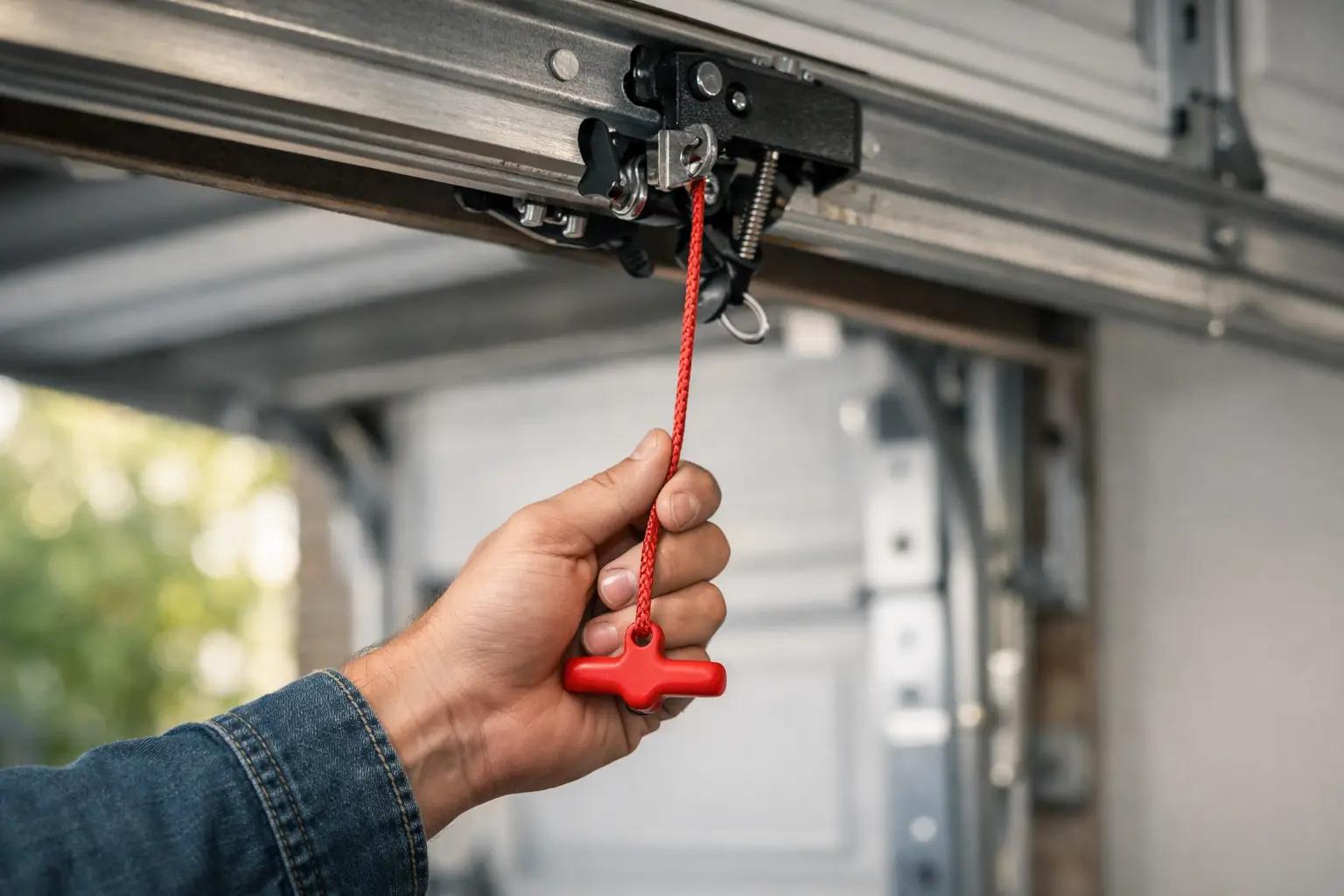
The emergency release is a manual disconnect for an automatic garage door opener. It separates the door from the opener trolley, allowing you to raise or lower the door by hand when the opener has no power or is not working.
Most residential openers have a red cord and handle near the center of the opener rail. Pulling the handle releases a spring-loaded latch inside the trolley. The opener remains mounted and powered, but it is no longer moving the door.
This feature is useful after a power outage, when an opener motor has failed, or when you need to get a vehicle out before repair service arrives. It does not repair the underlying problem. If the door is binding, crooked, unusually heavy, or stuck halfway, disconnecting it from the opener may make the situation more dangerous rather than more manageable.
When It Is Safe to Pull the Emergency Release
The safest time to use the release is when the garage door is fully closed. With the door resting on the floor, it cannot drop unexpectedly when you disconnect the opener.
Before you pull the cord, look at the door. The sections should be level, the cables should appear to be on their drums, and the tracks should not be bent or pulled away from the wall. If you recently heard a loud bang in the garage, saw a loose cable, or noticed the door lifting unevenly, assume a spring or cable may have failed.
A properly balanced door should feel manageable when disconnected. It will still be heavy, but the springs should carry most of its weight. A door with a broken torsion spring can weigh well over 100 pounds in your hands, depending on its size and construction. That is not a door to test alone.
Never Release a Door That Is Open or Halfway Open
Do not pull the emergency release while the garage door is open, partly open, or hanging unevenly. If a spring is broken or the door is off track, the opener may be the only thing keeping it from falling. Releasing the trolley can allow the door to slam shut.
If your door is stuck open, keep people and pets away from the opening. Do not stand beneath the door, pull on the cables, or try to force it down. A technician can secure the door and identify whether the problem is the springs, cables, rollers, track, or opener.
How to Use the Garage Door Emergency Release Safely
If the door is fully closed and looks normal, you can use the manual release with a few careful steps:
- Make sure the door is in the down position and clear the area around it. Keep children, pets, and vehicles away from the door.
- Unplug the opener if you are dealing with a power surge, damaged wiring, or an opener that has been behaving erratically. For a simple power outage, this step is not required.
- Locate the red emergency-release handle hanging from the rail between the opener and the top of the door.
- Pull the handle straight down. You may feel or hear the trolley release from the opener carriage.
- Lift the door from the bottom handles, using both hands. Move slowly and stop immediately if it feels extremely heavy, jams, or rises crookedly.
Once the door is open, do not assume it will stay there. A healthy, balanced door can remain open, but a door with a damaged spring may drift or fall. If you must leave it open briefly to move a vehicle, keep the opening clear and lower the door again as soon as possible.
If the door will not lift smoothly, do not muscle through it. Forcing a door can bend a track, pull a cable off its drum, damage the opener rail, or cause an injury. The right next step is repair, not more force.
How to Reconnect the Opener
After power returns or the opener issue is resolved, the door needs to reconnect to the trolley. The exact method depends on the opener model, but most modern units reconnect when you run the opener with the remote or wall button.
First, make sure the door is fully closed if possible. Pull the emergency-release handle toward the opener or toward the door, depending on the trolley design, to reset the latch position. Then operate the opener. As the trolley moves along the rail, it should click back into place.
If it will not reconnect, avoid repeatedly running the opener. Check that the trolley is aligned with the carriage and that the door is not blocked. A stripped gear, damaged trolley, misaligned rail, or improperly set travel limit may be behind the problem.
What If the Power Is Out and the Door Is Your Only Exit?
Many homes have a standard entry door from the garage to the house, so you can reach the release from inside. If your garage has no other entry and the power is out while you are outside, do not try to hook the release cord through the top of the door or force a window. Those methods can damage the door and create a security problem.
A battery backup opener can prevent this situation in the future. It keeps the opener working for a limited number of cycles during an outage. It is especially useful for households that use the garage as their main entrance or for anyone who needs reliable access during Northern Colorado storms.
Problems the Emergency Release Will Not Solve
The release disconnects the opener. It does not solve a mechanical door failure. If the opener hums but the door does not move, the problem may be a stripped gear or a disconnected trolley. If the door feels heavy, sits crooked, or has a gap in the spring above the opening, the issue is likely with the door hardware.
Call for professional garage door repair when you see a broken spring, frayed or loose cable, bent track, cracked hinge, damaged roller, or door section that has come off track. These parts work under significant tension. Trying to reset a cable or replace a torsion spring without the right tools can turn a routine repair into a serious injury or a more expensive door replacement.
Commercial overhead doors deserve the same caution, with even more reason to stop. Rolling steel doors, high-cycle springs, and larger sectional doors are heavier and use specialized hardware. If a business door is stuck open or blocks deliveries, secure the area and arrange emergency service rather than having staff attempt a manual repair.
A Quick Test After You Reconnect It
When the door is operating again, watch one full open-and-close cycle from a safe distance. It should travel evenly, stay in its tracks, and reverse when the photo-eye safety sensors are blocked. Listen for grinding, popping, or a loud strain from the opener.
If the opener is working harder than usual, the door may need adjustment or maintenance. An opener is designed to guide a balanced door, not lift a door whose springs have lost tension. Addressing that early can protect the motor and keep a small issue from trapping your car on a busy morning.
If you are in Greeley, Evans, Windsor, or Ault and the door is too heavy to lift, stuck open, or off track, keep it secured and get a real technician involved. Greeley Garage Door Repair by Mike can assess the problem, explain the repair before work begins, and help get your garage safely back in service.