
A power outage is frustrating enough. It gets worse when your car is trapped behind a garage door that will not move. If you need garage door help during a power outage, the good news is that most residential doors can be operated manually. The key is knowing when it is safe to do that and when a heavy door needs professional attention.
Do not force the opener, yank on the door, or guess at a broken part. A garage door can weigh a few hundred pounds, and the springs and cables that counterbalance it are under serious tension. A few careful checks can get you out safely. They can also prevent a small outage problem from becoming a damaged door, bent track, or injury.
Garage Door Help During a Power Outage: Start Here
First, confirm that the outage is the actual problem. Check whether lights and other outlets in the home are off. If power is working everywhere else but the garage opener is dead, the issue may be a tripped GFCI outlet, a disconnected opener, or an opener failure rather than the utility outage.
If the power is out throughout the home, unplug the opener if you can safely reach the plug. This protects it from a power surge when service returns. Then look at the garage door itself before touching the emergency release. Is it fully closed and sitting straight in the opening? Are the cables still on the drums and the tracks free of obvious damage? A closed, stable door is generally the safest position for manual operation.
If the door is partly open, crooked, hanging from one side, or has a loose cable, stop there. Do not pull the red emergency-release handle. The door may be unsupported because of a broken spring or cable problem, and releasing the opener can allow it to slam shut. Keep people, pets, and vehicles clear of the opening and arrange emergency service instead.
How to Open a Garage Door Manually
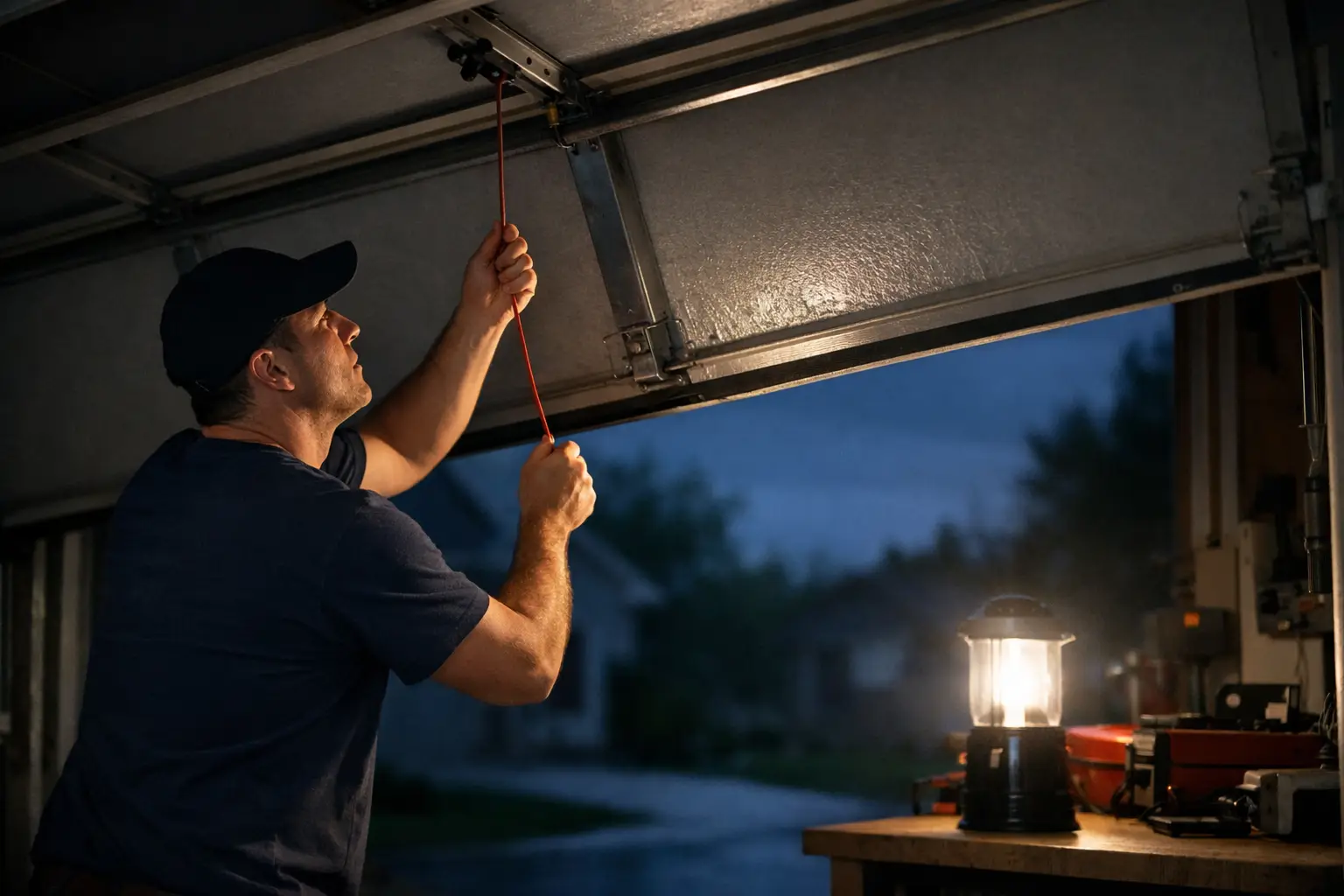
Most automatic openers have a red cord with a red handle hanging from the trolley rail. This is the emergency release. It disconnects the door from the opener so you can lift it by hand.
With the door fully closed, pull the release handle straight down and toward the back of the garage. You should hear or feel the trolley disengage. Then lift the door from the bottom using both hands, keeping your fingers away from the joints between door sections.
A properly balanced door should rise with steady effort and stay open near the top of the tracks. It will feel heavy, but it should not feel impossible to lift. If it barely moves, crashes downward, or feels much heavier than usual, stop immediately. That is a common sign of a broken torsion spring, extension spring, or cable issue.
Once you get the door open, make sure it is fully raised. Never park or walk under a door that is only partly open. The opener is disconnected, so it cannot hold the door in place. If you need to leave, close the door manually before you go. Pull it down evenly with both hands until it rests on the floor.
Do not leave a manually released door open overnight or while the property is unattended. It creates an easy access point for intruders and exposes the garage to wind, rain, and blowing debris. Northern Colorado weather can change quickly, and a sudden gust can make an unsecured door dangerous.
If the Door Will Not Lift
A door that will not lift by hand is not a door to muscle through. Broken springs are a frequent reason homeowners discover their door is unusually heavy during an outage. You may see a visible gap in the torsion spring above the door, but you do not need to inspect closely or touch it to know there is a problem.
Do not try to replace a spring, rewind a cable, or use vice grips to hold the door open. Those repairs require the right tools, training, and safe setup. A technician can secure the door, identify the failed component, and give you a clear repair price before work begins.
How to Close and Secure the Door Without Power
If you can close the door manually, confirm that it touches the floor evenly across the bottom. A gap on one side, a roller outside the track, or a door that will not sit level points to a mechanical problem. Do not force it down against resistance.
For a door that closes correctly, use the inside manual slide lock if your door has one. It is usually a small metal bar on the inside of a door section that slides into the vertical track. If there is no manual lock, keep the garage-to-home entry door locked and avoid leaving valuables in plain view until power returns.
Do not padlock the emergency-release cord or make changes to the door hardware during an outage. That can interfere with normal operation later and may create a safety issue. A simple check of the door and a secure interior entry door are usually the better short-term answer.
Reconnect the Opener When Power Comes Back
When electricity returns, do not assume the opener will reconnect on its own. First, make sure the garage door is fully closed. Pull the emergency-release handle toward the opener so the trolley reset lever is in its normal position. Then use the wall button or remote to run the opener.
On many systems, the trolley reconnects automatically when the opener moves and meets the release mechanism. On others, you may need to move the door by hand until the trolley clicks back into place. Follow the instructions for your opener model if the release does not reset easily.
Test the door after reconnecting it. Watch one complete open-and-close cycle from a safe distance. The door should travel smoothly, reverse when the safety sensors are blocked, and rest evenly on the floor. If the opener hums but the door does not move, the remote works inconsistently, or the door reverses for no clear reason, the outage may have revealed an existing opener or balance issue.
Check for a Tripped Outlet or Surge Damage
Power restoration can sometimes trip the garage outlet or affect the opener's electronics. Check the breaker panel and any nearby GFCI reset button, often located in the garage, bathroom, or exterior outlet circuit. Reset only once. If it trips again, leave it off and have the electrical issue checked.
If the opener has power but no display, lights, or response from the wall control, it may have surge-related damage. Some units need a simple reset, while others need a replacement logic board or a new opener. There is no benefit in repeatedly cycling the breaker or pressing the remote. That can make diagnosis harder and will not repair a damaged component.
When to Call for Emergency Garage Door Service
Call for help right away if the door is stuck open, your vehicle is trapped and the door is too heavy to lift, or the door is off track. The same applies if you see a broken spring, loose cables, bent tracks, cracked rollers, or a gap that will not allow the door to close securely.
For a home or business, an unsecured garage door is more than an inconvenience. It can affect security, inventory, access, and protection from weather. Commercial overhead doors should not be manually operated by untrained staff if there is any sign of cable, spring, or track damage. Keep the area clear and let a qualified technician assess it.
Greeley Garage Door Repair by Mike provides 24/7 emergency help for homeowners and businesses in Greeley, Evans, Windsor, and Ault. A local technician can determine whether the problem is simply a disconnected opener or a repair that needs attention before the door can be used safely. You should get a straightforward explanation and upfront pricing before repair work begins.
A power outage is temporary, but a damaged garage door can create a lasting safety problem. If the door does not move smoothly by hand, will not stay open, or cannot close and secure properly, leave it alone and get experienced help before the next use.