

A garage door can be the largest moving wall in your home, and in a Greeley winter, an uninsulated one can make the attached garage feel like a refrigerator. The right garage door insulation options can reduce temperature swings, quiet a rattling door, and make the room above or beside the garage more comfortable. But insulation is not a cure-all. The best choice depends on your door’s condition, how you use the garage, and whether the door can safely handle added weight.
What Garage Door Insulation Actually Does
Garage door insulation slows the transfer of heat. In cold weather, it helps keep some heat from escaping the garage. In hot weather, it helps reduce the heat coming through the door. It will not turn an unheated garage into a finished living space, but it can make a real difference when the garage is attached to your home or used as a workshop, gym, laundry area, or storage space.
A better-insulated door also tends to run more quietly. Insulated steel doors have a firmer feel than thin, uninsulated doors, which can reduce panel vibration and outside noise. That matters if bedrooms sit above the garage or you leave early in the morning.
The number people usually compare is R-value. A higher R-value means greater resistance to heat flow. Still, R-value is only part of the decision. Air gaps around the door, worn bottom weatherstripping, damaged panels, and poor insulation in the garage walls can all limit the results.
Garage Door Insulation Options for Existing Doors
If your current door is structurally sound, adding insulation can be a practical upgrade. Before buying a kit, look at the door’s panels, hinges, rollers, cables, and springs. A door that is bent, off track, or already struggling to open needs repair first. Adding material to a failing door can make an existing problem worse.
Foam Board Panels
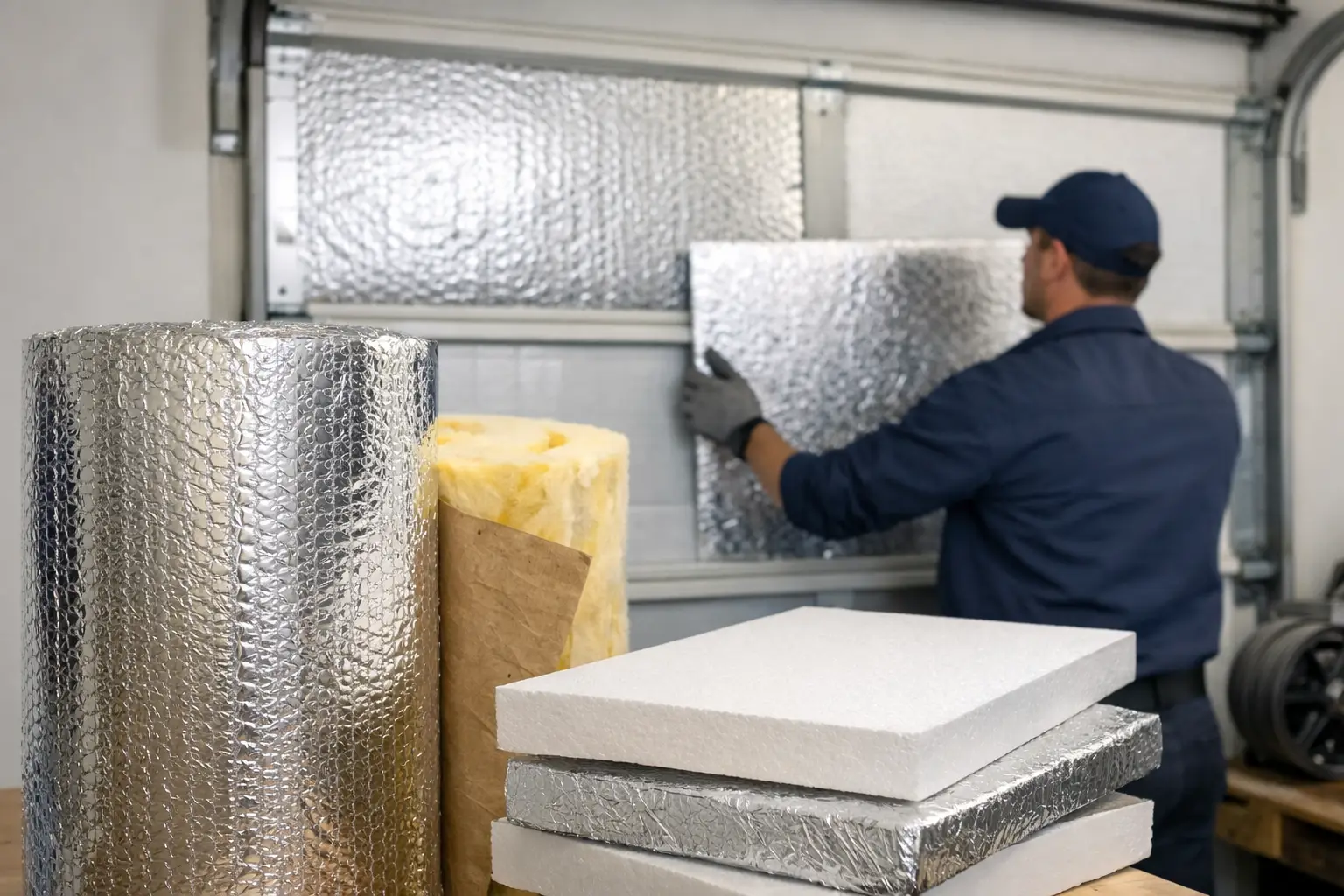
Rigid foam board is a common choice for sectional steel garage doors. The panels are cut to fit inside each section of the door, often behind the metal bracing. Foam board offers good insulation for its light weight, which is a major advantage on a moving garage door.
This option works best when the panel cavities are fairly deep and the door is in good condition. Installation needs to be neat. Poorly cut pieces can fall out, interfere with moving parts, or leave gaps that reduce performance. Some homeowners can handle a basic foam board kit, but a professional should inspect the door if it is older, damaged, or not balanced correctly.
Reflective Foil Insulation
Reflective foil kits are lightweight, affordable, and simple to install. They are often marketed heavily because they look clean and can help reflect radiant heat. In a Northern Colorado garage, however, foil alone usually provides less cold-weather benefit than foam board or a factory-insulated door.
It can be a reasonable low-cost option for a detached garage where the goal is to take the edge off summer heat. For an attached garage that gets uncomfortably cold every winter, it may not provide the improvement you expect.
Fiberglass Batts
Fiberglass insulation can offer solid thermal performance, but it is usually not the first choice for a garage door. It is bulkier than foam, may absorb moisture, and can sag or shift as the door moves. Loose fibers are also not ideal in garages where people work, store belongings, or spend time.
Fiberglass needs a proper facing and secure retention to stay in place. If it is poorly installed, it can snag on hardware or create a messy, uneven finish. It is generally better suited for fixed garage walls and ceilings than for a moving door.
Spray Foam
Spray foam sounds appealing because it seals gaps and insulates well, but it is rarely a smart DIY garage door project. It can add uneven weight, expand into places it should not, and make future panel repairs difficult. A garage door needs to move smoothly through hundreds or thousands of cycles, so balance matters.
For most homeowners, spray foam is better reserved for stationary walls, rim joists, and other fixed parts of the garage. Do not spray foam over hinges, struts, tracks, cables, or any part of the door’s operating system.
When an Insulated Replacement Door Is the Better Value
Retrofitting makes sense when the existing door is newer, straight, and mechanically reliable. A replacement often makes more sense when you are also dealing with rusted panels, recurring breakdowns, poor weather seals, dents, or an outdated door that no longer fits the home.
Factory-insulated doors are built with insulation bonded inside the panels. They are designed to keep the insulation in place, maintain the door’s strength, and operate at the correct weight. Many use polystyrene insulation, while higher-end doors may use polyurethane foam that fills the panel cavity and adds stiffness.
An insulated replacement door can be a better long-term investment for an attached garage, especially if there is a bedroom above it or a living room on the other side. It also gives you a chance to replace worn perimeter seals and make sure the door fits the opening properly. A great insulation rating will not help much if cold air is blowing in around the sides and bottom.
Do Not Ignore Door Balance and Opener Capacity
This is where a simple insulation project can become a service call. Any insulation added to the door adds weight. Springs are calibrated to counterbalance that weight, and an opener is meant to guide a properly balanced door, not lift a heavy door on its own.
After insulation is installed, the door should still lift smoothly by hand when disconnected from the opener. If it feels heavy, drops quickly, will not stay halfway open, or makes the opener strain, stop using it until it is checked. Do not adjust torsion springs yourself. They are under extreme tension and can cause serious injuries when handled incorrectly.
A technician can determine whether the springs need adjustment or replacement and confirm that the opener’s force settings are safe. This is especially worthwhile for older wood doors, heavy steel doors, and doors with one-piece construction.
Improve the Rest of the Garage Too
The door is usually the biggest weak point, but it is not the only one. Replacing cracked bottom seals and worn side weatherstripping can noticeably cut drafts. If daylight is visible around the door when it is closed, conditioned air is escaping and outside air is entering.
Also look at the garage-to-house door. A weatherstripped, insulated entry door helps protect the home from cold air, dust, fumes, and noise coming from the garage. If the garage ceiling is below a bedroom, proper ceiling insulation often makes a larger comfort difference than adding a thin insulation kit to the garage door.
For homeowners who use a space heater in the garage, keep expectations realistic. Insulation helps the room hold heat longer, but ventilation and fire safety still come first. Never use an unvented fuel-burning heater in an enclosed garage.
Choosing the Right Option for Your Garage
For a detached garage used mainly for parking and storage, a lightweight foam or reflective kit may be enough. For an attached garage that feels freezing and affects nearby rooms, a factory-insulated replacement door and fresh weather seals are often the stronger solution. If the door is damaged, noisy, or unreliable, putting money into an insulation kit may only delay a replacement you already need.
Greeley Garage Door Repair by Mike can inspect the door, check its balance, and give you a straightforward answer about whether insulation, weather sealing, repair, or replacement makes the most sense. The goal is not to sell you more door than you need. It is to help you get a safer, quieter garage that holds up through Colorado weather.
A garage should not have to be perfect to be more comfortable. Start with a door that operates safely, seals properly, and matches how you actually use the space, then choose insulation that supports that plan.