



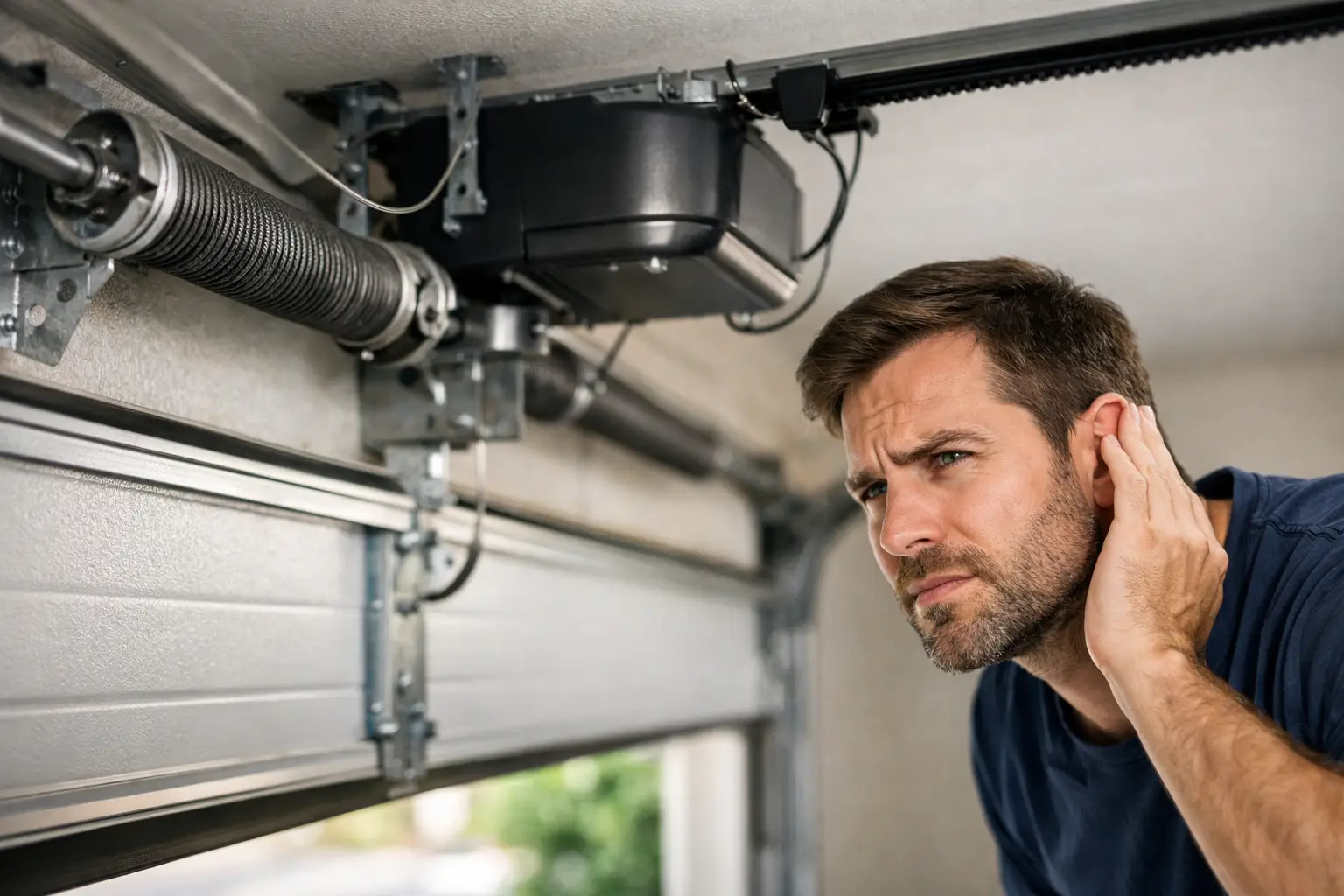
That new screech at 6:30 in the morning usually starts the same way - you hit the wall button, the door moves a few inches, and suddenly the whole garage sounds louder than it should. If your garage door making noise has gone from mild annoyance to something you notice every day, it is usually a sign that a part is wearing out, out of alignment, or under the wrong amount of tension.
Some noises are minor and tied to normal wear. Others are early warnings of a bigger repair, especially if the sound shows up with jerky movement, a slow opener, or a door that looks crooked as it travels. The trick is knowing which sounds point to simple maintenance and which ones mean stop using the door until it is checked.
Why a garage door starts making noise
A garage door has a lot of moving parts working together at once. Rollers travel in metal tracks, hinges flex as each section bends, springs carry most of the door's weight, and the opener helps guide the motion. When one part gets dry, loose, bent, or worn down, the system starts talking.
In Northern Colorado, weather can speed that up. Cold snaps can stiffen lubricants, wind and dust can work into tracks and rollers, and older doors often start making more noise as hardware loosens over time. That does not always mean you need a full replacement. It does mean the sound is worth paying attention to before a smaller fix turns into a broken spring, damaged cable, or a door stuck halfway open.
What the sound usually tells you
Squeaking or squealing
A high-pitched squeak often comes from dry metal-on-metal contact. Hinges, rollers, bearings, and spring components can all squeak when lubrication wears off. If the door still moves smoothly and the noise is consistent rather than violent, this is often the least urgent type of sound.
That said, not every squeak is harmless. Cheap or worn rollers can start squealing before they crack or bind in the track. If the sound has gotten worse over a few weeks, or you can see rollers wobbling as the door moves, it is probably more than a simple lubrication issue.
Grinding
Grinding usually deserves more attention. It can point to worn opener gears, damaged rollers, bent tracks, or bearings that are starting to fail. If the garage door making noise sounds rough, strained, or mechanical in a bad way, the problem may be inside the opener or in the door's main moving hardware.
A grinding opener often gets slower before it quits. You might also notice the motor humming longer than usual or the chain or belt looking slack. With a heavy door, that can put extra stress on the opener and lead to a bigger repair if it keeps running that way.
Banging or popping
A loud bang can mean a broken torsion spring, which is one of the most common major garage door repairs. Springs carry the weight of the door. When one breaks, the sound can be sharp enough to mistake for something falling in the garage.
Popping can also happen when sections flex badly, hinges bind, or tracks are slightly out of alignment. The difference is what happens next. If the door suddenly feels extremely heavy, stops opening normally, or lifts unevenly, stop using it. A spring or cable issue is not a safe DIY job.
Rattling
Rattling often comes from loose nuts, bolts, hinges, brackets, or opener hardware. This is common on older doors and doors used several times a day. It may not be dangerous right away, but it tends to get louder as vibration works hardware looser.
Sometimes the noise is not the door at all. It can be the opener mounting bracket, the rail, or even the chain slapping because tension has changed. If the whole system sounds shaky, that is a sign the door needs a proper adjustment rather than another month of waiting.
What you can check safely
There are a few things a homeowner can look at without getting into dangerous territory. Start by watching the door open and close from inside the garage with the lights on. Listen for where the sound seems loudest - near the rollers, overhead at the spring shaft, or at the opener motor.
Look for obvious problems like bent track, loose hinge screws, frayed cables, cracked rollers, or door sections that seem to hesitate at one point in travel. If the opener is straining but the door looks balanced and straight, the issue may be in the opener. If the door jerks, tilts, or one side moves differently than the other, the issue is more likely in the spring, cable, roller, or track system.
You can also check whether the noise happens only in cold weather, only while opening, or only when closing. That pattern helps narrow it down. A squeak at the top of travel can suggest different wear than a grinding sound that starts immediately.
If the door is operating normally and the problem seems limited to dry hinges or rollers, basic garage door lubricant on the right metal moving parts may help. Use a garage-door-specific product, not heavy grease that collects dirt. But skip the tracks. Tracks should be clean and unobstructed, not coated.
What not to mess with
Springs, cables, bottom brackets, and anything under high tension are not homeowner maintenance items. These parts can cause serious injury if handled the wrong way. A lot of people hear a noisy door and assume they just need to tighten or adjust something near the spring assembly. That is where small mistakes turn into expensive and dangerous ones.
The same goes for a door that is off-track, crooked, or suddenly much heavier to lift by hand. If one side is lower than the other, or the opener starts pulling hard against a door that does not want to move, stop running it. Forcing the opener can burn out the motor or bend more hardware.
When the noise means call now
A noisy door becomes urgent when it comes with any of these signs: the door will not open fully, the door slams shut, one side lifts unevenly, the opener hums but the door barely moves, you heard a single loud snap or bang, or the cables look loose or frayed.
Those symptoms usually mean the issue is beyond routine maintenance. In a busy household, it is tempting to keep using the door until there is more time to deal with it. That often turns a spring repair into an opener repair too, or a roller replacement into track damage and panel wear.
For homeowners in Greeley, Evans, Windsor, and Ault, this is where local service matters. A technician who works on these doors every day can usually tell within a few minutes whether the problem is worn rollers, a failing spring, loose hardware, a bad bearing, or an opener issue. The right repair is not always the biggest one, and that matters when you want the job done fast without being sold parts you do not need.
Repair or replace?
Not every loud garage door needs a new door. In many cases, replacing worn rollers, adjusting track alignment, securing hardware, servicing the opener, or replacing a spring solves the noise and restores normal operation.
Replacement becomes the better move when the door has multiple problems at once - older panels, poor insulation, repeated spring or opener trouble, and hardware that has reached the end of its service life. If the door is still structurally sound, repair is usually the practical first step. If it is noisy because the whole system is worn out, replacement may save money over repeated service calls.
That is one reason a straightforward inspection matters. You want to know whether the noise points to one failing part or a door that is generally aging out.
The value of catching it early
The best time to deal with a noisy garage door is before it stops working on a cold morning when your car is trapped inside. Most noise issues start small. A dry roller becomes a worn roller. A loose hinge starts shaking a panel. A tired spring makes the opener work harder than it should.
Handled early, many of these repairs are faster and less disruptive. Wait too long, and the sound you ignored becomes the emergency you cannot put off.
If your garage door is making noise, trust what you are hearing. Doors usually give a warning before they fail, and listening to it now is often the cheapest part of the repair.