
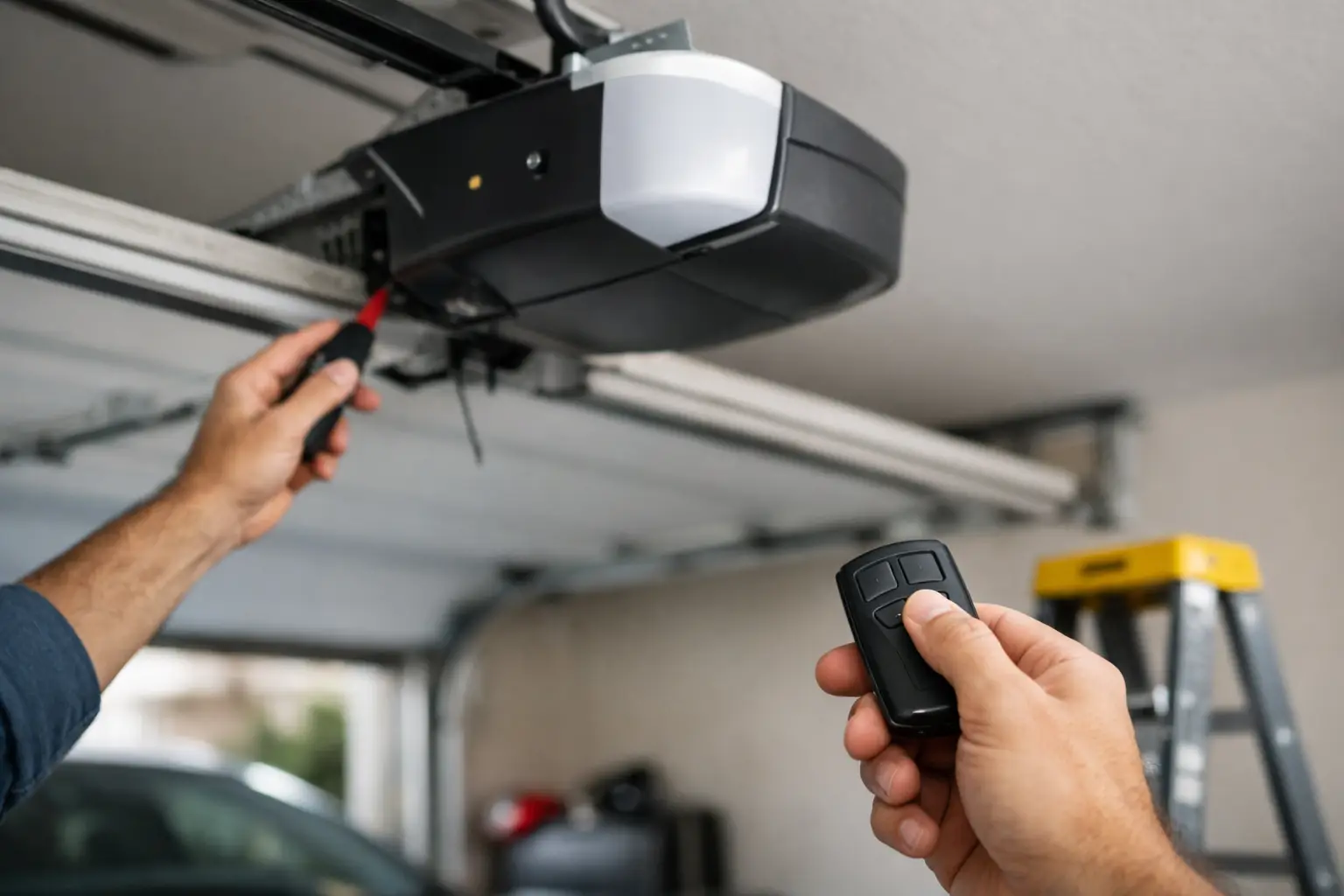
You press the wall button, hear a click, and nothing happens. Or the motor runs but the door does not move. When a garage door opener not working issue shows up, it can throw off your whole day fast - especially if your car is trapped inside or the door is stuck open.
Most opener problems come down to a handful of causes. Some are simple and safe to check yourself. Others point to a bigger garage door repair issue, like a broken spring or door imbalance, and that is where forcing the opener can make the damage worse.
Why a garage door opener stops working
A garage door opener is only one part of the system. The opener provides the lift assist, but springs do the heavy lifting. Rollers, tracks, cables, sensors, and the door itself all have to work together. That is why an opener can seem like the problem when the real cause is somewhere else.
In practical terms, there are three broad possibilities. The opener is not getting power, the opener is getting power but not receiving the right signal, or the opener is trying to work but the door system is blocking movement. Figuring out which category you are dealing with saves time and helps you avoid guessing.
Garage door opener not working: what to check first
Start with the easiest things before assuming the opener has failed.
Check the power source
If the opener is completely dead, look at the outlet first. A tripped GFCI, a flipped breaker, or a loose plug can shut everything down. If the outlet works for another device but the opener still has no lights or response, the problem may be inside the unit.
Sometimes homeowners overlook the lock switch on the wall control. Many wall panels have a vacation or lock feature that disables remotes. If your remotes suddenly stop working but the wall button still works, that switch is worth checking.
Replace the remote battery
A weak remote battery is one of the most common reasons people think the opener failed. If one remote does not work but another does, that is a good clue. If neither remote works, but the wall control does, the issue may be with batteries, programming, or the receiver.
Look at the photo-eye sensors
If the door starts down and then reverses, or refuses to close at all, check the safety sensors near the bottom of the tracks. Dirt on the lens, bumped brackets, or loose wires can break the beam. The opener reads that as an obstruction and stops the closing cycle.
This is especially common in garages where bikes, tools, trash cans, or kids' gear get moved around a lot. You do not need a major repair if the sensors just need to be cleaned or realigned. But if the sensor wiring is damaged, that is a different fix.
See if the opener has been disconnected
Every opener has an emergency release cord. If that cord was pulled, the opener may run while the door stays put. In that case, the carriage needs to be re-engaged so the opener can pull the door again.
This can happen after a power outage, after someone opens the door manually, or when a homeowner is trying to troubleshoot something else. It is simple when that is the only issue. It is not simple if the door was disconnected because it had become too heavy to lift.
When the opener is not the real problem
A lot of service calls that start with "my opener quit" turn out to be spring or door issues.
Broken spring
If you hear the opener hum but the door barely moves, feels extremely heavy, or slams shut, a broken spring is a likely cause. Springs counterbalance the weight of the door. Without them, the opener is trying to lift far more than it was designed to handle.
This is one of the biggest cases where it is better to stop and call for service. Continuing to run the opener can burn out the motor, strip gears, or bend parts. Spring repair is also not a safe DIY job.
Door off track or jammed rollers
If the door looks crooked, one side is higher than the other, or the rollers are not sitting right in the track, the opener may stop as a safety response. The same goes for damaged tracks, bent hinges, or obstructions in the roller path.
Here again, the opener is often doing exactly what it should do. It senses resistance and stops. Trying to force it can turn a smaller repair into a more expensive one.
Frozen or weather-related issues
Northern Colorado weather can create opener complaints that are really door problems. Ice at the bottom seal, swollen wood trim, stiff rollers, and cold-weather sensor issues can all affect operation. In winter, a door can freeze to the ground just enough to prevent normal opening.
If the opener strains but the door will not lift, do not keep hitting the button. Check the bottom edge first and look for obvious sticking or resistance.
Signs your opener may actually be failing
If the rest of the door system looks normal, the opener itself may be the issue.
A failing opener often gives warning signs before it quits for good. You may notice inconsistent response from the remotes, random reversing, grinding noises, delayed starts, flashing lights, or a motor that runs without moving the chain, belt, or screw drive correctly. Older units can also develop worn gears, failing circuit boards, or capacitor problems.
Age matters here. If your opener is more than 10 to 15 years old, repair may or may not make sense depending on the model, condition, and safety features. A simple gear or sensor repair is one thing. Replacing major internal components on an outdated unit is another. It depends on cost, parts availability, and whether the opener still meets your needs.
What you can safely do yourself
There is a line between reasonable homeowner troubleshooting and repairs that should be left alone.
Safe checks include confirming power, replacing remote batteries, cleaning sensor lenses, checking for blocked sensors, making sure the lock feature is off, and verifying the opener has not been disengaged. You can also visually inspect the springs and tracks from a distance.
What you should not do is adjust spring tension, remove bottom brackets, force a stuck door, or keep cycling the opener when the door is clearly too heavy or out of alignment. Garage doors are heavier than they look, and spring systems store enough force to cause serious injury.
When to call for garage door opener repair
If the opener has power but will not respond, if the motor runs and the door does not move, if the door reverses for no clear reason, or if you suspect a broken spring, it is time to get it checked. The same goes for a door stuck open, a vehicle trapped inside, or any problem involving damaged cables, off-track sections, or grinding noises.
For most homeowners, the real value in a service call is speed and clarity. A good technician can tell you whether you need a small opener repair, a spring replacement, a sensor fix, or a full opener replacement without turning it into a sales pitch. That matters when you are trying to get your home secured again or get to work on time.
If you are in Greeley, Evans, Windsor, or Ault, local response also matters. You want someone who knows the common weather issues, carries the parts, and can usually solve it in one visit instead of scheduling you out for days.
Repair or replace the opener?
This is where honesty matters. Not every opener problem calls for replacement.
If the unit is fairly new and the issue is a sensor, remote, gear, travel setting, or logic board problem, repair can be the smart move. If the opener is older, loud, unreliable, missing modern safety features, or repeatedly costing you money, replacement may be the better long-term choice.
A newer opener can also be worth it for reasons beyond basic function. Quieter operation, battery backup, Wi-Fi access, stronger lighting, and better security features make a real difference for many households. Still, if your current unit is otherwise solid, there is no reason to replace it just because one component failed.
Greeley Garage Door Repair by Mike sees this a lot on service calls: homeowners assume the whole opener is shot when the repair is actually straightforward. The opposite also happens, where an old opener keeps getting patched when replacement would save money and frustration over the next few years.
A quick word on emergencies
An opener issue is not always just an inconvenience. If your garage is your main entry door, if the door is stuck open overnight, or if a business overhead door is blocking daily operations, waiting can create bigger problems. Security, weather exposure, and safety all become part of the equation.
That is why the best next step is not always more troubleshooting. Sometimes the smartest move is stopping before more damage happens and getting a trained technician out to diagnose it properly.
When your garage door opener is not working, the goal is simple: get the right fix, not the most complicated one. A few basic checks can rule out the easy stuff, and after that, a clear diagnosis saves time, protects the door, and gets your day moving again.