
When your garage door opener quits, the problem usually shows up at the worst time - when you are late for work, trying to get kids in the car, or staring at a door that will not close before bed. For homeowners who need garage door opener repair Windsor residents can count on, the real question is not just what broke. It is how fast you can get it fixed safely, at a fair price, and without turning a small issue into a bigger one.
A bad opener can look like a dead motor, but that is not always the case. Sometimes the opener is fine and the issue is a worn gear, a sensor problem, a damaged trolley, loose wiring, or a door that has become too heavy for the opener to lift. That is why a good repair visit starts with a full look at the whole system, not just the box hanging from the ceiling.
What garage door opener repair in Windsor usually involves
Most opener problems fall into a few common categories. The opener may hum but not move the door. It may open halfway and stop. It may reverse for no clear reason, ignore the wall button, or work with the remote one day and fail the next. In some homes, the opener starts straining long before it fully breaks, which is why grinding noises, jerky movement, and delayed response should never be ignored.
Cold weather, power surges, worn parts, and simple age all play a role. In Northern Colorado, seasonal temperature swings can make existing wear show up faster. Plastic gears get brittle, sensors get knocked out of alignment, and hardware loosens over time. If your garage door is used as the main entrance to the house, the opener sees a lot more cycles than most people realize.
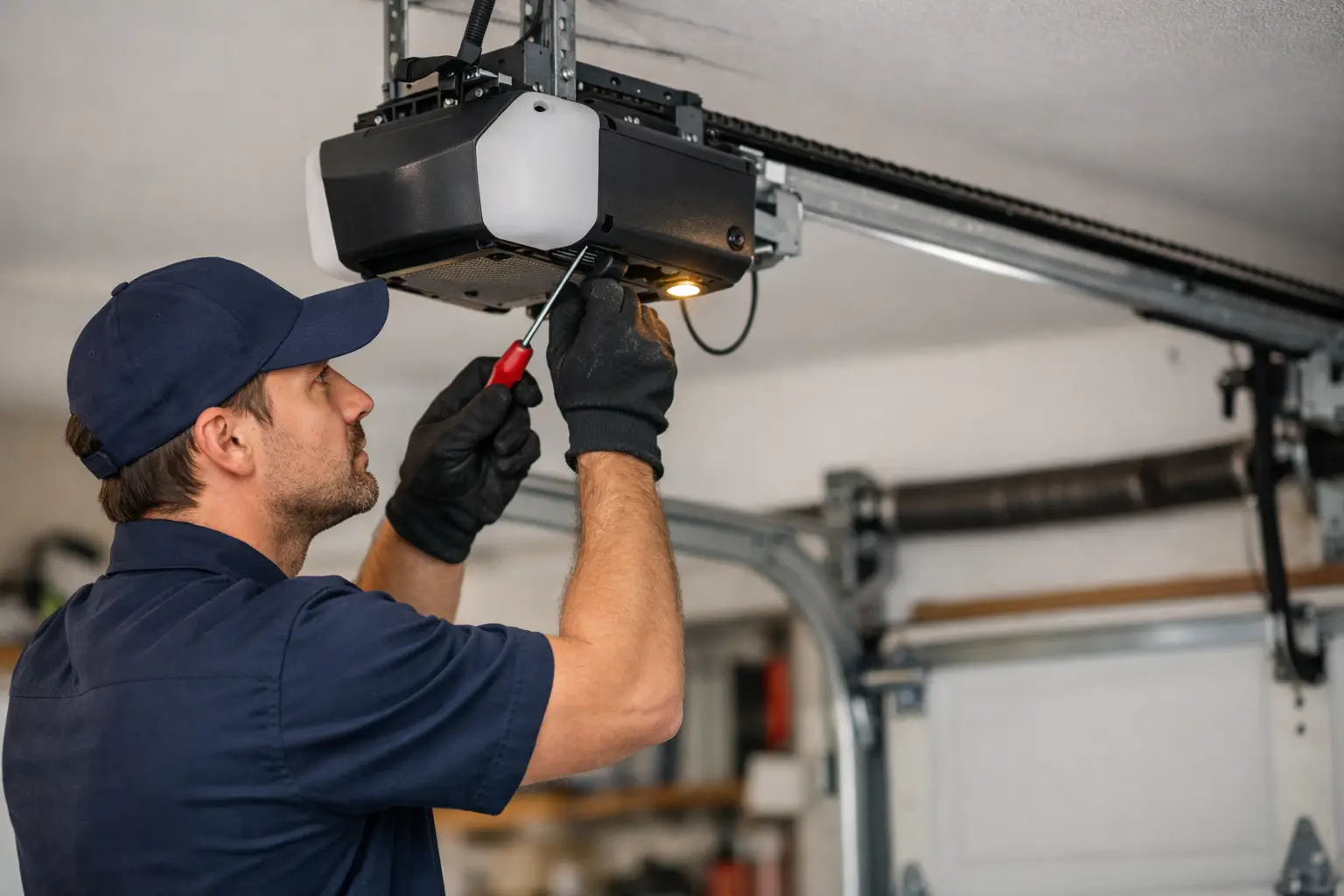
A proper repair call should check the motor unit, safety sensors, travel limits, force settings, rail assembly, trolley, remote programming, and the door balance itself. If the springs are weak or the rollers are binding, replacing opener parts alone may not solve the problem for long.
Signs you need garage door opener repair Windsor homeowners should not ignore
Some opener failures are sudden, but plenty give warning first. If you catch those signs early, the repair is often simpler and less expensive.
One of the biggest red flags is an opener that sounds louder than usual. Grinding, buzzing, clicking, or rattling often points to internal wear or loose hardware. Another common sign is inconsistent operation. If the remote works only when you are standing in one exact spot, the issue could be signal interference, a failing receiver, weak batteries, or a board problem.
A garage door that reverses before closing deserves quick attention. Sometimes the safety sensors are dirty or slightly out of line. Other times the opener is sensing too much resistance because the door itself is dragging. That matters because homeowners often blame the opener when the real issue is a mechanical problem elsewhere in the system.
Slow response is another clue. If you hit the button and the opener hesitates, strains, or only moves a few inches, do not keep cycling it over and over. That can burn out the motor or strip internal gears. The same goes for a door that slams shut or will not stay closed. Those symptoms can involve both opener settings and door hardware, and they should be checked together.
Repair or replace the opener?
This is where honesty matters. Not every broken opener needs to be replaced, but not every opener is worth repairing either.
If the issue is a sensor alignment problem, worn gear, logic board connection, remote programming issue, or damaged wall control, repair often makes good sense. It is usually faster and less expensive than a full replacement, especially if the opener is otherwise in decent shape.
Replacement starts making more sense when the opener is older, parts are no longer reliable, or the motor has failed after years of heavy use. Safety is part of the equation too. Older openers may lack modern safety and security features, including rolling code technology and battery backup options. If the opener is noisy enough to wake the house, a newer belt-drive system can be a major quality-of-life upgrade.
It also depends on what is happening with the door. If the opener failed because it has been lifting an unbalanced or damaged door, you need to fix the root problem first. Otherwise, a brand-new opener can end up under the same strain.
What a technician should check before quoting the job
A fair repair estimate should be based on inspection, not guesswork. That matters to homeowners because opener problems can overlap with spring, track, cable, and roller issues.
Before quoting the work, a technician should verify whether the opener is receiving power, whether the safety sensors are aligned and communicating, whether the drive system is intact, and whether the door moves by hand the way it should. A door that is too heavy or off balance can make a good opener look bad.
The technician should also check whether the limit and force settings are correct. If those are off, the opener may stop short, reverse unexpectedly, or press too hard against the floor. In some cases, the opener itself is fine and only needs adjustment. In others, the opener has been overcompensating for a door issue for months and internal parts are now worn out.
That is why transparent pricing matters. You want to know whether you are paying for a simple adjustment, a specific replacement part, or a complete opener changeout. No vague answers. No pressure. Just a clear explanation of what failed and what the fix will cost.
Common garage door opener parts that fail
The motor gets most of the blame, but many service calls involve smaller components. Drive gears wear down. Trolleys crack. Chains loosen. Belts fray. Capacitors fail. Circuit boards can stop responding after a surge or age-related wear. Wall buttons go bad. Sensor wires get nicked or pulled loose.
Remote problems are common too. Sometimes it is just a battery. Sometimes the remote needs to be reprogrammed. Sometimes the opener receiver is failing, which can look like a remote issue until someone tests the full system.
There is also the human factor. Vehicles bump sensors, storage items block the beam, ladders hit the rail, and DIY adjustments throw off travel settings. None of that is unusual. What matters is figuring out whether the opener needs a minor correction or a more serious repair.
How long should opener repair take?
For many homeowners, speed matters as much as price. If your car is trapped inside or the door is stuck open, you need an answer quickly.
A straightforward opener repair can often be completed in one visit if the technician arrives with common parts on the truck. Sensor fixes, gear replacements, wall control issues, remote programming, and many rail or trolley repairs do not usually require a drawn-out process. More complex situations can take longer, especially if the opener is obsolete or the repair uncovers related door problems.
This is one reason local service matters. A local company is more likely to know the area, respond quickly, and carry the kinds of parts commonly needed for homes in Windsor and nearby communities. You are not stuck waiting on a national dispatch chain to decide when someone can come out.
Cost depends on the problem, not just the opener brand
Homeowners naturally want a price up front, and that is fair. But opener repair pricing depends on whether the fix is electrical, mechanical, or a full replacement issue.
A simple sensor or programming fix will cost less than a gear assembly repair or logic board issue. Replacing an opener entirely is a bigger job, but in some cases it is the better value if the current unit is old, unreliable, or missing key safety features. Brand matters somewhat, but condition matters more. A well-supported major brand with one bad component is often repairable. An older unit with repeated failures may not be worth putting more money into.
If you own rental property or manage a small commercial building, downtime can be even more costly than the repair itself. In those cases, the best option is often the one that restores dependable access fast, even if replacement costs more than a patch repair.
When not to try fixing it yourself
There are a few garage door tasks homeowners can handle safely, like replacing remote batteries or making sure the sensor lenses are clean. Beyond that, opener repair can get risky quickly.
Electrical components, force settings, moving parts, and door balance all affect how the system operates. If the opener is connected to a door with spring problems, forcing a DIY fix can damage the opener or create a safety hazard. That is especially true if the door is crooked, heavy, or making sharp snapping noises.
If you are not sure whether the problem is the opener or the door itself, that is usually the moment to stop and have it inspected. A reliable technician will tell you what is repairable, what needs replacement, and what can wait.
At the end of the day, a garage door opener should do one simple job well - open when you need it, close securely when you are done, and do both without second-guessing. If yours is acting up, getting it checked sooner usually means a cleaner repair, less stress, and a safer door by tonight.