
A garage door opener review should do more than name a popular brand or point to the highest horsepower number on the box. Your opener has one job that affects your whole day: get a properly balanced garage door moving safely, quietly, and reliably when you need to leave for work, bring in groceries, or get your vehicle out during a Colorado cold snap.
The right opener depends on your door’s weight, how your garage connects to the house, how often the door runs, and whether the door itself is in good repair. A strong opener cannot make up for worn springs, frayed cables, a bent track, or a door that is too heavy to lift by hand. Starting with the full system saves money and prevents a new opener from being asked to do a job it was never designed to handle.
Garage Door Opener Review: What Actually Matters
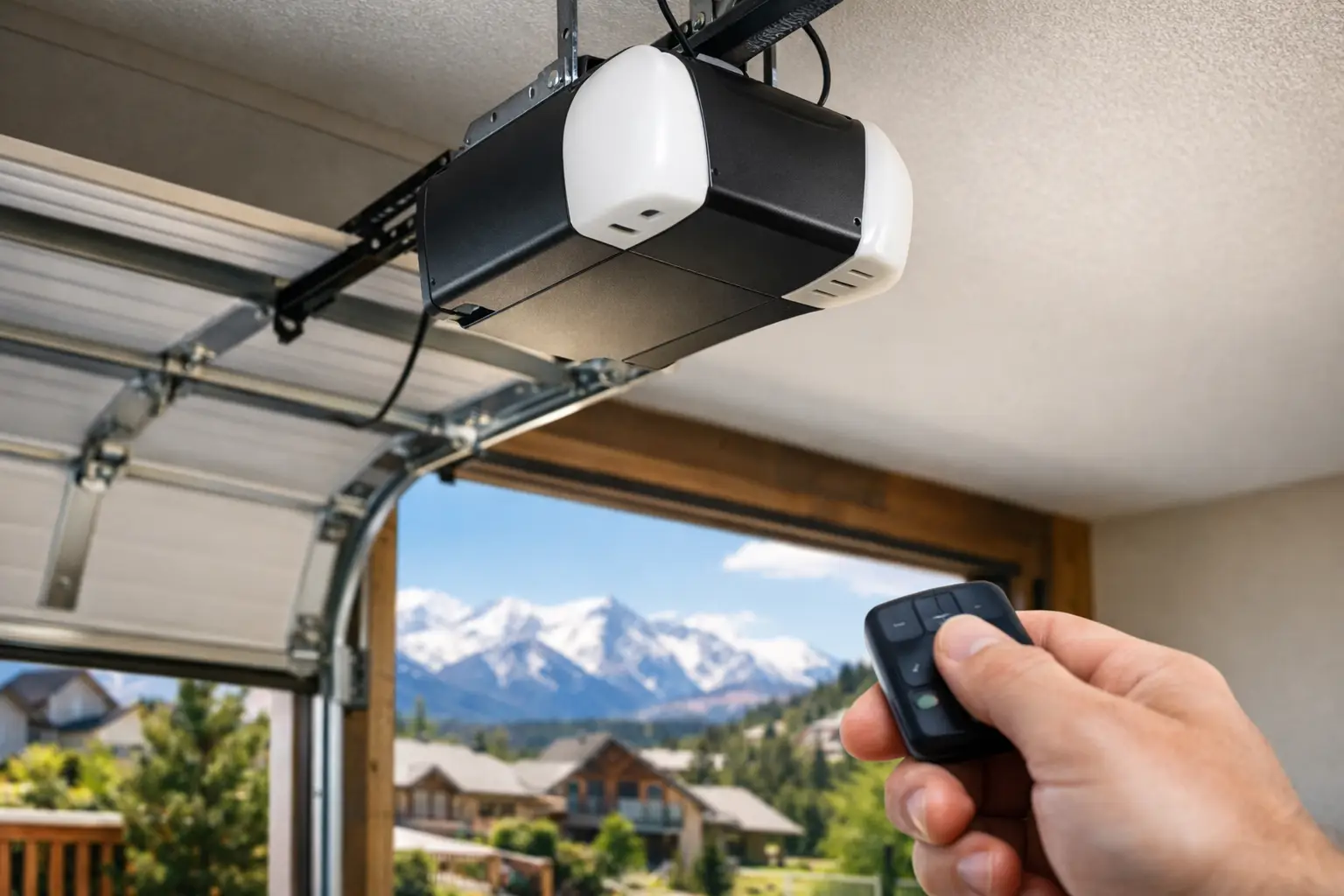
Most homeowners are choosing among a belt-drive, chain-drive, screw-drive, or wall-mount opener. All can be a good fit. The best choice is the one that matches the door and the way your household uses the garage.
A belt-drive opener is usually the quietest option. It uses a reinforced rubber belt instead of a metal chain, which makes a noticeable difference when there is a bedroom, office, or living space above or beside the garage. Belt-drive units typically cost more than basic chain-drive models, but many families consider the lower noise worth it.
A chain-drive opener uses a metal chain to move the trolley. It is a dependable, familiar choice and is often a practical match for heavier doors or detached garages where noise is less of a concern. Chain drives do need occasional attention because vibration, lubrication, and chain tension can affect performance over time.
Screw-drive openers move the door using a threaded steel rod. They have fewer moving parts than some other designs, but temperature changes can affect how they operate. That does not automatically rule them out in Northern Colorado, but it does make proper installation and maintenance more important.
Wall-mount openers, also called jackshaft openers, attach beside the garage door rather than hanging from the ceiling. They free up overhead space for storage, tall vehicles, or a clean garage layout. They are especially useful when a standard ceiling-mounted opener will not fit because of high-lift tracks, low headroom, or obstructions. The trade-off is price and compatibility. Your garage needs the right side clearance and a properly configured torsion spring system.
Horsepower Is Not the Whole Story
Many people shop by horsepower first. It matters, but it is not the complete answer. Modern openers may use horsepower ratings or DC motor classifications, and a properly balanced door should not require an oversized motor to operate.
For a standard, well-maintained residential door, a quality opener with the appropriate lifting capacity is usually plenty. For an insulated double door, a solid wood door, a carriage-house door, or a commercial application, the opener must be matched more carefully to the door’s size, weight, cycle count, and spring setup.
Here is the key point: the springs carry the door’s weight. The opener guides the door up and down. If the door feels heavy when the opener is disconnected, or it will not stay halfway open by hand, the problem may be the springs or door hardware. Installing a more powerful opener without correcting that issue can burn out the motor, strip gears, or create a safety problem.
Safety Features Worth Paying For
Every modern residential garage door opener should include photo-eye safety sensors near the bottom of the tracks. These sensors send an invisible beam across the opening. If a child, pet, bicycle, or trash can breaks that beam while the door is closing, the door should reverse.
Test the sensors monthly by closing the door with a safe object in the beam path. The door should stop and reverse before making contact. Also test the door’s reversing function by placing a flat piece of wood on the floor under the door. If either test fails, stop using the opener until it can be inspected.
Battery backup is another feature that deserves serious consideration. During a power outage, it allows you to operate the opener for a limited number of cycles. That can be the difference between getting your car out and being stuck at home when the power is down. It is particularly useful for garages that serve as the main daily entrance to the house.
Smart controls can be convenient, but they are not essential for every homeowner. App control can alert you if the garage door has been left open and allow you to close it remotely. Some systems support delivery access, guest controls, and activity notifications. Those features are helpful if you travel often or manage a rental property, but they also depend on a stable Wi-Fi connection and should not replace basic habits like checking that the door is closed.
A bright LED light, motion detection, and an exterior keypad are smaller features that make daily use easier. For a household with several drivers, a keypad can be more useful than another remote sitting loose in a vehicle.
Compatibility Comes Before Installation
Before selecting an opener, check the condition and style of the door. Sectional overhead doors are compatible with most residential openers, but specialty setups may need a different approach. Low-headroom hardware, high-lift tracks, one-piece doors, oversized doors, and commercial rolling steel doors each have different requirements.
The garage ceiling also matters. A standard rail opener needs enough overhead room and a solid mounting location. If there is exposed ceiling damage, limited clearance, or a storage system in the way, a wall-mount unit or a different rail configuration may make more sense.
Do not overlook the electrical outlet. The opener should be plugged into a properly installed outlet near the motor. Extension cords are not a permanent solution. The photo eyes, wall button, emergency release, and rail alignment all need to be set correctly as well. A door can look like it is working after a rushed installation while still having unsafe force settings or poorly aligned sensors.
When Repair Makes More Sense Than Replacement
Not every opener problem means you need a new unit. If the motor hums but the door does not move, a stripped gear, broken trolley, worn sprocket, or disconnected emergency release may be the cause. If the remote will not work, the issue could be a dead battery, sensor interference, programming problem, or failed receiver.
Replacement is usually the smarter move when an opener is older, repeatedly failing, lacking modern safety features, or facing an expensive motor or circuit-board repair. Parts availability matters too. Putting significant money into an obsolete unit can be frustrating when another component fails a few months later.
A technician should inspect the door balance, springs, rollers, tracks, cables, and opener before giving a recommendation. That is how you avoid replacing an opener when the real problem is a broken spring, and avoid repairing an old opener that is no longer worth the cost.
What a Proper Opener Installation Includes
A good installation is not just hanging a motor from the ceiling. The opener must be secured to appropriate framing, the rail needs to be level and aligned, and the door arm needs the correct connection point. The technician should test the door balance first, set the travel limits, adjust the closing force, align the photo eyes, program remotes and keypads, and verify that the emergency release works.
The final test should be simple: the door opens fully, closes evenly, reverses when the safety system is triggered, and does not shake, bind, or make new grinding noises. If the door is loud before the new opener goes in, worn rollers or dry hinges may need attention too. A quieter opener cannot hide noisy door hardware.
For homeowners in Greeley, Evans, Windsor, and Ault, weather adds another practical consideration. Cold temperatures can expose weak batteries, stiffen old lubricants, and make worn rollers or tired springs more obvious. Choosing a dependable opener is helpful, but regular door maintenance is what keeps the whole system ready for daily use.
If your garage door is stuck, unusually loud, or unreliable, start with the condition of the door before shopping for features. The right opener should feel like a quiet convenience in the background, not another household problem waiting to happen.