
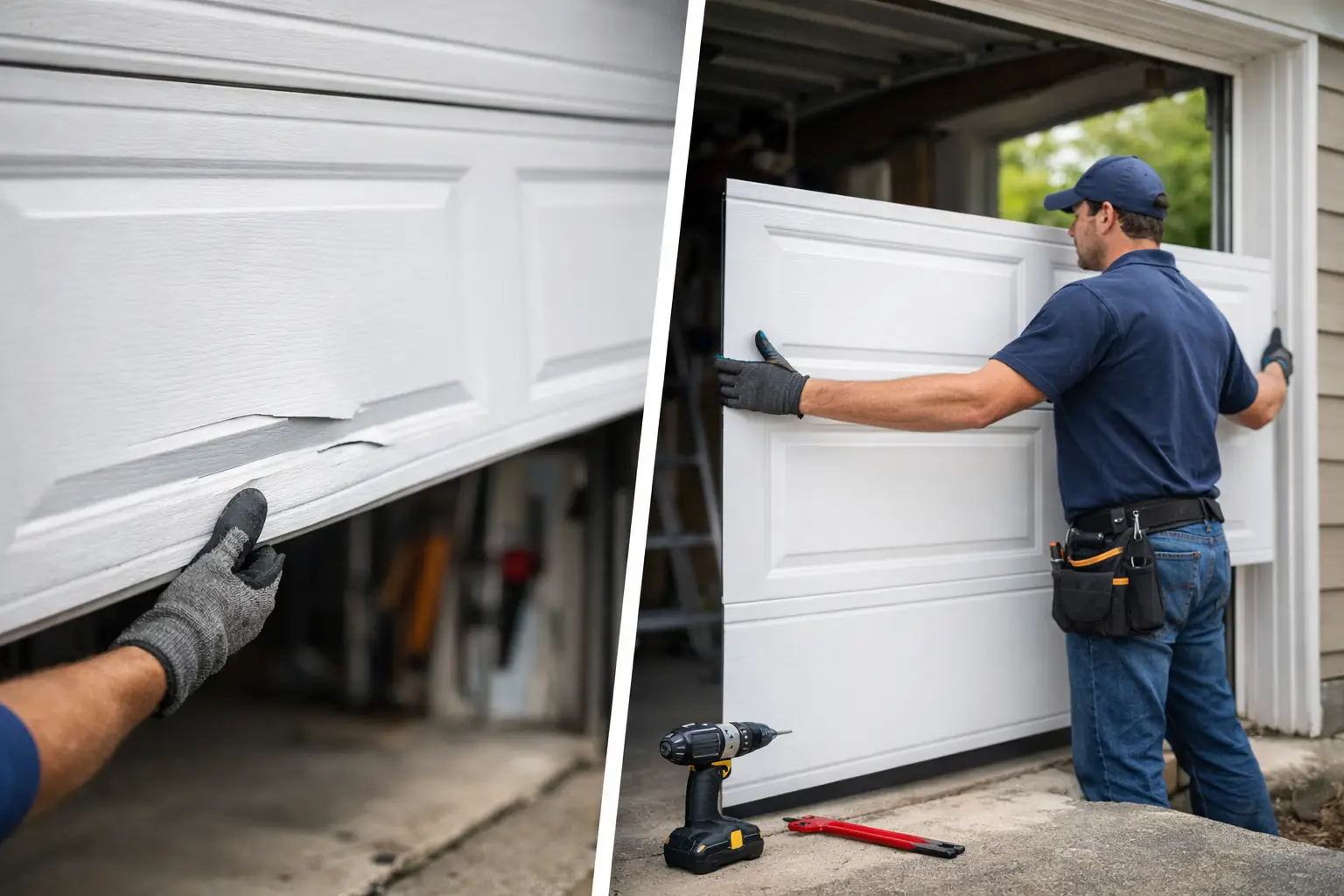
A garage door gets hit once - by a bumper, a basketball, hail, or a trash can on a windy day - and suddenly the whole front of the house looks off. The first question most homeowners ask is simple: is garage door panel replacement enough, or are you looking at a full new door? The honest answer is that it depends on the age of the door, the extent of the damage, and whether matching panels are still available.
When garage door panel replacement makes sense
Panel replacement is often the right call when the damage is limited to one or two sections and the rest of the door is still in solid shape. If the tracks are straight, the springs are sized correctly, the opener has not been strained, and the door still has years of useful life left, replacing a panel can be the most cost-effective option.
This is especially true when the damage is cosmetic with only minor structural impact. A dented lower panel from a low-speed bump may look bad, but the rest of the system might be fine. In that case, swapping the damaged section can restore both appearance and function without the cost of a complete replacement.
For newer doors, this route is usually more realistic. Manufacturers change designs, embossing patterns, colors, insulation types, and window layouts over time. If your door is relatively recent, there is a better chance the right panel can still be sourced and installed without creating a mismatch.
When a full door replacement is the smarter move
There are plenty of cases where garage door panel replacement sounds cheaper at first, but a full replacement ends up making more sense. If the door is older, faded, discontinued, or already has multiple worn parts, replacing one panel may only solve part of the problem.
A common issue is panel availability. Even if the manufacturer still exists, the exact model may be gone. You might be able to find a close match, but close is not always good enough on the front of your home. A slightly different color, texture, or window frame can stand out more than homeowners expect.
Structural damage is another line you do not want to ignore. If the impact bent the hinges, tweaked the track, threw the door out of alignment, or caused the rollers to bind, replacing a panel alone will not fix the real problem. The same goes for wood rot, rusted sections, or doors that are already sagging. At that point, putting money into one section can turn into patchwork on a failing system.
If the repair cost gets too close to the cost of a new door, replacement is usually the better investment. You get a fresh warranty, better insulation if you want it, and the confidence that all components are working together the way they should.
What technicians look at before recommending panel replacement
A good technician does more than look at the dent. The panel is only one part of a moving system, and damage can travel farther than it appears from the driveway.
First comes the door model and availability check. If a matching panel cannot be ordered, that changes the recommendation right away. After that, the technician looks at alignment, hinge points, track condition, roller wear, and whether the opener or spring system has been stressed by the damaged section.
The bottom panel deserves extra attention because it takes the most abuse and often connects near the weather seal. If that section is crushed or twisted, it can affect how the entire door sits when closed. On insulated doors, internal layers may be compromised even when the outside skin does not look terrible.
This is also where honest pricing matters. Some companies push full replacement on every damaged door. Others promise a cheap panel swap without explaining the risks. The right approach is straightforward: inspect the whole door, explain what is damaged, and show where the money is best spent.
The hidden costs of waiting too long
A bent panel is not always just an eyesore. It can put uneven pressure on hinges, rollers, and the opener. Over time, that strain can lead to louder operation, jerky movement, and parts wearing out faster than they should.
If the damaged section affects how the door seals, you can also end up with bigger gaps along the edge. That means wind, dust, moisture, and cold air getting into the garage. In Northern Colorado, weather matters. A door that no longer closes evenly can make your garage less secure and less efficient.
There is also the safety side. A sectional garage door is heavy. When one panel is compromised, the load across the system may no longer be balanced correctly. That does not always cause immediate failure, but it can increase the chance of the door going off track or putting added stress on springs and cables.
Can you replace just one garage door panel?
Sometimes yes, and sometimes no. That is the part that frustrates homeowners, because from a distance it seems like a simple piece-by-piece fix. But garage doors are built in sections that have to match in size, thickness, design, and connection points.
If one panel can be matched exactly and the rest of the system is healthy, replacing just that section is often a practical repair. If the new panel will not match, if the damage has spread, or if the old door is near the end of its life, replacing only one section may not be worth it.
That is why a real inspection matters more than a photo estimate. Pictures help, but they do not always show warping, track movement, opener strain, or hinge damage.
How the process usually works
Once the door is inspected, the next step is confirming whether the correct panel is available. If it is, the damaged section can be removed and replaced, then the entire door is reassembled, adjusted, and tested for smooth travel.
That testing step matters. A proper job includes checking balance, track alignment, roller movement, hinge condition, and opener settings. If a panel is installed but the door is not tuned afterward, you can end up with new problems right away.
If the panel is not available, a technician should tell you that plainly and lay out the next best option. For many homeowners, that means comparing the cost of piecemeal repair against a full new door that comes with updated materials and warranty coverage.
What homeowners should ask before approving the work
You do not need to know every garage door part to make a smart decision. You just need clear answers. Ask whether the new panel will truly match, whether other components were damaged, and how much useful life the rest of the door has left.
You should also ask what happens if additional problems show up during the repair. A dependable company will explain that upfront instead of surprising you later. Clear pricing, a realistic timeline, and warranty information should all be part of the conversation.
If the answer feels rushed or pushy, that is usually a bad sign. You want someone who treats it like your home, not a sales quota.
The bottom line on garage door panel replacement
Garage door panel replacement can be a smart way to save money when the damage is limited and the door is still worth saving. It is not the right fix for every situation, though, especially when the door is older, mismatched, or structurally compromised.
The best next step is simple: have the whole door checked by a local technician who will give you a straight answer. Around Greeley, Evans, Windsor, and Ault, that kind of honest assessment matters more than a quick guess. A good repair should leave you with a door that looks right, runs safely, and does not turn into a second repair a month later.
If your panel damage happened recently, do not wait for the rest of the door to start complaining. Getting it looked at early usually gives you more options and a better outcome.