

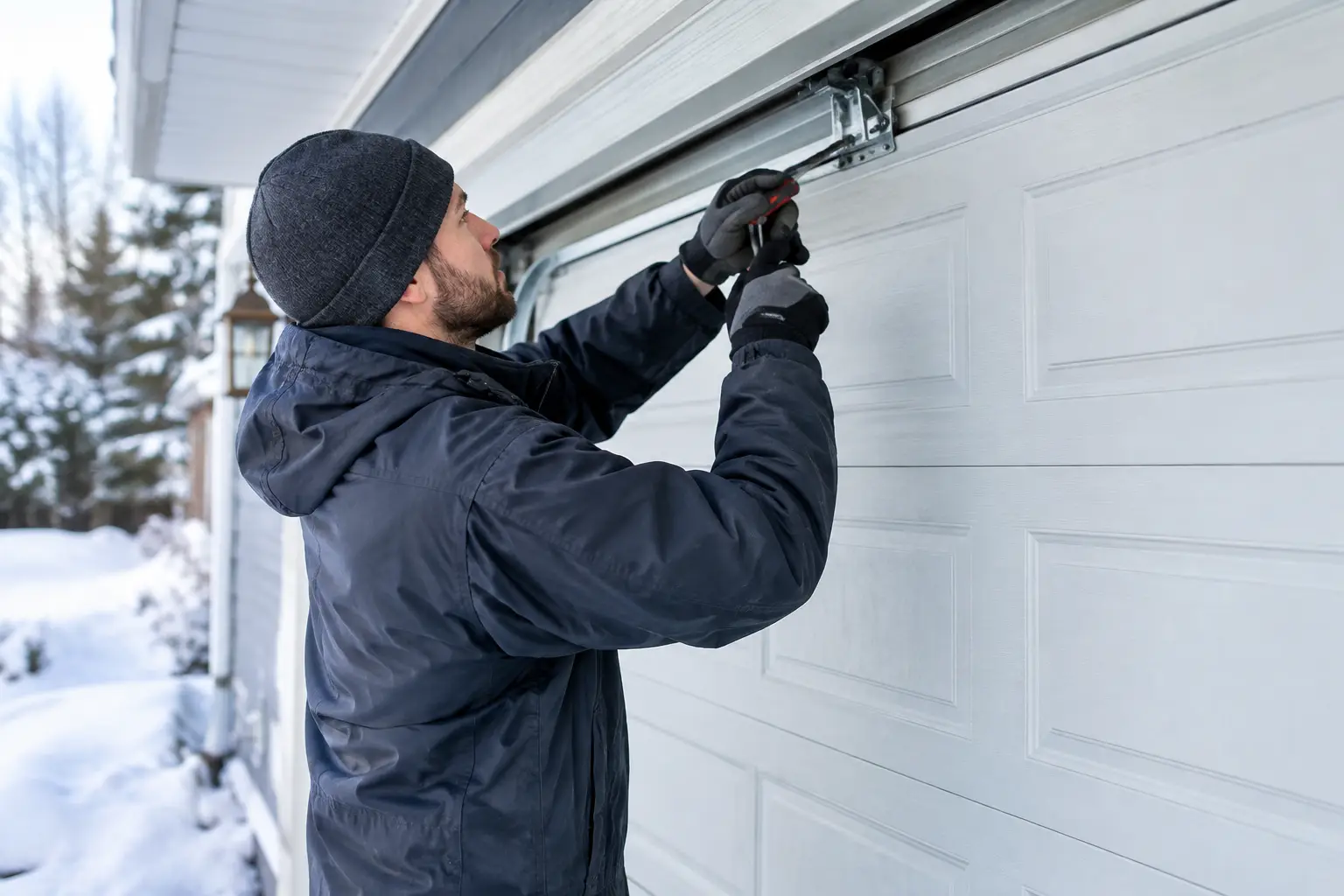
The first hard freeze has a way of finding the weak spot in a garage door. A spring that was merely noisy in October can break when temperatures drop. A door that hesitated on damp mornings can refuse to open when you are late for work. That is why garage door repair before winter is less about checking off a home-maintenance task and more about protecting everyday access to your home.
For homeowners in Greeley, Evans, Windsor, and Ault, the goal is simple: find small problems while the door is still operating safely and get clear answers before cold weather turns a minor repair into an urgent call.
Why Winter Is Hard on Garage Doors
A garage door is a moving system with heavy panels, springs under extreme tension, rollers, cables, tracks, hinges, weather seals, and an opener that all need to work together. Cold weather does not automatically cause every failure, but it can make existing wear show up fast.
Metal parts contract in lower temperatures. Lubricant can thicken or stop doing its job well. Old rollers may become louder and less smooth. A brittle or flattened bottom seal lets in cold air, blowing snow, moisture, and pests. If your garage shares a wall with living space, that draft can make nearby rooms noticeably colder.
Winter weather also raises the stakes when a door gets stuck. A door that will not close leaves belongings exposed and can create a security issue. A door that will not open can trap a vehicle inside. For a business, an unreliable overhead door can delay deliveries, keep staff waiting outside, or interrupt the workday.
Warning Signs to Handle Before the First Freeze
You do not need to be a garage door expert to notice when something has changed. Pay attention to what the door sounds like, how it moves, and whether it closes evenly.
A door that shakes, jerks, or gets louder on the way up and down may have worn rollers, loose hardware, track trouble, or an opener working harder than it should. Grinding, popping, or a loud bang are not sounds to ignore. A bang can indicate a broken spring, and continuing to run the opener afterward can cause additional damage.
Look at the door from inside the garage while it closes. If one side drops lower, the door appears crooked, or a cable looks loose or frayed, stop using it and schedule service. Cables can be under dangerous tension, especially when a spring has failed. They are not a safe do-it-yourself repair.
Other signs worth addressing before winter include:
- The door reverses before reaching the floor or will not stay closed.
- The opener hums, but the door does not move.
- The remote only works from very close range or works inconsistently.
- Daylight is visible around the bottom or sides of the closed door.
- The door feels unusually heavy when operated manually.
That last point matters. A properly balanced garage door should not feel like it is fighting you. If it is heavy, the springs may no longer be carrying their share of the weight. Do not force it open or try to replace springs yourself. Torsion springs store enough energy to cause serious injury when handled incorrectly.
What a Pre-Winter Garage Door Check Should Cover
A useful seasonal inspection is more than spraying lubricant on the tracks. In fact, tracks usually should be clean rather than heavily lubricated. The important work is checking the door as a complete system and correcting the part that is causing the problem.
A technician can inspect spring condition and door balance, rollers and hinges, cables and drums, track alignment, fasteners, safety sensors, opener settings, and the condition of the weather seal. The photo-eye sensors near the bottom of the tracks deserve attention too. If they are dirty, misaligned, or blocked, the door may reverse unexpectedly instead of closing.
The opener needs its own check. Test the wall button, remotes, keypad, safety reversal, and force settings. An opener that strains or only works sometimes may need an adjustment, a replacement gear, a new logic board, or a full replacement depending on its age and condition. Sometimes the opener is not the real problem at all - it is reacting to a heavy, unbalanced door.
Weather sealing is the practical finishing step. A worn bottom seal will not usually stop the door from operating, but replacing it can reduce drafts, keep out windblown debris, and make the garage more comfortable. If the door itself is damaged, thin, or poorly insulated, it may be worth comparing repair costs with an insulated replacement. The right choice depends on the door's condition, the garage's use, and whether it connects directly to conditioned living space.
Garage Door Repair Before Winter Can Prevent Bigger Costs
Putting off a noisy door may feel reasonable when it still opens. The trade-off is that worn parts often put stress on other parts. A failing roller can affect the track. A weak spring can make the opener work beyond its intended load. A door that is out of alignment can wear cables and hinges faster.
Early repair is not always the cheapest option in the moment, but it can prevent a more complicated failure later. It also gives you time to make a decision instead of choosing under pressure when the garage door is stuck open on a freezing night.
A good repair visit should include a straightforward explanation of what failed, what needs attention now, and what can reasonably wait. Ask for upfront pricing before work begins. You should not have to guess what the repair will cost or agree to a replacement when a dependable repair is still the sensible option.
When Repair Makes Sense and When Replacement Is Better
Most garage door problems can be repaired. Broken springs, damaged cables, worn rollers, bent tracks, sensor issues, and many opener problems are common service calls. If the door panels are in good shape and the system can be restored safely, repair is often the practical choice.
Replacement may make more sense if there is major panel damage, repeated breakdowns, severe rust, poor insulation, or an older door that no longer fits your needs. For example, a homeowner who uses the garage as a workshop may benefit more from an insulated door than from repeatedly patching an old, uninsulated one.
Commercial property owners should be especially careful about recurring issues. A high-cycle door has different demands than a residential door, and downtime has a real cost. If a rolling steel or sectional overhead door is slow, noisy, or difficult to close, scheduling service before winter can help prevent an access problem during a busy day.
Safe Steps You Can Take at Home
Homeowners can do a few simple checks without taking risks. Keep the photo-eye sensors clean, clear leaves and debris from around the tracks, replace remote batteries if performance is inconsistent, and look for visible gaps in the weather seal. You can also listen for new noises and watch for uneven movement.
Leave spring adjustments, cable repairs, track straightening, and major opener work to a trained technician. Never pull a disconnected emergency release when the door is open unless you understand that the door could come down quickly. Never loosen hardware attached to the spring system.
If the door is stuck open, off its track, hanging unevenly, or has a visibly broken spring, stop using it. Keep children and pets away from the area, do not park beneath the door, and call for service. Those are situations where trying to save time can make the repair more dangerous and more expensive.
Get Ahead of the Cold, Not Stuck in It
A garage door does not need to be completely broken to deserve attention. A few minutes spent noticing a new sound, a draft, or a slow opener can give you the chance to schedule repair on your terms. Greeley Garage Door Repair by Mike provides local service with clear pricing and workmanship backed by a lifetime warranty, so you can head into winter knowing the door you rely on every day is ready to do its job.