

That rattling, grinding sound when the door goes up is usually not something to ignore for another month. In many homes, garage door roller replacement becomes necessary right after the first clear signs show up - jerky movement, extra noise, or a door that looks like it is dragging through the tracks. Rollers are small parts, but when they wear out, the whole system starts working harder.
A lot of homeowners first assume the opener is the problem. Sometimes it is, but worn rollers are one of the most common reasons a garage door starts sounding rough or moving unevenly. If you catch it early, the fix is usually straightforward. If you wait too long, bad rollers can wear down tracks, strain the opener, and put more pressure on hinges and springs.
When garage door roller replacement makes sense
Rollers help guide the door through the tracks every time it opens and closes. Over time, they wear down from daily use, weather, dust, and lack of lubrication. In Northern Colorado, wind, cold snaps, and blowing debris do not help. Even a quality door can start acting up if the rollers are old or the bearings are breaking down.
The most obvious sign is noise. Steel rollers especially can get loud as they age, and a worn bearing can create a grinding or squealing sound that gets worse week by week. You may also notice the door hesitating, shaking, or looking slightly crooked as it moves. Sometimes one roller is visibly cracked, chipped, or sitting wrong in the track.
There is also the less obvious issue - extra strain on everything else. When rollers stop moving smoothly, the opener has to pull harder. The door may not stay aligned the way it should. That can lead to track wear, loose hardware, and a system that feels unreliable when you need it most.
Not all rollers are the same
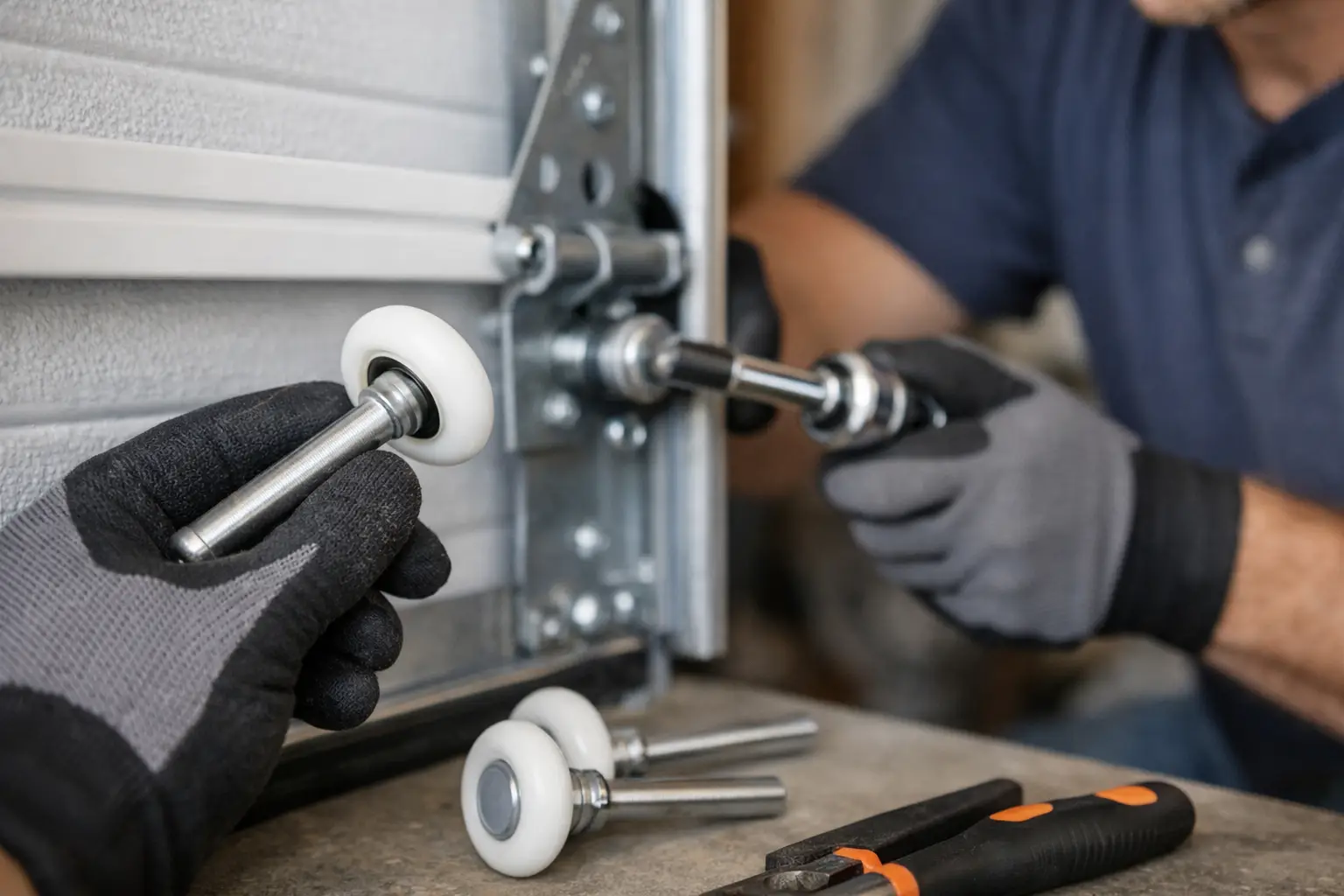
One reason pricing and repair recommendations can vary is that garage door rollers are not all built alike. Basic plastic rollers are common on builder-grade doors, but they usually do not last as long. Steel rollers are durable, though they can be noisier. Nylon rollers tend to be the upgrade many homeowners prefer because they run quieter and generally give smoother operation.
That does not mean every door needs the most expensive option. It depends on the age of the door, how often it cycles, whether it is attached to a living space, and whether the homeowner cares most about quiet operation or keeping the repair budget lower. For a detached garage with light use, one option may be perfectly fine. For a main family garage door that opens several times a day, better rollers usually pay off.
Commercial doors are a separate conversation. Heavier doors and high-cycle use call for parts designed for that workload. Using the wrong rollers on a commercial setup can turn a short-term repair into a repeat problem.
What causes rollers to fail early
Time is part of it, but early failure often comes down to three things: cheap parts, poor maintenance, or hidden track and balance issues. If a door is out of alignment, even good rollers can wear unevenly. If the tracks are bent or the springs are not doing their share of the lifting, the rollers take more abuse than they should.
Lack of lubrication matters too, but it is not a cure-all. People sometimes spray everything heavily and expect the noise to disappear. If the roller stem is worn, the wheel is cracked, or the bearing is failing, lubricant might quiet it for a few days, but it will not solve the actual problem.
This is also why replacing only the loudest roller is not always the best move. If one is failing because of age, the others are often close behind. In many cases, replacing the full set makes more sense than chasing one bad roller at a time.
Can you replace garage door rollers yourself?
Sometimes, but this is where the details matter.
A homeowner may be able to replace certain rollers on an extension spring door or on a door where the work can be done without disturbing high-tension components. But not every roller is equally easy or equally safe to access. On many doors, especially around the bottom fixtures or anywhere near torsion spring tension, this job can quickly move from basic maintenance to a serious safety risk.
That is the part many online tutorials gloss over. Garage doors are heavy. Springs are under extreme tension. A mistake during repair can lead to injury or create a much bigger door problem than the original worn roller. If the door has come off track, if the roller is jammed hard in the track, or if the bottom corner hardware is involved, it is smart to stop there and bring in a trained technician.
For most homeowners, the real question is not just whether they can do it. It is whether they want to spend part of their day wrestling with a heavy door, guessing at part sizes, and risking damage to the track or hinges to save a service call.
What professional garage door roller replacement usually includes
A proper service visit should be more than swapping out a few wheels and leaving. The technician should inspect the track condition, hinge wear, door balance, and opener strain while the system is already being serviced. That matters because rollers often wear out alongside other parts, and replacing them without checking the rest of the system can leave the main cause untouched.
In a straightforward job, the old rollers are removed, the new set is installed, moving hardware is checked, and the door is tested for smooth travel. If the tracks need adjustment or the door is not balanced correctly, that should be addressed too. The goal is not just a quieter door. The goal is a door that moves safely and consistently.
This is also where local experience helps. A technician who works on doors every day in Greeley, Evans, Windsor, and Ault has likely seen the same patterns many times - builder-grade rollers wearing out early, track issues after wind events, and opener strain that started with ignored roller problems. That kind of experience usually leads to a faster diagnosis and fewer repeat visits.
Cost depends on the door and the parts
Homeowners usually want a number first, and that is fair. The price for garage door roller replacement depends on the number of rollers, the roller type, the door size, and whether there are related issues like bent track, worn hinges, or balance problems. A simple residential replacement with standard parts costs less than a heavier insulated door with upgraded nylon rollers or a commercial setup.
The cheapest quote is not always the best value. Low pricing can mean low-grade rollers that wear out too soon, or it can mean the company is only replacing the obvious failed part without checking the rest of the door. Good service should come with clear pricing up front, a realistic explanation of what is needed, and no pressure to replace the entire door if the real issue is just worn hardware.
That straight answer is what most people are looking for anyway. If the rollers are the problem, fix the rollers. If there is more going on, explain it plainly.
Repair now or wait a little longer?
If the door still opens, it is tempting to put this off. Sometimes you can. But there is a difference between a mildly noisy door and one that is starting to bind, shake, or travel unevenly. Once rollers begin failing badly, the risk of the door coming out of alignment goes up. At that point, the repair can get more expensive fast.
A door stuck halfway open is not just inconvenient. It can affect security, daily access, and in some cases safety. That is especially true when your garage is the main way into the house or when a business depends on a working overhead door to keep operations moving.
If the door sounds rough but still works, scheduling service sooner usually keeps the repair simpler. If it is jerking, off track, or refusing to move normally, it is time to stop using it until someone can inspect it.
A quieter door is only part of the benefit
Most people notice the noise first, but smoother rollers do more than quiet things down. They reduce wear on the opener, help the door track better, and make daily operation feel normal again. That matters more than it sounds. A garage door is one of the biggest moving systems in your home, and when it starts acting unpredictable, it adds stress every single day.
At Greeley Garage Door Repair by Mike, we see a lot of calls that start with, "It just got really loud all of a sudden." Sometimes the fix is as simple as replacing worn rollers before they cause larger issues. Getting ahead of that wear usually costs less than waiting for a track repair, opener problem, or off-track emergency.
If your garage door is chattering, shaking, or dragging through its tracks, trust what you are hearing. Small hardware problems have a way of turning into bigger ones when the door keeps cycling under strain. Getting it checked now can save you money, hassle, and one very bad morning when the door decides it is done moving.