
Your garage door closes halfway, then pops back open like it hit an invisible wall. Or the opener lights blink and the door refuses to move at all. In a lot of homes, garage door safety sensor problems are behind that kind of headache.
These sensors do one very specific job. They stop the door from closing if something, someone, or a pet is in the opening. That safety feature matters, but it also means a small issue at the sensor can shut down the whole system. The good news is that many sensor problems are simple. The bad news is that some signs that look minor can point to wiring trouble, track movement, or opener issues that need a real repair.
What garage door safety sensors actually do
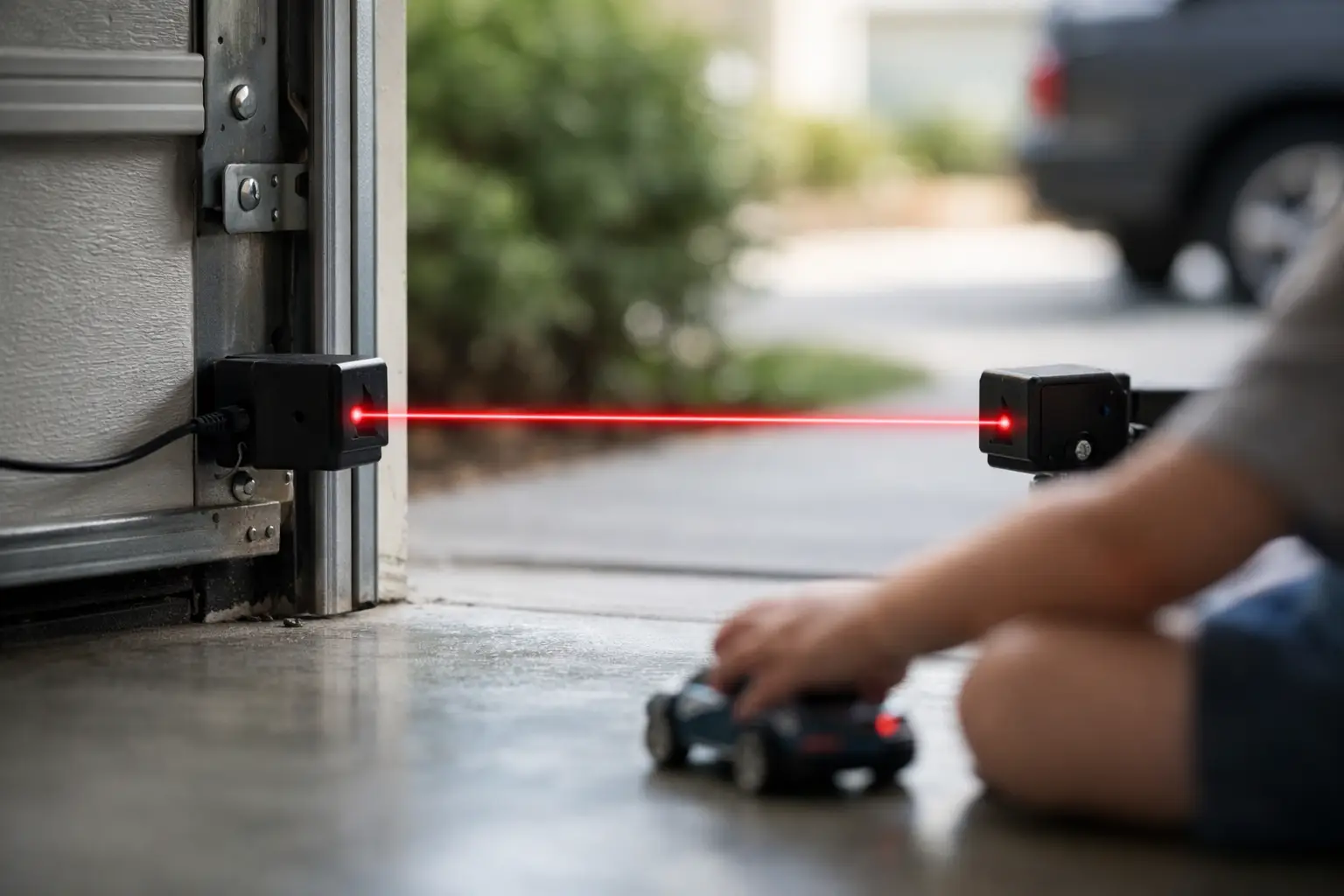
Most modern garage doors have two photo-eye sensors mounted near the bottom of the tracks, one on each side. One sensor sends an invisible beam across the opening, and the other receives it. If the beam is broken, the opener will not let the door close normally.
That is why a trash can, bicycle tire, muddy snow shovel, or even a buildup of leaves can keep the door from shutting. It is also why a sensor that is bumped out of place can make the opener act like there is something in the way when there is not.
When the system is working right, it is easy to forget it is there. When it is not, you usually find out at the worst possible time, like when you are trying to leave for work or lock up for the night.
The most common garage door safety sensor problems
Sensor issues usually come down to a few repeat causes. Dirty lenses are one of the most common. Dust, cobwebs, water spots, and road grime can block or weaken the beam enough to trigger a fault.
Misalignment is another big one. These sensors sit low to the ground, so they get kicked, bumped by bikes, nudged by trash bins, or shaken loose over time. Even a slight angle change can keep the beam from connecting.
Wiring trouble is also common, especially in garages that deal with temperature swings, moisture, vibration, or old repairs. A loose wire, a nicked low-voltage line, or a bad splice can interrupt the signal. In some cases, the sensor itself has simply failed.
Sunlight can cause problems too. It depends on the layout of the garage and the time of day, but direct sun hitting one sensor can interfere with the beam. That is not the first thing we check, though, because alignment and dirty lenses are much more common.
Then there is the issue that gets overlooked - the sensors are not always the real problem. A door with track issues, loose hardware, or opener logic trouble can create symptoms that look sensor-related. That is where quick guessing starts to waste time.
Signs your sensors are the reason the door will not close
The clearest clue is when the garage door opens fine but will not close with the remote or wall button. In many systems, you can hold the wall button down continuously and force the door to close. If that works, the opener is often telling you the safety circuit is the issue.
You may also notice blinking opener lights or small indicator lights on the sensors themselves. Most sensor sets have one light that stays steady when power is present and another that stays solid only when the beam is properly aligned. If one light is off, flickering, or weak, that points you in the right direction.
Another sign is inconsistent behavior. The door closes normally one time, then reverses the next. That kind of on-and-off problem often comes from a loose bracket, marginal alignment, or wiring that is barely making contact.
If the door starts down and immediately reverses, sensors are possible, but they are not the only explanation. Force settings, travel limits, and door resistance can also do that. It depends on what the door is doing and whether the sensor lights are normal.
What you can safely check yourself
Start simple. Look at both sensors near the bottom of the tracks and make sure nothing is physically blocking them. Kids' toys, tools, boxes, and yard gear are common culprits.
Next, wipe the sensor lenses gently with a soft cloth. You do not need anything fancy. In many garages, a little dust and grime is enough to cause trouble.
Then check the sensor lights. If one or both are off, there may be a power or wiring issue. If the lights are on but one flickers, alignment is more likely. You can sometimes fix that by carefully adjusting the sensor until the indicator light turns steady.
Take a look at the brackets too. If one sensor is hanging loose or twisted, it will not hold alignment for long. Tightening a loose bracket can help, but be careful not to overdo it and crack older plastic housings.
Also check for obvious wire damage. You might see a staple driven too tightly into the wire, a chewed section, or a disconnected lead near the sensor. If you do, that is usually where DIY should stop. Low-voltage wiring is not the most dangerous part of the system, but bad repairs there can create bigger opener problems.
When not to keep troubleshooting
If cleaning and basic alignment do not solve it quickly, forcing the issue usually does not help. A lot of homeowners spend an hour fighting the sensors when the real problem is a bad opener board, damaged wire inside the wall, or a door that is shaking the sensor out of line every time it moves.
You should also stop if the door is off track, jerking, making loud popping sounds, or acting heavy. Sensor trouble and door balance trouble can happen at the same time, and balance issues involve springs and cables. Those parts are under serious tension and are not a safe DIY repair.
If this is happening at a business, speed matters even more. A commercial overhead door that will not close can become a security issue fast. In that situation, it makes sense to have the whole system checked instead of assuming the photo-eyes are the only failure point.
Why sensor problems happen more in real garages than in brochures
On paper, these systems are simple. In real life, they sit inches from concrete floors, road salt, sprinkler overspray, windblown dirt, and everything else a working garage collects. In Northern Colorado, shifting temperatures and dust do not help.
That is why some homes have recurring sensor issues while others almost never do. Garage layout, sun exposure, traffic in and out, and how stable the tracks are all make a difference. A family garage with bikes, storage bins, and kids coming through all day puts those sensors under more abuse than a lightly used detached garage.
There is also the age factor. Older sensors and older openers can become more finicky over time. You can often repair one bad component, but sometimes replacement makes more sense than repeated service calls. It depends on the opener brand, the condition of the wiring, and whether other parts are starting to fail too.
Repair or replace?
If the issue is dirt, minor misalignment, or a loose bracket, repair is usually the obvious answer. If a wire has been damaged in one accessible spot, that can also be a straightforward repair.
Replacement starts to make more sense when the sensor housing is cracked, the internals have failed, the wiring is brittle in multiple places, or the opener system is older and already having other problems. Some parts are still available for older units, and some are not. That is one reason an on-site diagnosis matters.
The cheapest option is not always the best value. A small repair is great when it truly solves the problem. But if the sensors keep failing because the opener is aging out or the mounting setup is unstable, a quick fix can turn into repeat frustration.
What a professional visit should look like
A good service call should be straightforward. The technician checks sensor alignment, power, wiring, brackets, and opener response, then confirms the door itself is moving correctly. If there is a repair needed, you should get a clear explanation and an upfront price before work starts.
That matters because sensor symptoms are easy to misread. You do not want a guess. You want someone to confirm whether the problem is dirty lenses, failed sensors, wiring damage, or a larger opener or door issue.
At Greeley Garage Door Repair by Mike, that is how we handle these calls - no runaround, no inflated chain pricing, and no pushing parts you do not need. Just a clear fix and a garage door that works the way it should.
A simple way to avoid repeat sensor trouble
The best prevention is boring, which is usually a good sign. Keep the area near the bottom of the tracks clear, wipe the lenses once in a while, and pay attention if the sensor lights start flickering before the door quits entirely.
If your door has been bumped, serviced, or started rattling more than usual, it is worth checking the sensor brackets too. A small alignment issue caught early is easier than dealing with a door that will not close when you are already late.
Most garage door safety sensor problems are fixable without replacing the whole system. The key is knowing when it is a five-minute cleanup and when it is time to get a trained technician involved before a small safety issue turns into a bigger repair.