

A garage door that suddenly will not open can turn an ordinary morning into a real problem, especially when your vehicle is trapped inside. Your garage door spring lifespan is one of the biggest factors behind that kind of failure. Springs do the heavy lifting every time the door moves, and they eventually wear out even when the door has been working perfectly.
For homeowners in Greeley and nearby Northern Colorado communities, knowing what to expect can help you plan ahead, spot trouble early, and avoid forcing a door that needs professional attention.
How Long Does a Garage Door Spring Last?
Most standard residential garage door springs are rated for about 10,000 cycles. One cycle means the door opens once and closes once. For a household that uses the garage door four times a day, that can work out to roughly seven years. A family that uses the garage as the main entrance may reach that limit in three to five years.
That rating is a useful estimate, not a guarantee. A spring can fail earlier due to corrosion, poor installation, an improperly balanced door, or frequent temperature swings. It can also last longer when the door is correctly balanced, maintained, and used less often.
Higher-cycle springs are available for homeowners who use their garage door constantly. Depending on the setup, these may be rated for 20,000, 30,000, or more cycles. They cost more up front, but they can be a practical choice for a busy household, a rental property, or a small business with frequent overhead door traffic.
What Affects Garage Door Spring Lifespan?
The number of times the door runs is only part of the story. The condition of the entire garage door system matters. Springs are designed to counterbalance the door's weight. If cables, rollers, tracks, or hinges are worn, the system can put extra strain on the springs.
Door weight and spring sizing
A garage door needs springs sized specifically for its weight, height, track configuration, and hardware. Adding insulation, windows, reinforcement struts, or heavier replacement panels changes the weight the springs must lift. If the spring size is wrong, the opener and springs both work harder than they should.
This is why a spring replacement should not be treated like a one-size-fits-all repair. A technician should weigh the door and confirm the correct spring type before installing a replacement.
Colorado weather and corrosion
Northern Colorado weather can be hard on moving garage door parts. Cold temperatures can make an already worn spring more likely to break, while moisture and road salt carried into the garage can contribute to rust. Rust creates friction as the coils move against each other, which shortens useful spring life.
A light coating of garage door spring lubricant during routine maintenance can help reduce friction and discourage surface corrosion. It will not make an old spring new again, but it can help a healthy spring operate more smoothly.
An unbalanced door
A properly balanced door should stay roughly in place when manually lifted halfway with the opener disconnected. If it races upward, drops heavily, or feels unusually hard to lift, something is wrong. The springs may be losing tension, the door may be binding in the tracks, or previous work may not have been adjusted correctly.
Do not attempt to adjust torsion spring tension yourself. These springs are under extreme force, and the risk of injury or property damage is serious. A balance check is a smart maintenance task for a trained garage door technician.
High daily use
A garage door that opens for school drop-off, work, errands, dog walks, and evening activities may cycle far more often than its owner realizes. Smart openers and attached garages have made the overhead door the primary front door for many families. More cycles simply means the springs reach their rated life sooner.
Signs Your Garage Door Spring Is Wearing Out
Springs often break without much warning, usually with a loud bang that can sound like something fell in the garage. Still, there are a few changes worth taking seriously before a complete break occurs.
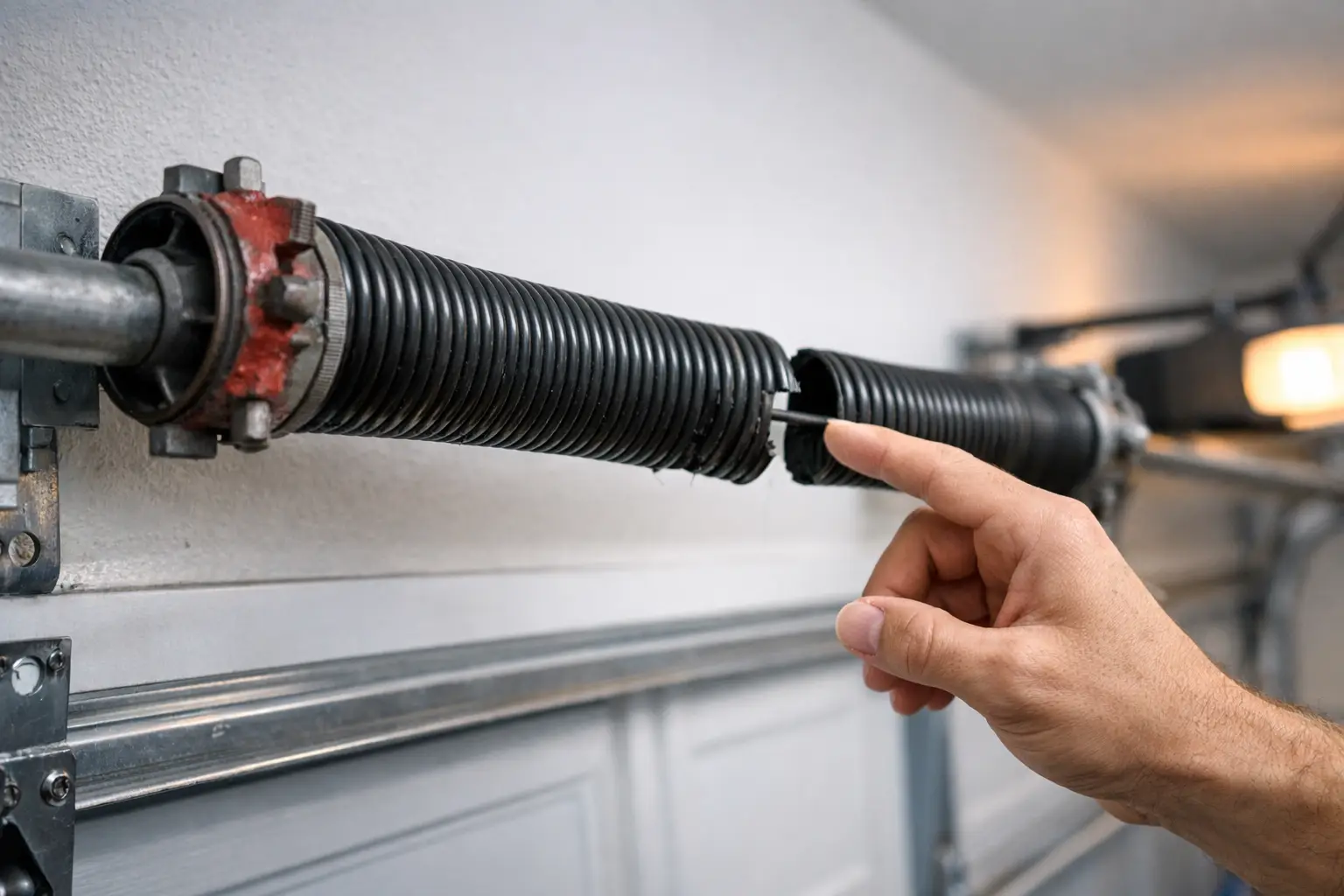
Watch for a door that starts feeling heavier, opens only a few inches, or closes faster than usual. You may also notice that the opener strains, the door moves unevenly, or the top section bends as the opener tries to lift it. A visible gap in a torsion spring above the door is a clear sign that it has broken.
Extension springs, which run along the sides of the horizontal tracks, can also fail. Signs may include a hanging cable, a spring that appears stretched or separated, or a door that lifts crookedly. Extension springs should have safety cables running through their centers. Without those cables, a broken spring can become a dangerous projectile.
If your garage door has two torsion springs and one breaks, it may be tempting to replace only the broken one. In many cases, replacing both is the better value. The remaining spring has likely completed the same number of cycles and may fail soon after. Replacing the pair at the same appointment can reduce the chance of another unexpected breakdown.
What to Do When a Spring Breaks
First, stop using the opener. Repeatedly pressing the remote will not fix the problem, and it can burn out the opener motor or damage the gear system. Do not pull hard on the emergency release or try to lift a heavy double door by yourself.
If the door is closed and your vehicle is inside, call for same-day garage door spring service. If the door is stuck open, avoid leaving it unattended if possible. An open garage affects home security and exposes the door to wind damage. Keep children and pets away from the door until it is repaired.
A qualified technician can inspect the springs, cables, drums, rollers, and opener before making the repair. That full-system check matters because a spring failure can reveal other worn parts that contributed to the problem. You should receive a clear explanation of the needed repair and an upfront price before work begins.
Can You Make Garage Door Springs Last Longer?
You cannot prevent normal metal fatigue forever, but regular care can prevent avoidable wear. Schedule a professional tune-up about once a year, particularly if your door is used several times each day. The visit should include checking spring tension, door balance, cables, rollers, fasteners, hinges, and opener safety features.
Between service visits, keep an eye on unusual noises and changes in movement. A squeak may only need lubrication, but grinding, popping, jerking, or a door that drifts out of alignment deserves a closer look. Addressing small issues early is usually easier and less expensive than waiting for a complete failure.
Avoid adding weight to the door without having the springs evaluated. Decorative hardware, insulation kits, and replacement sections may look minor, but every added pound affects how the door balances. Also, never use the opener to force a door that is frozen to the floor or blocked by snow, ice, or an object in the track.
When to Call a Local Garage Door Professional
Call for service right away if you see a broken spring, a loose cable, a crooked door, or an opener that hums without lifting the door. These are not repairs to put off, especially when the garage is your main way in and out of the house.
Greeley Garage Door Repair by Mike provides spring replacement and same-day garage door repairs with clear upfront pricing and a lifetime workmanship warranty. The goal is simple: get the door operating safely, explain what failed, and avoid piling on work you do not need.
A garage door spring may be out of sight above the door, but it should not be out of mind. Pay attention when your door starts sounding or moving differently, and get help before a small change leaves you stuck in the driveway.