

A garage door can look mostly fine after a Northern Colorado storm and still be unsafe to run. One bent section, loose track bracket, damaged cable, or water-affected opener can turn a working door into a door that jams halfway, falls crooked, or leaves your home exposed. When you need garage door storm damage repair, the first job is not forcing the door open or closed. It is making the situation safe.
Start With Safety, Not the Opener
After high winds, hail, heavy rain, or flying debris, stand back and look at the entire door before pressing the wall button or remote. If the door is crooked, hanging on one side, off its tracks, or has a cable hanging loose, do not operate it. A garage door is heavy, and its springs and cables carry serious tension.
If your car is trapped and the door will not move normally, it is tempting to pull the emergency release and lift it by hand. That can be risky if a spring is broken, a cable has slipped, or a track has shifted. A door that feels unusually heavy is telling you something is wrong.
Keep children and pets away from the area. If the door is stuck open and you cannot secure the garage, move valuables away from the opening if possible and call for emergency service. For a commercial property, block off the affected bay until the door has been inspected.
What Storms Commonly Damage on Garage Doors
Storm damage is not always a dented panel. Wind pressure can flex the door, pull hardware loose, and expose weak parts that were already worn. Hail can damage the exterior, while water and power surges can create problems with the opener and safety system.
Bent or Cracked Door Panels
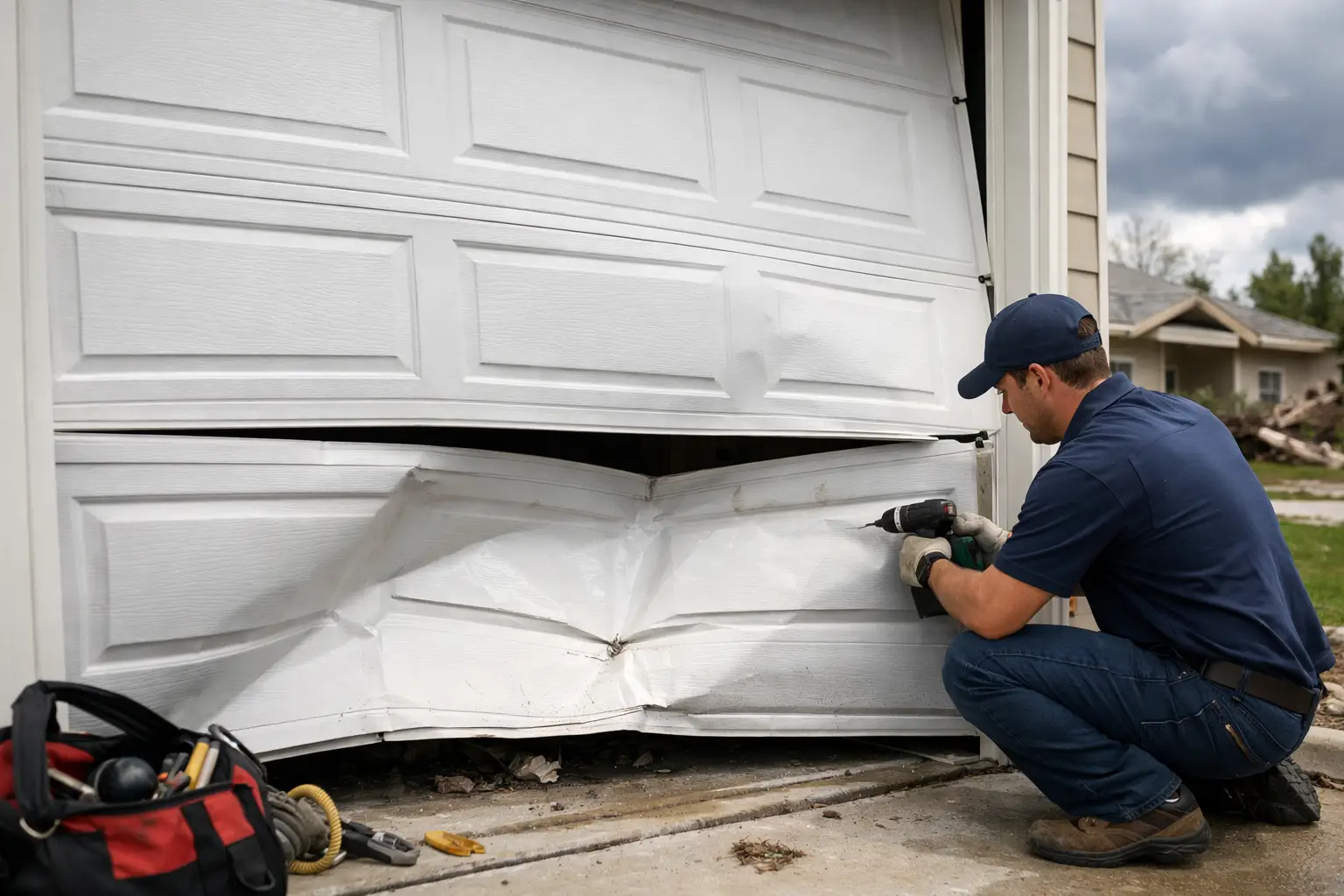
Hail, branches, trash cans, and other windblown debris can dent steel panels or crack sections of a wood or composite door. Cosmetic dents may not stop the door from operating. But a deep bend near a hinge, roller, or reinforcement strut can affect how the door travels in the tracks.
One damaged panel does not always mean you need a full replacement. If the model is still available and the rest of the door is in good shape, replacing a single section can make sense. If several sections are damaged, the door is older, or matching the color and design is not realistic, a new door may be the better long-term value.
Off-Track Doors and Bent Tracks
Strong wind can shake loose track brackets, especially when the door is hit by debris or the structure around the opening shifts. A roller may pop out of the track, causing the door to bind or hang at an angle.
Do not try to bend a track back with pliers or a hammer. Tracks need to be aligned precisely, and a makeshift adjustment can create a bigger problem. A technician can determine whether the track can be realigned or needs replacement, then check the rollers, hinges, cables, and mounting points that may have caused the issue.
Broken Springs, Cables, and Hardware
A storm may not directly break a torsion spring, but a door that gets forced against an obstruction or pulled unevenly can put extra stress on springs, cables, drums, and brackets. If you hear a loud bang from the garage and the door suddenly will not lift, a broken spring is a likely cause.
Never handle a spring, cable, or bottom bracket yourself. These parts are under high tension. This is a repair that belongs with a trained garage door technician, not a weekend tool kit.
Opener and Electrical Problems
Power outages, lightning, moisture, and voltage surges can affect an opener. You may find that the wall button does not respond, the remote works intermittently, the motor hums without moving the door, or the safety sensors will not stay aligned.
Start with the simple checks: make sure the opener has power, check the breaker, and look for water around outlets or extension cords. Do not reset or operate equipment that has been exposed to standing water. If power is available but the opener is not working properly, the door itself should be inspected before assuming the motor is the problem.
A Quick Storm Damage Check You Can Do Safely
You do not need to touch moving parts to collect useful information for a repair call. From a safe distance, look for visible dents, cracks, loose bolts, gaps between panels, bent tracks, rollers outside the track, or a door sitting unevenly.
Then check the weather seal along the bottom and sides. Wind-driven rain can tear or flatten seals, allowing water, dust, and cold air into the garage. This may be a smaller repair, but it matters in Greeley-area weather, especially when the next cold snap follows a storm.
If the door appears level and undamaged, test it only once from a clear position. Stop immediately if it jerks, scrapes, shakes, reverses unexpectedly, or makes grinding sounds. Repeatedly running a damaged door can turn a repairable issue into a replacement job.
Garage Door Storm Damage Repair: Repair or Replace?
The right answer depends on the type and extent of damage, the age of the door, and whether its safety systems are still dependable. A straightforward repair may involve tightening hardware, replacing rollers, repairing a cable issue, aligning tracks, replacing a damaged panel, or installing new weatherstripping.
Replacement is often worth considering when the door has multiple damaged sections, extensive rust or water damage, cracked framing, or repeated mechanical problems. It can also be the practical choice when a replacement panel is unavailable or no longer matches the existing door.
For many homeowners, insulation is part of the decision. An insulated replacement door can help moderate garage temperatures, reduce outside noise, and make an attached garage more comfortable. That benefit varies based on your garage layout and how well the rest of the home is insulated, but it is worth discussing if storm damage puts you at a replace-or-repair crossroads.
What to Tell Your Repair Technician
A clear description helps get the right parts and tools to your home faster. Note the type of storm, when it happened, whether the door was open or closed, and what changed afterward. Mention any strange noises, power loss, visible dents, water intrusion, or trouble opening the door.
Photos can be useful for insurance documentation and for showing visible exterior damage, but do not climb a ladder or place yourself beneath an unstable door to get them. Take pictures from the ground and save any storm-related records your insurer may request.
At Greeley Garage Door Repair by Mike, the goal is to explain what failed, what it takes to fix it, and what the price looks like before work begins. A properly stocked service truck can often handle common storm-related repairs in one visit, including track work, roller replacement, cable issues, spring replacement, and opener troubleshooting.
Should You File an Insurance Claim?
Storm damage may be covered under a homeowners or commercial property policy, but coverage depends on the cause of damage, your deductible, and the policy terms. Hail or wind damage is commonly treated differently from wear and tear or a mechanical failure that happened during the storm.
Before filing, compare the likely repair cost with your deductible. For a minor dent or weather seal replacement, a claim may not make financial sense. For significant panel damage, structural damage around the opening, or a full door replacement, documentation and a professional inspection can be helpful.
Do not wait too long to address damage just because you are deciding about insurance. A door that will not secure, close, or operate safely needs attention right away. Temporary exposure to rain, wind, and pests can create more expensive problems inside the garage.
Preventing Trouble Before the Next Storm
No garage door is completely storm-proof, but routine maintenance gives it a better chance of handling rough weather. Worn rollers, loose hinges, weak reinforcement, old bottom seals, and poorly balanced doors are more vulnerable when high winds arrive.
A seasonal service visit can catch small issues before they leave your vehicle trapped or your garage open during a storm. For homes in Greeley, Evans, Windsor, and Ault, it is smart to schedule maintenance before the seasons when wind and hail are most likely to test the door.
If your door was hit by a storm, trust what you see and what you hear. A prompt inspection can protect your home, prevent a small repair from growing, and get your everyday access back without taking chances on a heavy, damaged door.