
When your garage door is stuck closed, the problem usually shows up at the worst possible time - right before work, during school pickup, or when the weather turns ugly. The good news is that a stuck door usually points to a handful of common issues. The bad news is that some of those issues involve high-tension parts that should not be handled without the right tools and training.
If your car is trapped inside, the safest approach is to do a few basic checks first, then stop if anything looks broken, bent, or under tension. A garage door is heavy, and forcing it can turn a repair into a much bigger problem.
Why a garage door gets stuck closed
A garage door system depends on several parts working together at the same time. If one part fails, the whole door can stop moving. In many homes, the cause is a broken spring, a dead opener, damaged cables, locked hardware, or rollers that have come off track.
Cold weather can make things worse. In Northern Colorado, freezing temperatures, wind, and moisture can affect metal parts, stiffen grease, and even freeze the bottom seal to the concrete. That means a door that worked last night may not move in the morning.
Some stuck doors fail all at once with a loud bang. Others give warning signs first, like jerky movement, loud grinding, a door that feels unusually heavy, or an opener that hums without lifting the door. Those early signs matter because they usually mean a repair was coming.
First, do the safest checks
Before you touch anything, make sure children and pets stay clear of the garage door area. Do not stand under the door, and do not try to pry it open with tools.
Start with the opener. Check whether the motor has power. If the opener lights are off, there may be a tripped breaker, a loose plug, or a GFCI outlet that needs resetting. If the opener has power but the remote does not work, try the wall button. If the wall button works, the issue could be as simple as a dead remote battery or a programming problem.
Next, look at the lock. Some garage doors have a manual slide lock on the inside. It can get bumped into the locked position by mistake, especially when people are moving boxes or tools around the garage. If the opener tries to lift a locked door, stop using it until the lock is disengaged.
Then check the bottom of the door. If it is especially cold outside, the weather seal may be frozen to the floor. You might see ice buildup or feel resistance only at the bottom edge. In that case, do not keep hitting the opener button. Repeated attempts can strain the opener or damage the door sections.
Signs of a broken spring
A broken spring is one of the most common reasons a garage door stuck closed becomes a same-day emergency. Springs do the heavy lifting. The opener guides the door, but the springs carry most of the weight. When a spring breaks, the opener may not be able to raise the door at all.
You may notice a gap in the torsion spring above the door, or hear that the opener starts but the door barely moves. In some cases, the door lifts a few inches and then stops. In others, the opener strains, hums, or reverses.
This is not a DIY repair. Springs are under extreme tension, and the risk is real. If you suspect a broken spring, the safest move is to stop there and call for service.
When the opener is the problem
Not every stuck door means a broken spring. Sometimes the opener itself has failed. The motor could be worn out, the logic board could be failing, or the safety sensors may be blocking operation.
Look at the photo eyes near the bottom of the tracks. If one sensor is bumped, dirty, or misaligned, the opener may refuse to move the door properly. Wipe the lenses clean and make sure both sensors face each other. If one sensor light is off or blinking, that is a clue.
That said, sensor problems more often keep a door from closing than from opening. If your door will not open and the opener sounds weak or inconsistent, the issue may be internal to the opener or related to another failed door component.
Track, roller, and cable problems
If the door looks crooked or one side sits lower than the other, do not try to force it. That often points to a cable issue, an off-track roller, or uneven spring tension. Any one of those can make the door bind in place.
You may also notice bent track sections, loose brackets, or worn rollers that no longer move smoothly. Sometimes homeowners hear scraping or popping for days before the door finally jams shut.
Cables deserve extra caution. Like springs, they work under heavy tension. If a cable has come off the drum or started fraying, leave it alone. Pulling on it or trying to reset it without the right setup can be dangerous.
Can you open it manually?
It depends on what failed. If the spring is broken, the door may be far too heavy to lift safely. If the door is off track or a cable is damaged, manually forcing it can make the door fall or twist.
If there is no visible damage and you need to test whether the opener is the issue, you can pull the emergency release cord only when the door is fully closed. That disconnects the opener from the door. From there, try lifting the door carefully with both hands.
If the door feels extremely heavy, stops immediately, or moves unevenly, stop. That usually means there is a spring or hardware issue. If it lifts smoothly by hand, the opener may be the main problem.
Never pull the emergency release when the door is stuck partly open unless you are sure the door is supported. A failing spring can let the full weight of the door drop fast.
What not to do when a garage door is stuck closed
Most expensive repairs start with a homeowner trying to muscle the door open. That can bend panels, strip opener gears, damage the top section, or pull rollers out of the track.
Avoid repeated opener cycles, do not loosen brackets or spring hardware, and do not use your vehicle to nudge the door. If the problem is minor, those steps can turn it major. If the problem is serious, they can be unsafe.
There is also a difference between being proactive and taking apart a system that is under tension. Cleaning sensor lenses and checking power is reasonable. Touching springs, cables, bottom fixtures, or track mounting under load is not.
When to call for repair right away
Call for professional service if you see a broken spring, loose or frayed cable, crooked door, bent track, loud bang from the garage, or an opener that strains without lifting. Those are not wait-and-see issues.
The same is true if your vehicle is trapped and you need the door working quickly. A local company with stocked trucks can often solve the problem in one visit, which matters when your day is already off track.
For homeowners in Greeley, Evans, Windsor, and Ault, fast help matters even more during freezing weather or after-hours failures. A door stuck shut can be more than an inconvenience if it blocks your only safe access point or leaves work equipment trapped inside.
How these repairs are usually handled
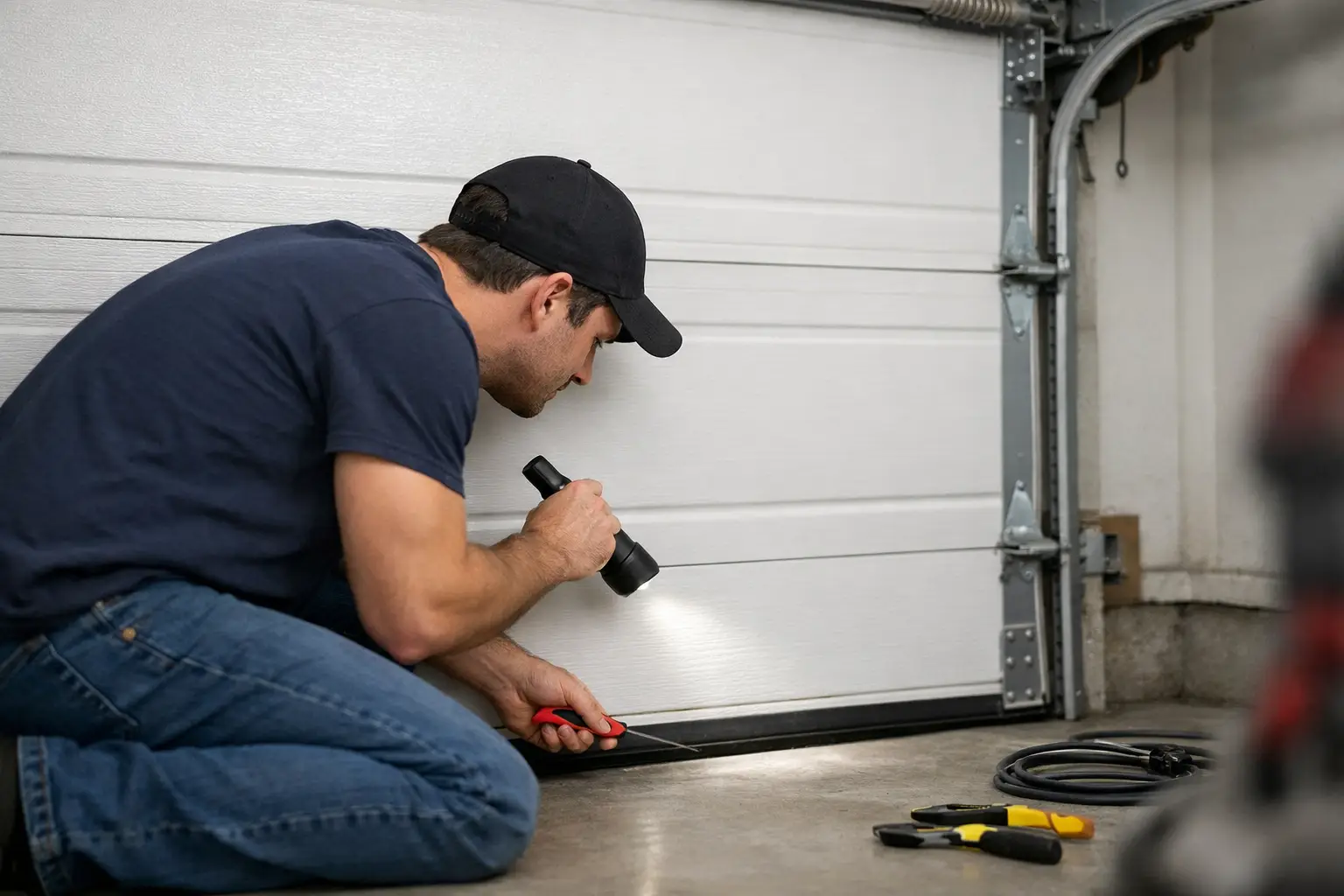
A technician will typically inspect the full system, not just the part that failed. That matters because garage door parts wear together. If one spring breaks, the second spring may not be far behind. If rollers are worn and tracks are misaligned, replacing only the opener will not solve the underlying issue.
A good service call should come with a clear explanation of the problem, an upfront price before work begins, and repair options that make sense for the age and condition of the door. At Greeley Garage Door Repair by Mike, that straightforward approach is exactly what local customers want - fix the issue, explain the cost, and do the job right without the runaround.
How to reduce the chances of it happening again
Most stuck-door emergencies give at least some warning. If your door is getting louder, moving unevenly, shaking, or reversing for no clear reason, schedule service before it quits completely.
Basic maintenance helps too. Keep the tracks free of debris, replace remote batteries when they get weak, and pay attention to changes in sound or speed. An annual inspection can catch worn springs, rollers, cables, and opener components before they leave you stuck.
If your door is older, repairs may start to stack up. Sometimes a targeted repair is the right call. Other times, especially with repeated spring, panel, and opener issues, replacement makes more financial sense. It depends on the age of the door, the condition of the hardware, and how long you plan to stay in the home.
A garage door should open when you need it to, without drama. If yours is stuck closed, start with the safe checks, avoid forcing anything, and trust your gut if something looks off. A quick, honest repair now is usually a lot cheaper than fixing the damage caused by pushing a bad door too far.