

A noisy garage door at 6:30 in the morning usually means one thing - something has been wearing down for a while. Most doors do not fail all at once. They get louder, slower, shakier, or harder to trust. That is where a garage door tune up earns its keep. It gives you a chance to catch small problems before they turn into a broken spring, a jammed opener, or a door stuck halfway open when you are already late.
For homeowners, that means fewer surprises and a safer door. For small businesses and property managers, it means less downtime and fewer calls about a bay door that will not close. A tune-up is not flashy, but it is one of the most practical ways to keep a garage door working the way it should.
What a garage door tune up actually does
A garage door system has a lot of moving parts, and they all depend on each other. Rollers travel the track. Springs carry the weight. Cables stay under high tension. Hinges flex with every cycle. The opener pulls or guides the door, but it should not be doing all the heavy lifting.
A proper garage door tune up is really a full working check of that system. The goal is to reduce wear, improve operation, and spot parts that are close to failure. It is part maintenance, part safety inspection.
That matters because garage doors are heavy. If the balance is off or hardware is loose, the door can strain the opener, slam shut, reverse unexpectedly, or come off track. A tune-up is not just about making the door quieter. It is about making sure it opens and closes safely.
What is usually included in a garage door tune up
The exact scope can vary a bit depending on the door and the condition it is in, but a solid tune-up covers the parts that take the most wear.
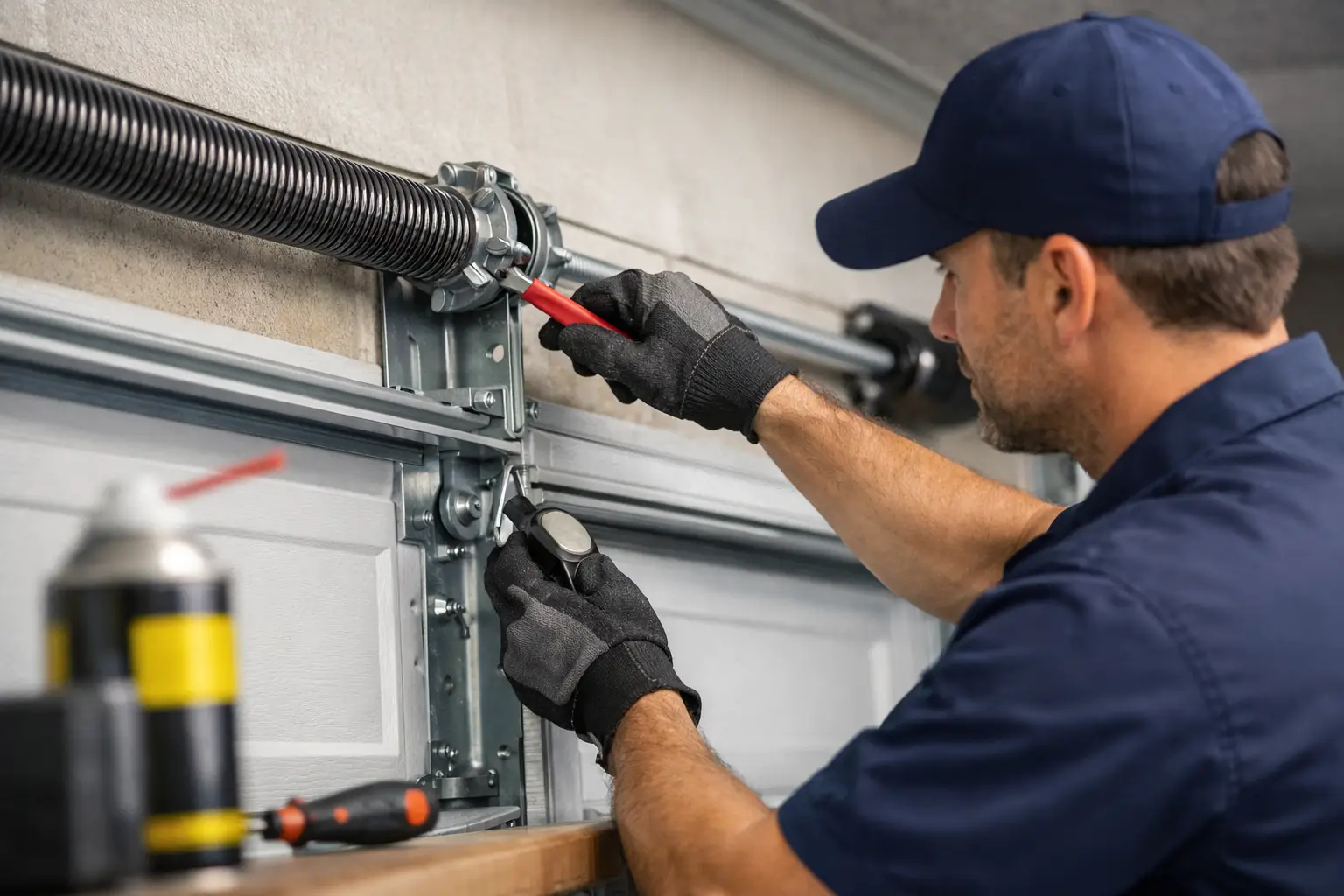
Inspection of springs, cables, rollers, and hinges
This is the first place an experienced technician looks. Springs can weaken before they break. Cables can fray. Rollers can crack, especially older plastic ones. Hinges can loosen or bend over time.
A good inspection is not just a quick glance. It is checking for rust, wear patterns, slack, damage, and hardware that is starting to back out. If one part is failing, there is often another part nearby showing stress too.
Tightening hardware and fasteners
Garage doors move up and down multiple times a day. All that vibration slowly works nuts, bolts, and brackets loose. That is normal, but it should be corrected before it causes bigger issues.
Loose hardware can lead to rattling, uneven movement, and track problems. Tightening everything back to proper tension helps the door run smoother and protects the rest of the system.
Lubrication of moving parts
This is one of the most visible parts of a tune-up, but it is not the whole job. The right lubricant on rollers, hinges, bearings, and springs can reduce noise and friction. The wrong product can attract dirt or gum things up.
Lubrication helps, but only if the rest of the door is in decent shape. If a roller is worn out or a hinge is cracked, lube alone will not fix the problem.
Balance and door travel check
A garage door should be properly balanced so the springs are carrying the weight, not the opener. If the door is too heavy or drifts when partially open, that is a sign the balance is off.
This part of the service matters more than many homeowners realize. An unbalanced door can burn out an opener faster, put extra stress on cables, and create a safety risk. In some cases, a tune-up reveals that spring adjustment or spring replacement is needed rather than basic maintenance.
Track alignment and roller movement check
Tracks do not usually need lubrication, but they do need to be clean and aligned. Bent sections, mounting issues, or rollers that are dragging can make the door move unevenly.
A technician will usually check whether the rollers are traveling smoothly and whether the track is secure and positioned correctly. If the door is shaking or rubbing, this is often where the cause shows up.
Opener and safety reverse testing
If your door has an automatic opener, the tune-up should also include a check of the opener settings and safety features. That means testing photo eyes, checking force and limit settings, and making sure the reverse function is working as it should.
This is one of the biggest safety items in the whole system. If the opener does not reverse properly, that is not something to put off.
What a tune-up does not fix
This is where homeowners sometimes get frustrated. A garage door tune up can improve performance and help prevent failures, but it is not a cure-all.
If a torsion spring is broken, the door needs repair. If a cable is frayed, it should be replaced, not just inspected. If the opener motor is failing or the gear is stripped, maintenance may confirm the issue, but it will not solve it.
The same goes for bent panels, heavily damaged tracks, and doors that are off track. Those are repair problems. A tune-up is most valuable before you get to that point.
When to schedule a garage door tune up
For most homes, once a year is a smart baseline. If the garage door is your main entrance and it gets heavy daily use, twice a year may make more sense. Commercial doors and high-cycle doors often need more frequent service because they simply do more work.
Weather also plays a role. In Northern Colorado, changing temperatures can affect metal parts, lubrication, and spring performance. Cold snaps tend to expose weak springs and stiff rollers fast. If your door starts acting different as the seasons change, that is a good time to have it checked.
You do not have to wait for a yearly reminder, though. If the door is louder than usual, moves unevenly, hesitates, or feels heavier when using the manual release, those are all solid reasons to schedule service.
Signs your door is overdue
Some warning signs are easy to spot. Others are more subtle.
A door that squeaks once in a while may just need routine service. A door that jerks, slams, or reverses for no clear reason is telling you more. Gaps under the closed door, shaking during travel, slow response from the opener, and visible cable wear all deserve attention.
Age matters too. An older door with original rollers, hinges, and springs may still work, but that does not mean it is working well. Tune-ups are especially useful on aging systems because they help you plan repairs before you are dealing with an emergency.
Can you do it yourself?
There are a few basic things homeowners can handle safely. You can keep the tracks free of debris, listen for changes in noise, and apply the correct lubricant to accessible moving parts if you know where it belongs.
But there is a line. Springs and cables are under high tension, and balance adjustments are not a DIY job. Even something that looks simple, like a track issue or roller replacement, can become unsafe quickly if the door shifts unexpectedly.
If you are only doing light upkeep, that is fine. If you are troubleshooting balance, tension, or worn hardware, it is better to have a trained technician handle it.
Why tune-ups save money over time
Most people call for service when the door stops working. That is understandable. But the cheapest call is usually the one that catches the problem early.
Replacing a worn roller or correcting door balance is usually simpler than dealing with an opener that has been overworked for months. Tightening hardware and spotting cable wear early can help you avoid a more expensive breakdown later. It also reduces the chances of getting stuck with your car inside the garage or your door stuck open at the worst possible time.
That is why many local homeowners treat tune-ups as preventive maintenance rather than an optional extra. It is less about perfection and more about avoiding avoidable problems.
Choosing the right service company
A garage door tune-up only helps if the inspection is thorough and honest. You want someone who can tell the difference between normal wear and a part that genuinely needs replacement. You also want clear pricing and plain answers, not scare tactics.
That matters even more when a technician finds an issue during the visit. Sometimes the fix is minor. Sometimes it is a spring or cable that should not wait. The value is in getting a straight answer from someone who works on these systems every day.
For homeowners in Greeley, that often means choosing a local company that understands how Colorado weather and daily use affect garage doors over time. Greeley Garage Door Repair by Mike built its reputation on that kind of practical service - fast response, clear recommendations, and no games.
If your door has been getting louder, slower, or less predictable, a tune-up is a smart next step. It is a simple service, but it can make the whole system safer, quieter, and a lot less likely to fail when you need it most.