
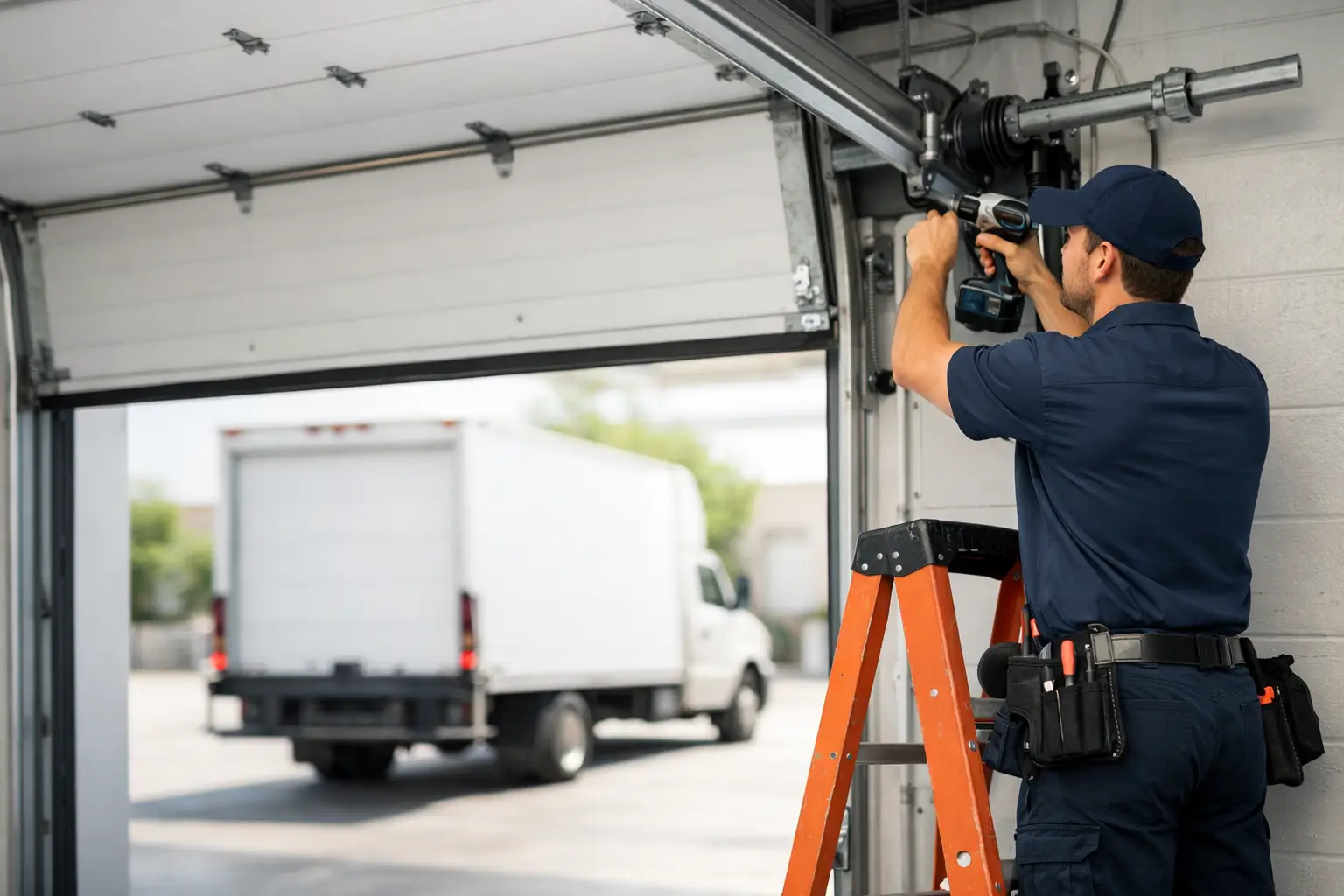
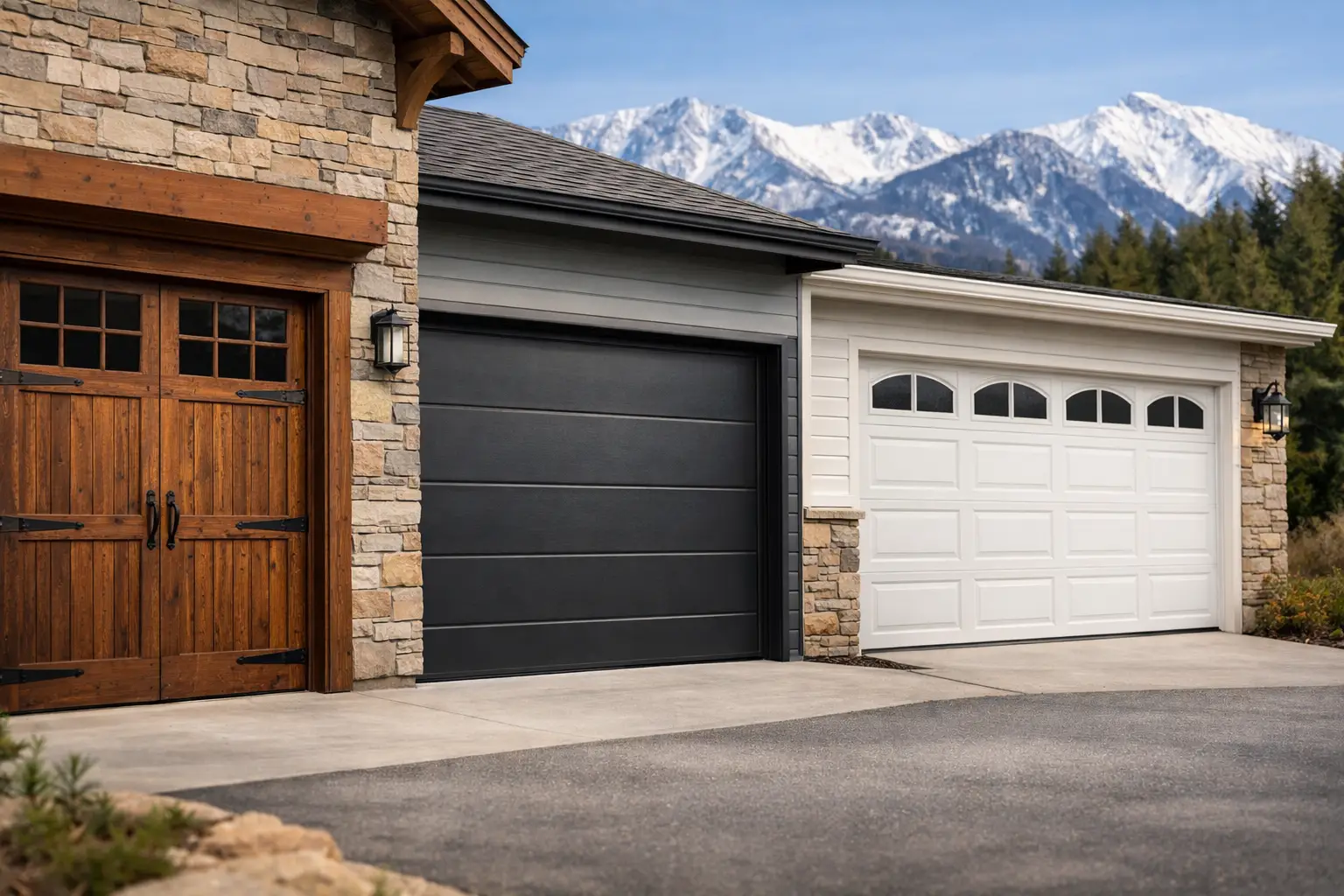
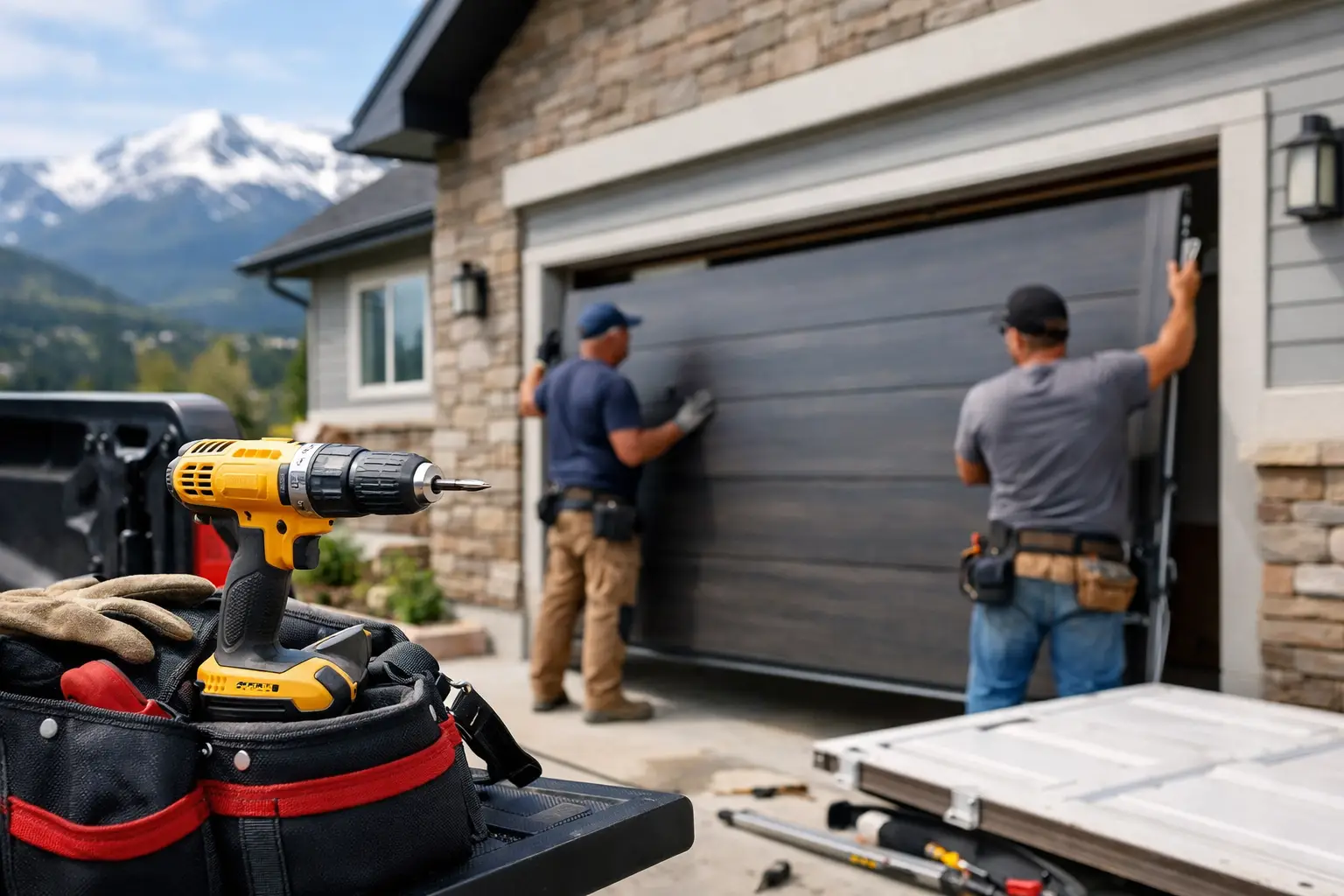


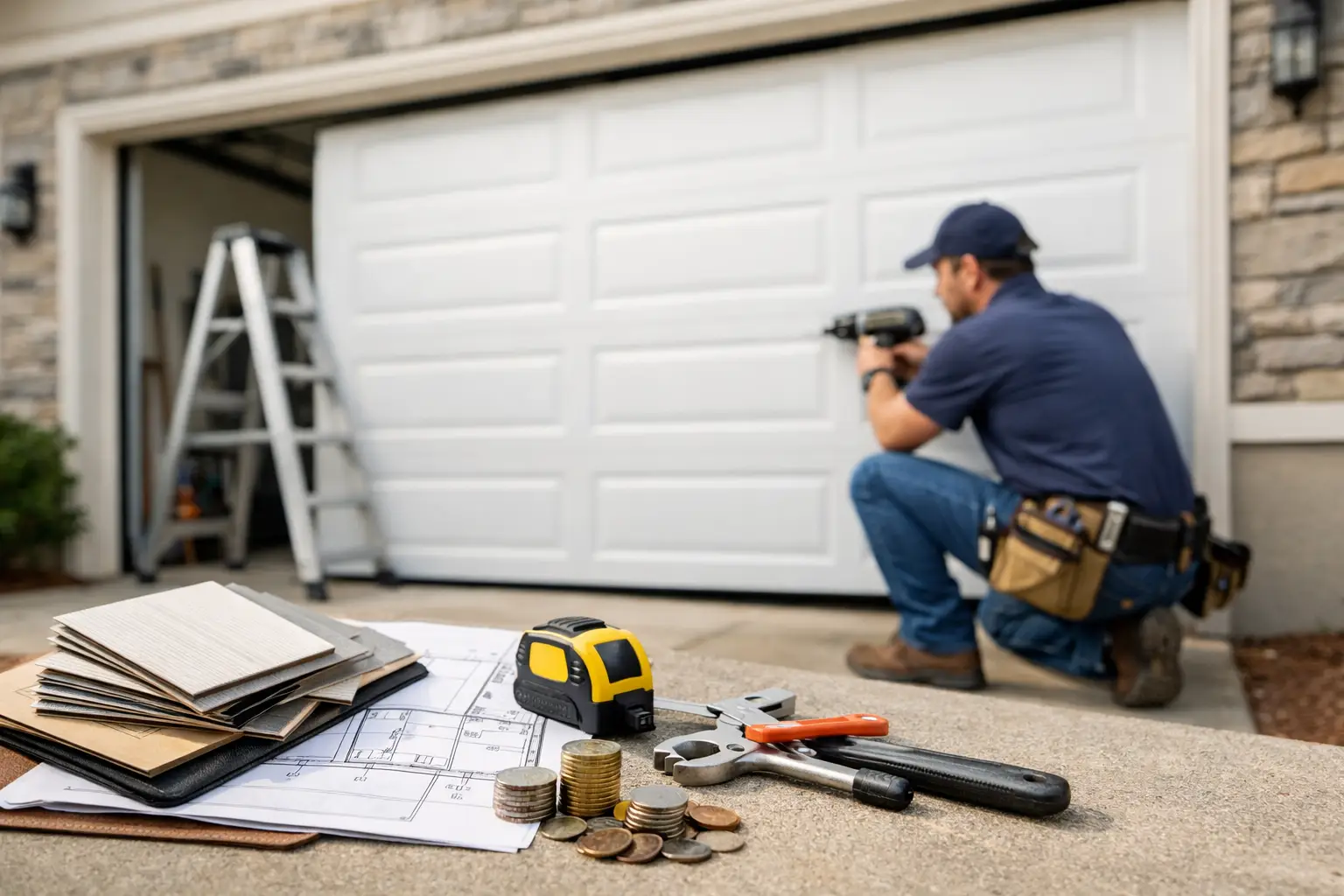
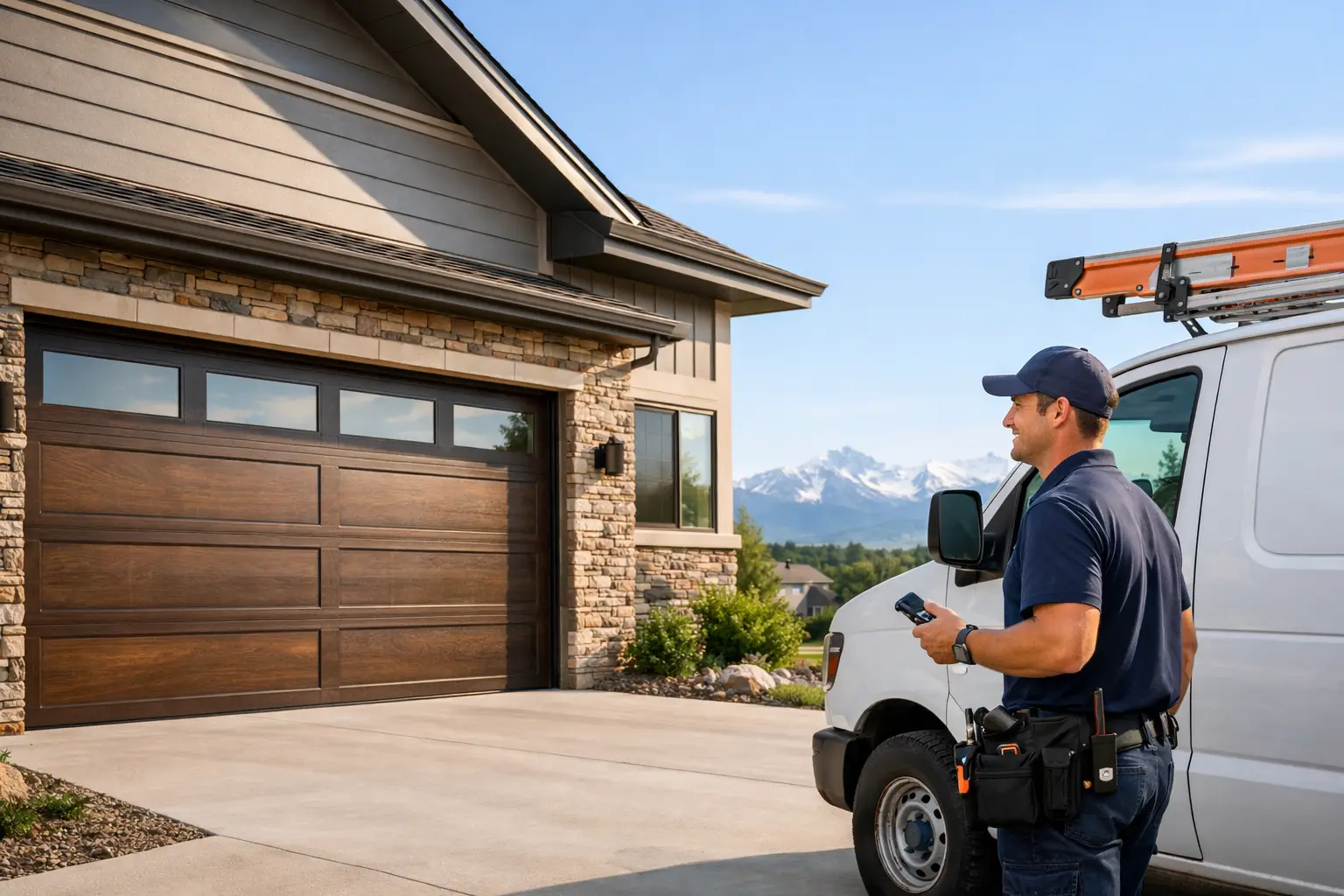



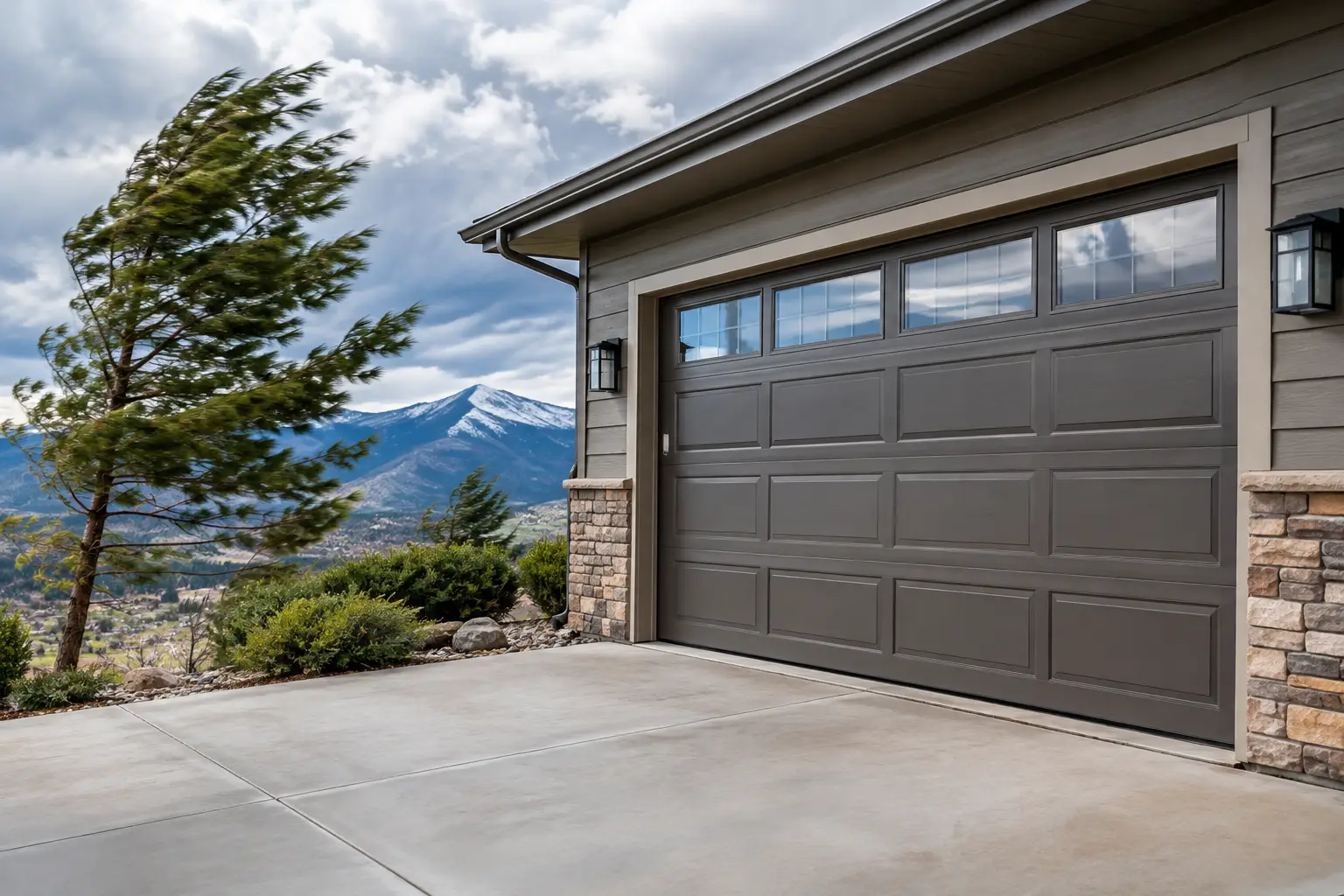
A garage door can be the largest moving wall in your home. When strong wind pushes against it, a weak, damaged, or improperly installed door can bow inward, come off its tracks, or leave the garage exposed. This garage door wind load guide explains what homeowners need to know before the next hard Front Range windstorm.
What wind load means for a garage door
Wind load is the force wind places on a garage door and its supporting hardware. It is not just about a door staying closed in a light breeze. A strong gust can create positive pressure against the outside of the door or negative pressure that pulls outward on the door panels, hinges, tracks, and mounting points.
Garage doors are tested and rated to handle a specified amount of pressure. That rating reflects the complete system, not only the panels. Reinforcement struts, end stiles, hinges, rollers, tracks, jamb brackets, and the way the door is anchored to the opening all play a part.
A door that looks fine on a calm day may still be vulnerable. Small cracks in a panel, loose track fasteners, a bent horizontal track, or worn rollers can reduce its ability to handle wind. That is why storm-related damage is not always obvious from the driveway.
Why wind ratings matter in Northern Colorado
Greeley, Evans, Windsor, and Ault are not coastal hurricane markets, but that does not mean wind is an afterthought. Northern Colorado sees powerful seasonal winds, sudden thunderstorms, snowstorms, and occasional severe gusts. Open terrain and changing weather can put extra stress on exterior doors, especially on detached garages, homes at the edge of new developments, and commercial buildings with wide overhead doors.
Wind can also create a chain reaction. If a garage door fails and the opening is exposed, air pressure inside the garage can rise quickly. That pressure may put added force on the roof, walls, windows, and interior doors. The garage door itself is only one part of the concern.
For most local homeowners, the practical question is not, "Do I need a hurricane door?" It is, "Is my existing door in good condition, properly reinforced, and appropriate for the wind exposure at my property?" The answer depends on the door size, age, construction, location, and local building requirements.
How to find your garage door wind load rating
Start by looking for a manufacturer label on the inside of the door. Depending on the make and age of the door, the label may list a model number, serial number, wind load approval, design pressure, or code compliance information. The label is often on an end stile, a panel edge, or near the track area.
Do not assume every insulated steel door has a wind rating. Insulation can improve energy efficiency and make panels more rigid, but it does not automatically make a door wind-load approved. Likewise, a decorative carriage-house door may need additional reinforcement because its design and window layout affect panel strength.
If the label is missing, faded, or unclear, a technician can identify the door and inspect its reinforcement. In some cases, the original manufacturer documentation can confirm whether the model was built for a particular design pressure. In other cases, especially with older doors or doors that have been altered, replacement is a better answer than trying to guess.
Wind load ratings are not a DIY calculation
You may see wind ratings expressed in pounds per square foot or as positive and negative design pressures. Those numbers are useful to engineers, manufacturers, and code officials, but they should not be treated like a simple shopping comparison.
The correct rating depends on factors such as building height, exposure to open land, the garage opening size, and local code requirements. A 16-foot-wide double door has a much larger surface area than a single door, so it receives more total force in a gust. Commercial doors can require a different approach altogether because they may be wider, taller, and cycled more often.
Signs your door may be vulnerable in high wind
A quick visual check can reveal problems worth addressing before bad weather arrives. Look at the door with it fully closed, then operate it from inside the garage. The door should move smoothly and sit squarely in the opening.
Call for an inspection if you notice any of these issues:
- Panels bowing, creasing, cracking, or separating at the hinges
- Reinforcement struts that are loose, missing, bent, or pulling away from the top section
- Tracks that are bent, loose at the wall, or visibly out of alignment
- Rollers that wobble, bind, or come out of the track
- Gaps around the top or sides of the closed door
- A door that shakes heavily, reverses unexpectedly, or sounds rough during operation
Also pay attention after a severe wind event. A door can be damaged even if it never opens during the storm. Wind pressure can bend a top section or loosen hardware just enough to create trouble the next time the opener runs.
Reinforcement can help, but it has limits
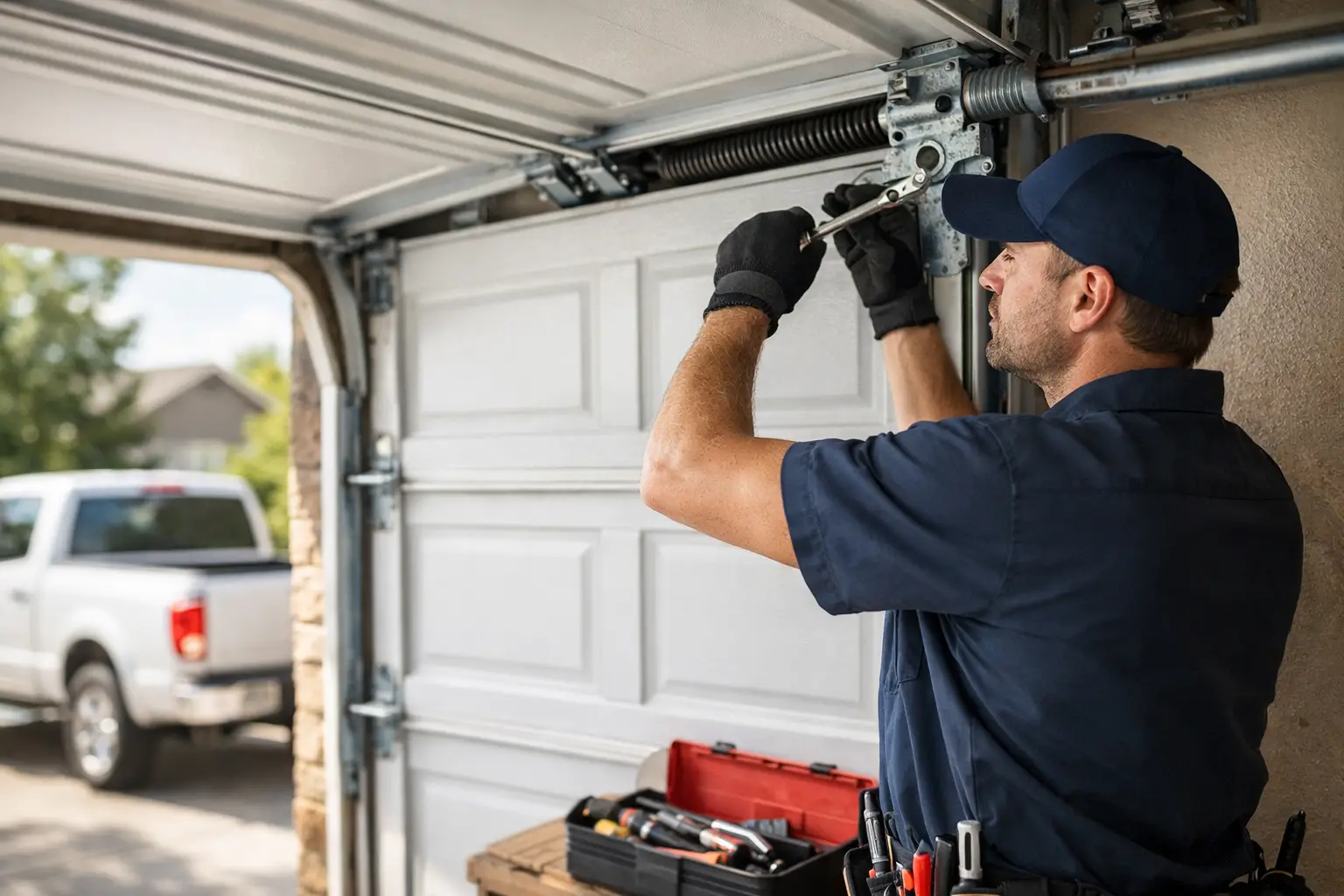
A reinforcement strut is a metal brace attached across a garage door section, commonly the top section. It helps reduce flex when the opener pulls the door and can add support against wind pressure. Wider doors often need multiple struts or manufacturer-specific reinforcement.
Adding a strut may be a sensible repair when the door is otherwise sound and the hardware is compatible. It is not a universal upgrade. A damaged, thin, rusted, or poorly supported door may not become code-compliant simply because a brace was added. Improvised wood braces, random angle iron, or hardware-store brackets can interfere with door movement and may create a safety problem.
The same goes for track upgrades. Heavier track and better jamb attachment can be part of a wind-rated system, but the installation has to match the door and the opening. Replacing one weak component without checking the rest of the system can leave the real problem untouched.
When replacement makes more sense than repair
Repair is usually the right call for loose hardware, worn rollers, a bent track, or a damaged strut when the door panels remain structurally sound. Replacement becomes the safer long-term choice when panels are deeply creased, sections are separating, the door has repeated wind damage, or the model cannot be properly reinforced.
A new wind-rated door can be a worthwhile investment for homes in exposed locations. It may also give you better insulation, quieter operation, stronger hardware, and a more dependable seal against cold, dust, and wind-driven moisture. The trade-off is cost: a higher-rated door and the required installation components can cost more upfront than a basic replacement door. But choosing a door based only on the lowest price can be expensive if it does not fit the property or fails early.
For commercial properties, this decision matters even more. A damaged overhead door can stop deliveries, leave inventory exposed, or create a security issue after hours. The right repair or replacement should account for opening size, daily cycles, wind exposure, and the need to keep the business operating.
What to do when wind damages your garage door
If the door is bowed, off track, hanging unevenly, or will not close, stop using the opener. Do not keep pressing the remote in hopes that it will pull the door straight. That can damage panels, cables, the opener rail, and tracks further.
If the opening can be secured safely without moving a damaged door, keep people and vehicles clear of the area. Never loosen cables, bottom brackets, or torsion spring hardware yourself. Those parts are under heavy tension and can cause serious injury.
Take a few photos for your records, especially if the damage followed a storm. Then arrange a professional inspection. A technician can determine whether the problem is limited to a panel and hardware or whether the door has lost the structural integrity needed for safe operation.
At Greeley Garage Door Repair by Mike, we see how quickly local weather can turn a minor door weakness into an urgent repair. A clear inspection and upfront recommendation are better than guessing whether a stressed door will make it through the next wind event.
If your door rattles in strong gusts, has visible panel damage, or has not been serviced in years, schedule an inspection before the weather forces the issue. A properly secured door gives you one less thing to worry about when the wind picks up.