



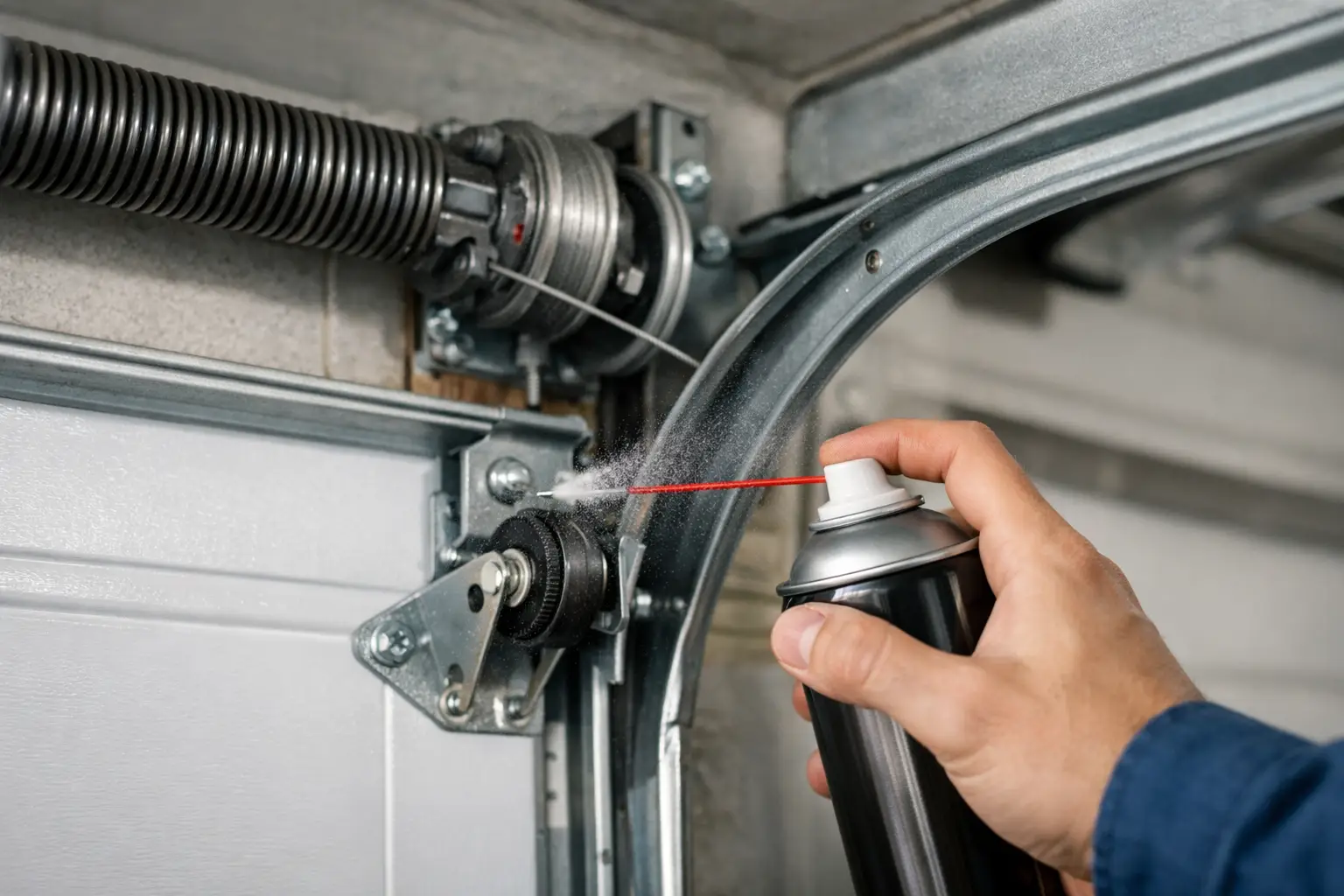
That grinding, squeaking, rattling sound usually starts small. Then one morning your garage door wakes up the whole house, jerks on the way up, or feels heavier than usual. If you're wondering how to lubricate garage door parts correctly, the good news is this is one of the few maintenance jobs most homeowners can handle on their own - as long as you know what to spray, where it goes, and what not to touch.
Lubrication helps reduce noise, cuts down on wear, and can help your door move more smoothly. But it is not a fix for every problem. If a spring is failing, a roller is cracked, or the track is bent, adding lubricant will not solve it. In some cases, it can even hide a bigger issue for a little while.
What to use to lubricate a garage door
The first step is using the right product. For most residential garage doors, a garage-door-specific lubricant or a silicone-based spray works well. A light lithium spray can also be a good fit for metal moving parts. What you do not want is a heavy grease that collects dust or a general-purpose spray that starts slick and then turns sticky.
A lot of homeowners reach for whatever is already on the shelf. That is understandable, but it is where trouble starts. Thick grease attracts grit. Some spray products leave residue that gums up rollers and hinges over time. If you use the wrong lubricant, the door may get quieter for a week and then end up dirtier and rougher than before.
If your door has nylon rollers, be especially careful. The bearings may need a light application, but the nylon wheel itself does not need to be soaked. More is not better here.
How to lubricate garage door components step by step
Before you spray anything, close the garage door and disconnect the opener if you want an extra margin of safety while inspecting moving parts. You do not need to take the system apart. This is a light maintenance job, not a repair.
Start with a clean rag and wipe away obvious dust, old residue, and cobwebs from hinges, rollers, and the spring area. Lubricant works best on reasonably clean hardware. If you spray over built-up grime, you are basically making sludge.
Hinges
Apply a short spray at each hinge pivot point where the metal pieces move against each other. Open and close the door by hand if possible so the lubricant works in. You are not trying to coat the entire hinge. Focus on the moving joint.
Rollers
Lubricate the roller bearings, not the track. If you have steel rollers, apply a small amount where the shaft and bearing meet. If you have nylon rollers, avoid drenching the wheel. A little on the bearing area is enough if the roller design allows it.
Torsion springs
If your door uses torsion springs above the opening, apply a light spray across the top of the spring while the door is closed. Then open and close the door a few times to spread it. This can reduce noise and surface friction, but do not mistake a quieter spring for a healthy one. Springs are under high tension, and lubrication does not fix fatigue, gaps, rust damage, or balance issues.
Bearing plates and pulleys
If your system has bearings or pulleys that are accessible, a light application on the moving contact points can help. Extension spring systems may have pulleys near the horizontal track. Again, use restraint. A quick spray is enough.
Lock and arm bar joints
If your manual lock or arm bar joints squeak, they can also benefit from a small amount of lubricant. These little spots are easy to overlook and often cause more noise than people expect.
Where not to spray
This matters just as much as knowing where to apply lubricant. Do not lubricate the tracks. Tracks should be clean and dry. If you spray them, rollers can slip, dirt can build up, and the door may not travel properly.
Do not spray the belt on a belt-drive opener. Do not soak the chain either unless the opener manufacturer specifically recommends a certain product and method. Opener rails, chains, and screws depend on the system design. When in doubt, check the opener manual instead of guessing.
And do not spray directly into electrical components, safety sensors, or the opener motor housing.
How often should you lubricate a garage door?
For most homes, about twice a year is enough. A good rule is once before winter and once in spring. In Northern Colorado, dry conditions, windblown dust, and temperature swings can dry out moving parts faster than people expect, so some doors do benefit from a little extra attention.
That said, a noisy door does not always mean it needs more lubricant. If you are spraying the same hinges every month, something else may be going on. Worn rollers, loose hardware, poor balance, or a misaligned track can all create noise that keeps coming back.
Signs lubrication is enough - and signs it is not
A little noise, light stiffness, or minor chatter during movement often improves with proper lubrication. If the door has been otherwise reliable and the sound developed gradually, maintenance may be all it needs.
But there are clear signs that the problem is beyond routine care. If the door is jerking, hanging crooked, slamming shut, reversing unexpectedly, or feeling unusually heavy, stop there. Those symptoms point to mechanical issues that should be inspected, especially if springs or cables are involved.
You should also pay attention to rollers that wobble, hinges that look cracked, frayed cables, gaps in a torsion spring, or bent track sections. Lubrication will not correct any of those. It may make the door a little quieter while the real problem keeps getting worse.
A few common mistakes homeowners make
The biggest mistake is overapplying lubricant. People tend to think if a little helps, a lot will help more. In reality, excess spray drips onto the door, collects dirt, and creates a mess that attracts more wear.
The second mistake is using the wrong product. Household oils and sticky sprays can leave parts worse off. The third is trying to lubricate away a repair issue. If the opener is straining or the door is out of balance, that is not a maintenance problem.
Another common one is forgetting the simple visual inspection. While you are there, look at brackets, bolts, rollers, and the spring system. You are not tightening high-tension components yourself, but you can still spot changes early.
When it makes sense to call for service
If you have done the basic maintenance and the door still squeals, binds, or shakes, it is time for a closer look. The same goes for doors that have not been serviced in years. A professional tune-up is often less about spraying lubricant and more about catching worn parts before they turn into an emergency.
That is especially true if your car is trapped, the door will not close all the way, or the opener sounds like it is fighting the weight of the door. Those are not wait-and-see issues. Springs, cables, and off-track doors can become dangerous fast.
For homeowners in Greeley, Evans, Windsor, and Ault, this usually comes down to peace of mind. You want the door quiet, safe, and dependable without guessing whether a small noise is just dryness or the start of a bigger failure. That is why many people handle light lubrication themselves and leave the tension, balance, and hardware checks to a local tech.
At Greeley Garage Door Repair by Mike, we see this all the time: a homeowner does the right thing, lubricates the door, and then realizes the real issue is a worn roller, failing spring, or opener problem. There is nothing wrong with starting with maintenance. The key is knowing when maintenance ends and repair begins.
A quiet garage door is nice. A safe one matters more. If you lubricate the moving parts properly and the door still sounds off, trust what it is telling you before a minor annoyance turns into a stuck door at the worst possible time.