
A garage door that stops halfway open at 10 p.m. is not just annoying. It is a security problem, a weather problem, and sometimes a safety hazard if the door is under tension or hanging unevenly. If you are looking for how to secure a stuck garage door, the first goal is not forcing it closed. The goal is making the area safe, protecting your home, and avoiding a much more expensive repair.
A lot of homeowners make the same mistake in this situation. They hit the opener again and again, pull the emergency release without checking the door position, or try to muscle the door down from one side. That can turn a stuck door into a crashed door. If the spring is broken, a cable is loose, or the rollers have come off track, the door may no longer be carrying its weight the way it should.
How to secure a stuck garage door without making it worse
Start by figuring out what kind of stuck you are dealing with. A door that is fully closed but will not open is inconvenient. A door that is open a few inches is usually manageable. A door that is stuck halfway or hanging crooked is the one that deserves the most caution.
If the door is jammed in a partially open position, keep people and pets away from it first. Do not stand under it. Do not let anyone try to duck under it. If the door looks uneven, if one side is lower than the other, or if you hear popping, grinding, or cable noise, assume there is a spring or track issue and leave it alone until a technician can inspect it.
Your next move depends on whether the door is stable. If it appears level and is not drifting, disconnect power to the opener. You can do that by unplugging the opener or switching off the breaker if the outlet is not safely reachable. This prevents anyone from accidentally hitting the wall button or remote while you are trying to secure the opening.
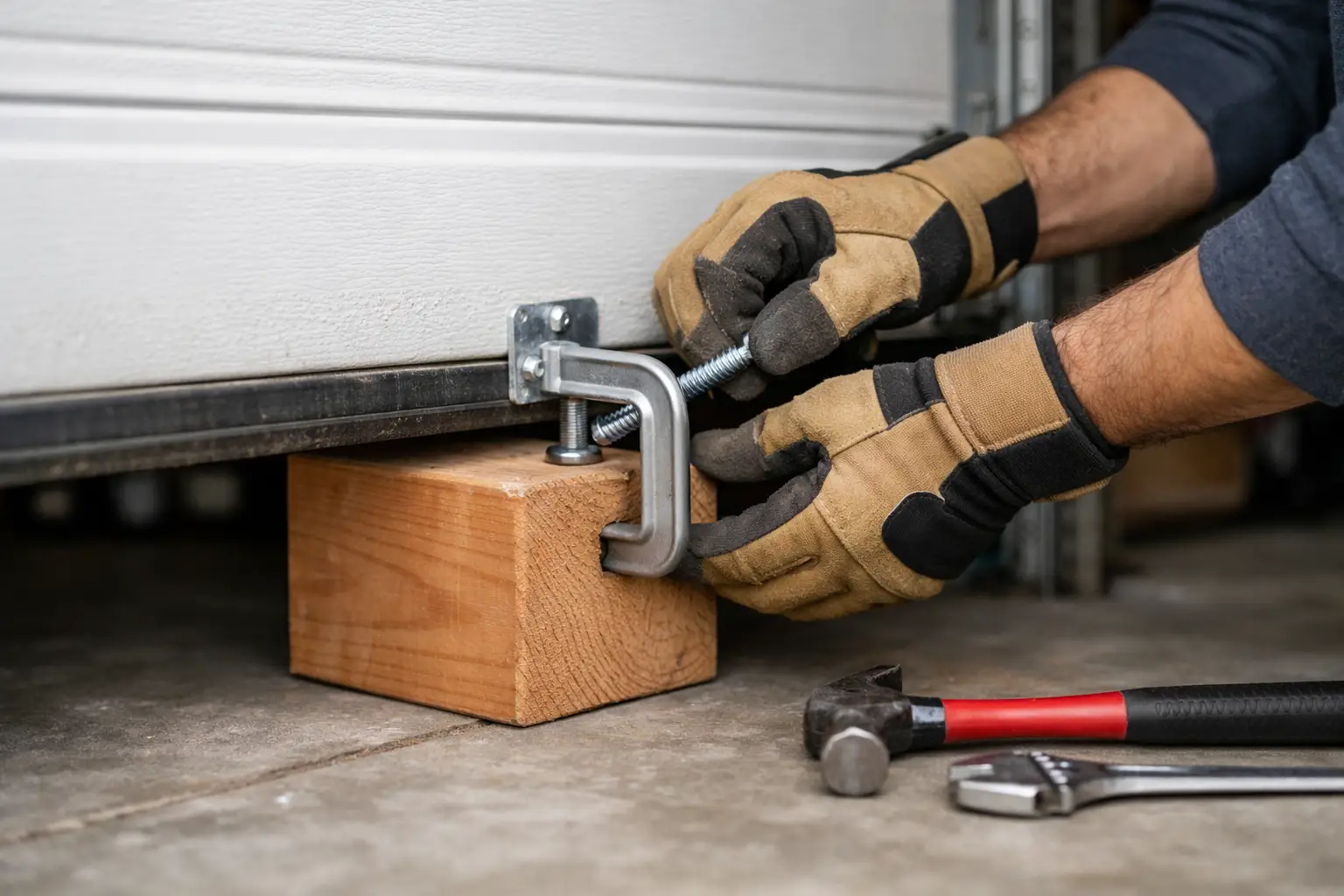
If the door is partially open but stable, place locking pliers or a sturdy C-clamp on the track just below the bottom roller on both sides. That will help keep the door from sliding further down. This is not a repair. It is a temporary safety step to keep the door from moving unexpectedly.
When you should not try to close it yourself
There is a big difference between a simple obstruction and a failed door component. If you can clearly see a shovel, trash can, ice buildup, or other object blocking the path, removing that obstacle may solve the problem. But if the door stopped for no obvious reason, be careful.
Do not try to manually close the door if a torsion spring is broken. In many cases, the opener was doing part of the lifting work until the system failed. Once the spring breaks, the full weight of the door becomes a serious issue. Steel garage doors can weigh hundreds of pounds. Wood doors can be even heavier.
You should also stop and call for service if the cable is hanging loose, the rollers are out of the track, the top section is bent, or the opener rail is straining. Those are not DIY adjustments. They are warning signs that the door is not moving evenly, and trying to force it can damage panels, tracks, hinges, and the opener itself.
For homeowners in Greeley and nearby areas, this is where fast local help matters. A stuck garage door is one of those problems that can go from minor to dangerous in a hurry if the wrong part gets touched.
Securing the opening if the door is stuck open
Sometimes the bigger issue is not the door itself but the fact that your garage is exposed. If the door is stuck open and cannot be safely lowered, focus on securing access points around it.
If your garage connects to your house, lock the interior door leading from the garage into the home. That gives you one layer of protection right away. Remove garage remotes from any vehicles parked outside, especially if the door is open enough for someone to see inside. If bikes, tools, or equipment are near the opening, move them deeper into the garage or into the house if possible.
If weather is coming in, you can use a temporary barrier near the opening, but keep expectations realistic. Tarps, plywood, or storage panels may help block wind, snow, or visibility for a short period, but they are not substitutes for a functioning door. Do not screw or nail anything into the tracks or door sections. That often creates more damage and slows down repair.
If the opening is wide and the door is stuck overhead, lighting matters too. A dark garage with an open entry can attract the wrong kind of attention. Exterior lights, motion lights, and keeping the area visible can help until the repair is handled.
If the door is stuck closed and you need to leave
This is the other version of the problem, and it is common when springs break overnight or during cold weather. If your car is trapped inside and the door will not open, resist the urge to keep cycling the opener. Repeated attempts can burn out the opener motor or strip internal gears.
First, look for obvious issues. Is the lock engaged? Is something blocking the photo eyes? Did the opener lose power? If the opener hums but the door does not move, or if it lifts a few inches and stops, that points more toward a spring, track, or hardware issue.
If you must get out and there is another vehicle available, use that instead of trying to force the garage door. If there is no other option and the door appears fully level with no visible broken parts, two adults may be able to lift it manually after disconnecting the opener - but only if the spring system is still intact. If there is any doubt, stop there. A door that feels unusually heavy is telling you something.
Common reasons a garage door gets stuck
Knowing the cause helps you decide whether this is a simple reset or a same-day repair call. In Northern Colorado, cold snaps, wind, and daily wear all play a part.
Broken torsion springs are one of the most common causes. When a spring breaks, the opener may still try to move the door, but the balance is gone. Worn rollers can bind in the track and cause jerky movement or sudden stops. Bent tracks, loose cables, and damaged hinges can also leave a door hanging or jammed in one spot.
Sometimes the issue is with the opener rather than the door. A stripped gear, bad travel setting, failed logic board, or sensor problem can stop operation even when the door hardware is mostly fine. The tricky part is that symptoms overlap. What feels like an opener issue may really be a broken spring, and treating it like a power problem can make things worse.
What you can check safely before calling
There are a few things homeowners can inspect without taking unnecessary risks. Look at the tracks for a visible obstruction. Check whether the photo eyes are aligned and clean if the door starts down and reverses. Confirm the manual lock has not been engaged by accident. If the opener outlet lost power, resetting that may restore function.
Beyond that, inspection should stay visual. Do not loosen brackets, remove bolts from the bottom fixtures, adjust spring hardware, or try to rewind anything under tension. Garage doors look simple from the outside, but the counterbalance system stores enough force to cause serious injury.
A good rule is this: if the fix requires tools beyond a flashlight and a clamp, it is probably time to hand it off.
How to secure a stuck garage door until repair arrives
If you are waiting on service, keep the setup simple. Cut power to the opener so no one activates it by mistake. Keep the area clear. If the door is partly open and stable, clamp the tracks below the rollers. Secure the door into the house. Move valuables out of sight. If needed, park another vehicle in the driveway to reduce direct access or visibility into the garage.
Then leave the door alone. A lot of secondary damage happens in the waiting period because someone decides to try one more thing. One more push, one more opener cycle, one more adjustment. That is how minor repairs turn into bent panels, broken hinges, or a door that drops completely out of alignment.
The smart move is not always the hands-on move. Sometimes securing the situation means recognizing that the safest temporary fix is simply keeping the door stable and getting a qualified repair tech there fast.
If your garage door is stuck, think safety first, property protection second, and repair third. The order matters. A door can be fixed. An injury or a collapsed door is a much bigger problem. The best next step is the one that gets your home secure without taking chances you do not need to take.