


A garage door spring rarely gives a dramatic warning before it fails. More often, the door starts feeling heavier, moves unevenly, makes a new noise, or stops opening as smoothly as it used to. Knowing how to spot garage spring wear can help you schedule a repair before your car is trapped, your door is stuck open, or a worn spring breaks at the worst possible time.
Garage door springs carry most of the door’s weight. The opener is designed to guide the door, not muscle a heavy door up and down. When springs weaken, the entire system works harder, including the opener, cables, rollers, and tracks. Catching the problem early can prevent a smaller repair from turning into a stressful same-day emergency.
Why Garage Door Spring Wear Deserves Attention
Most residential garage doors use either torsion springs or extension springs. Torsion springs sit on a metal shaft above the door opening. Extension springs run along the horizontal tracks on each side of the garage. Both are tightly wound or stretched under serious force, which is why spring repair is not a safe do-it-yourself project.
Springs are rated by cycles, with one full opening and closing counting as a cycle. A standard spring may last roughly 10,000 cycles, but real life varies. A busy family using the garage as the main entrance may wear through springs sooner than a household that opens the door a few times a week. Northern Colorado temperature swings can also affect metal components and make existing wear show up faster.
A worn spring does not always mean the door will fail immediately. But it does mean the door is losing balance and needs a professional look. Waiting until a spring breaks can leave a heavy door stuck shut or partly open, and it can put extra strain on an otherwise healthy opener.
How to Spot Garage Spring Wear at Home
You do not need to touch the springs to recognize a problem. A few everyday signs can tell you that the door’s counterbalance system is no longer doing its job.
The door feels unusually heavy
This is one of the clearest warning signs. With the garage door closed, disconnect the opener only if you can do so safely and the door is fully down. Then lift the door manually from the bottom handle. A properly balanced door should feel manageable and should not suddenly slam down or require all your strength to lift.
If the door feels much heavier than before, stop using it manually and do not force the opener to compensate. One weakened or broken spring can make a typical double garage door feel like dead weight. If you are unsure, leave the door closed and call for service.
The door will not stay halfway open
A balanced garage door should generally hold its position when it is opened about halfway. If it drops quickly, rises on its own, or refuses to stay put, the springs may be improperly tensioned, worn out, or mismatched.
This test is useful, but it is not a reason to keep experimenting with a questionable door. Keep people, pets, and vehicles clear of the opening while checking it. Never stand under a door that is drifting or unstable.
You hear new squeaks, bangs, or straining
Garage doors make some noise. A sudden loud bang from the garage can be the sound of a torsion spring breaking. Many homeowners describe it as a gunshot or a heavy object falling. If that happens, do not try to run the opener again.
Before a complete break, you may hear popping, creaking, or loud strain as the door moves. Noise alone does not prove a spring is failing. Dry rollers, loose hardware, or an aging opener can also make noise. Still, a new sound paired with a heavy or jerky door is a good reason to have the whole system inspected.
The opener struggles, reverses, or only lifts the door partway
An opener that hums, stalls, reverses unexpectedly, or pulls the door only a few inches may be dealing with spring trouble. The opener is often blamed first because it is the part you can see moving. But when springs lose tension, the opener is being asked to lift more weight than it was built to handle.
Do not keep pressing the remote in hopes that the door will finally go up. Repeated attempts can damage the opener gear, rail, or motor. A technician can determine whether the issue is truly the opener, the springs, or a combination of problems.
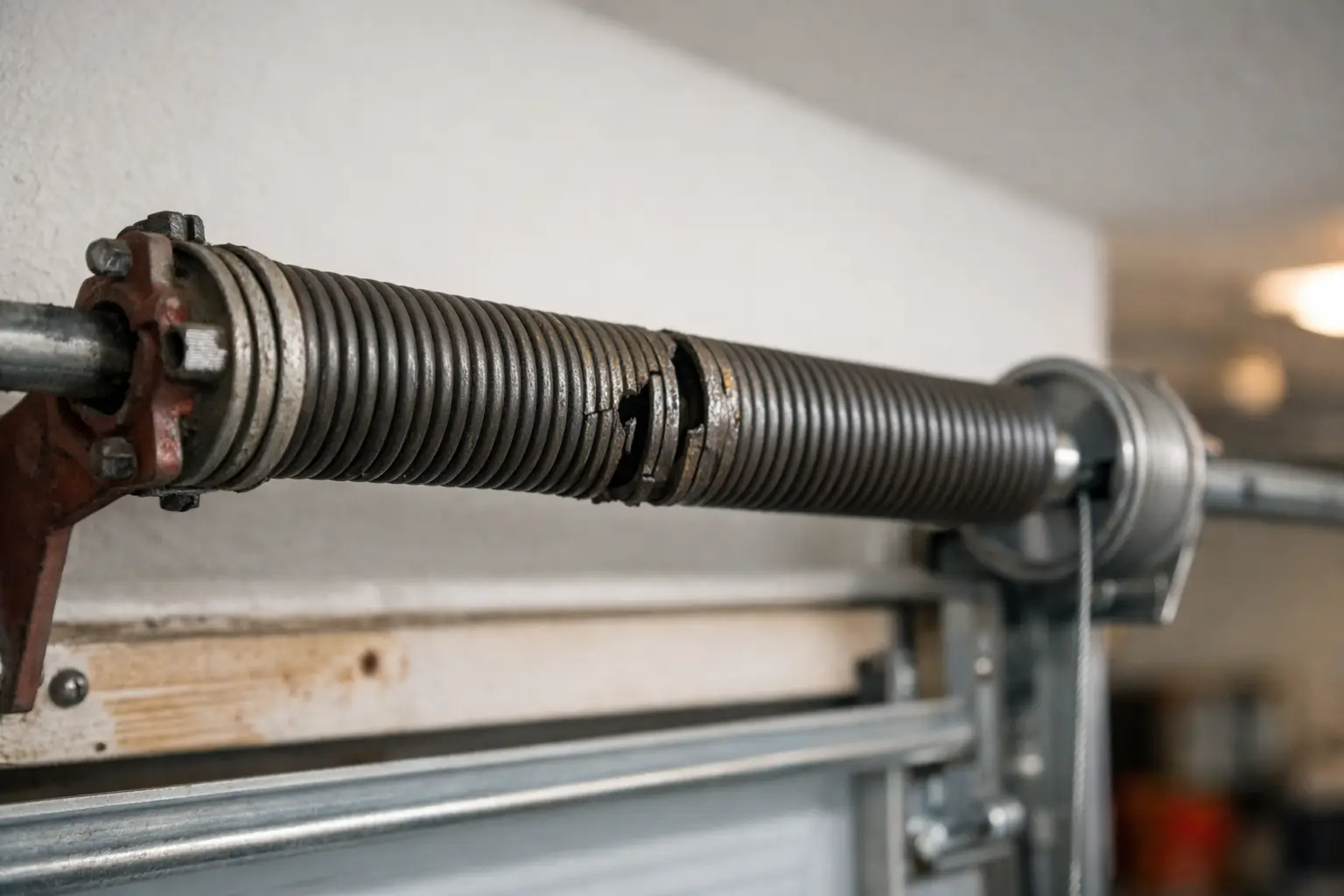
You can see a gap in a torsion spring
With the door closed and the opener off, look above the garage door from a safe distance. A broken torsion spring usually has a visible gap of about two inches where the coil has separated. That is a clear sign that replacement is needed.
Do not touch the spring, winding cones, cable drums, or the shaft. Even a spring that looks intact can still hold dangerous tension. A visual check is enough.
The door opens crooked or the cables look loose
When one spring wears differently than the other, or when a spring breaks, the door may lift unevenly. One side may rise higher, the door may shake, or a cable may look loose near the drum. In some cases, the door can come off track.
Stop operating the door if you see loose cables, a crooked door, or rollers out of the track. These conditions can worsen quickly. Trying to push the door straight or reset a cable without the right tools can create a bigger repair and a real injury risk.
What Spring Wear Can Look Like on Different Doors
A single-car garage door may still open with a weak spring because the door is lighter. That does not mean the system is safe. The opener may be taking the extra load, quietly wearing itself out until it fails too.
Double doors and insulated doors are heavier, so spring problems are often more obvious. The door may stop halfway, move slowly, or refuse to lift at all. Custom wood-look doors, wind-rated doors, and commercial overhead doors also need springs sized specifically for their weight and use. The right repair is not just installing any spring that fits the shaft.
For businesses, spring wear can show up as a loading-bay door that hesitates, a rolling steel door that will not stay open, or an operator that trips out during a busy workday. Commercial doors often have higher cycle counts, so regular inspection is especially worthwhile.
What Not to Do When You Suspect a Worn Spring
Springs are one of the most dangerous parts of a garage door system. The safest move is simple: do not loosen bolts, remove cables, clamp the spring, or attempt to wind it with makeshift tools. Online videos can make spring replacement look straightforward, but the risk is not worth it.
Avoid pulling the emergency release while the door is open if you suspect a broken spring. Without spring support, the door can fall hard. If the door is already open and will not close normally, keep the area clear and call for help. A technician can secure the door and determine the safest next step.
It is also wise not to park directly under a door that is acting unstable. If possible, use another entrance until the repair is complete.
When to Call for Garage Door Spring Repair
Call for service promptly when the door feels heavy, will not stay balanced, has a visibly broken spring, opens crooked, or makes a sharp bang followed by failure to lift. Same-day repair is often possible when the right springs and hardware are stocked on the service truck.
A qualified technician should inspect more than the broken part. Springs work alongside cables, bearings, drums, rollers, hinges, tracks, and the opener. A clear diagnosis should explain what failed, what is still in good shape, and what the repair will cost before work begins.
At Greeley Garage Door Repair by Mike, the goal is to give homeowners in Greeley and nearby communities a straight answer, a clear upfront price, and a safe repair without unnecessary add-ons. If both springs are the same age, replacing them together is often the practical choice because the second spring may not be far behind. If one spring was replaced recently, however, the better answer depends on its condition and the door’s balance.
A Simple Habit That Helps Springs Last
Once or twice a year, watch the door through a full open-and-close cycle. Listen for changes, look for uneven movement, and keep the tracks clear of stored items and debris. You can also use garage-door-approved lubricant on moving metal parts as recommended by a technician, but do not spray lubricant directly on the tracks or try to adjust spring tension yourself.
The best time to address garage spring wear is when the door is still working, not after it leaves you late for work or unable to secure the garage. If something feels different, trust that instinct and have the door checked before a small warning becomes a broken-spring emergency.