
A garage that bakes in July and freezes in January usually has the same weak spot - the door. If you're considering insulated garage door installation, you're probably not shopping for a small upgrade. You're trying to fix a space that feels too hot, too cold, too loud, or too drafty to ignore.
For a lot of homeowners, the garage is more than a place to park. It may share a wall with a bedroom, sit under a bonus room, or double as a workshop, gym, storage area, or main entry point. In those cases, the type of door you install affects comfort inside the house, not just inside the garage.
Why insulated garage door installation matters
An insulated garage door helps slow down heat transfer. That does not mean your garage will feel climate-controlled on its own, but it can make a noticeable difference when outdoor temperatures swing hard. In Northern Colorado, that matters. Cold snaps, summer heat, wind, and sun exposure can all push a garage to extremes.
Insulation also helps with noise. A well-built insulated door tends to rattle less than a thinner non-insulated model, and it can reduce some street noise or neighborhood sound coming through the garage. If your current door sounds like a sheet metal drum every time it opens, this upgrade often improves that experience right away.
There is also the durability factor. Many insulated doors use steel layers with insulation in between, which gives the panels more rigidity. That can help the door hold up better over time, especially compared with lower-end pan doors that flex more and dent more easily.
Not all insulated doors are built the same
This is where homeowners can get tripped up. Two doors may both be labeled insulated, but that does not make them equal.
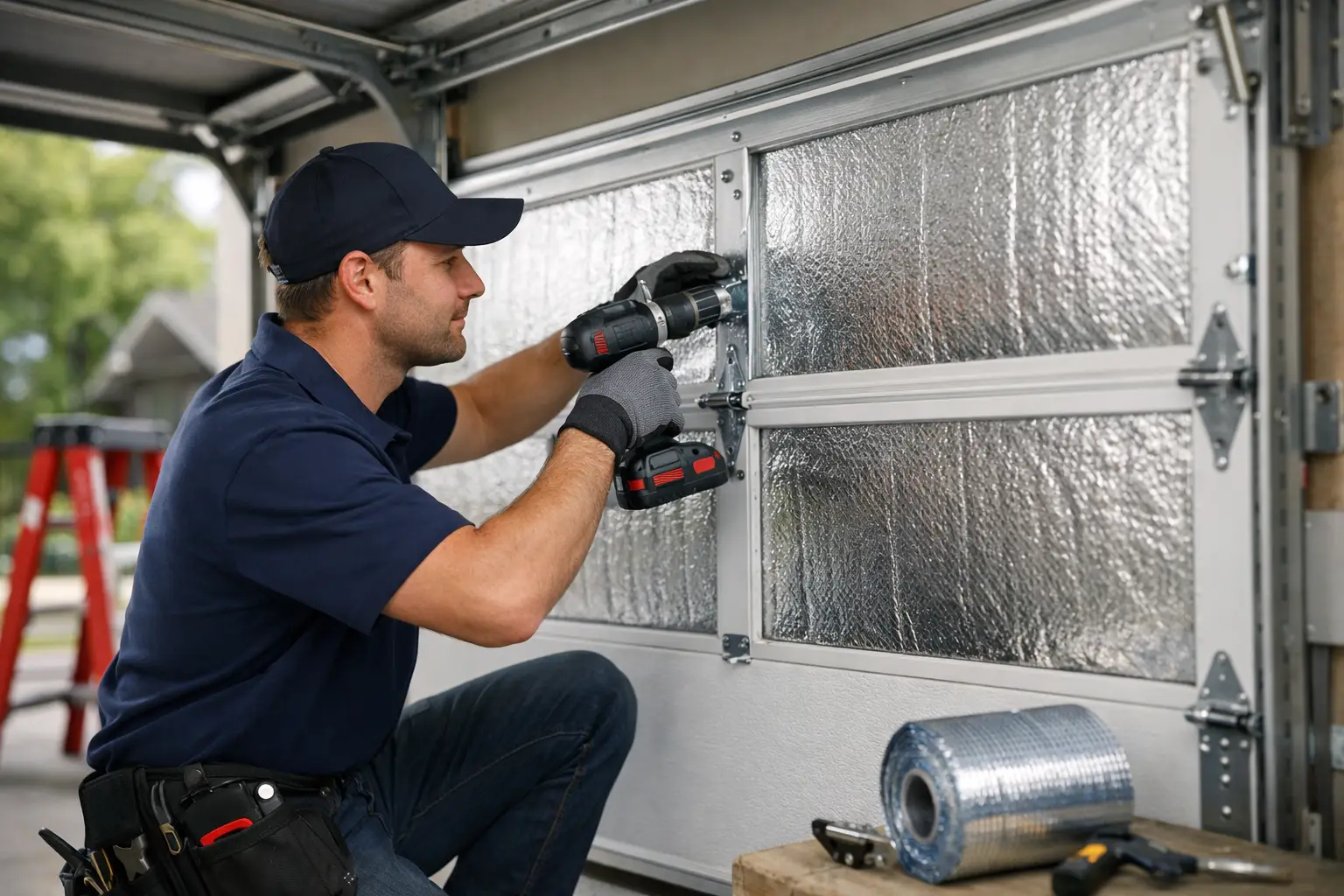
Some doors have a single layer of steel with insulation attached to the inside. Others are built as true multi-layer doors, usually steel on the outside, insulation in the middle, and a backing layer on the interior. That second type generally feels sturdier, runs quieter, and offers better overall performance.
You'll also hear about insulation types. Polystyrene is common and more budget-friendly. Polyurethane usually offers a higher insulating value and fills the door more completely, which can improve both energy performance and panel strength. If your garage is attached to the house or you spend time working in it, polyurethane is often worth a serious look.
R-value gets a lot of attention, and it should, but it is not the only thing that matters. A high R-value on paper is good, but weather seal quality, door fit, panel construction, and proper installation all affect real-world performance. A poorly installed insulated door can still leak air around the edges and leave you wondering why the garage still feels uncomfortable.
What to expect during insulated garage door installation
A proper installation starts before the new door goes up. The opening needs to be measured correctly, the track layout needs to match the space, and the opener has to be compatible with the new door's size and weight. That last part matters more than many people realize.
Insulated doors are often heavier than basic non-insulated models. In many cases, that is not a problem, but it does mean the spring system has to be sized correctly. If springs are undersized or mismatched, the opener works harder than it should, parts wear out faster, and the door may not balance safely.
During installation, the old door and hardware are removed, new tracks and panels are set, and the spring system is installed and adjusted. Weather seals should be checked at the bottom and around the perimeter. The opener is then connected, adjusted, and tested through full cycles to make sure the door opens smoothly and closes evenly.
This is not a place for shortcuts. Garage doors rely on high-tension components, especially torsion springs. A clean-looking install is not enough if the balance is off or the hardware is not set up correctly. The door should move smoothly, stay aligned, and seal well when closed.
How to know if an insulated door is worth the money
Sometimes the answer is clearly yes. If the garage is attached to your home, if there is a room above it, or if the garage is your most-used entrance, an insulated door usually makes practical sense. The comfort improvement alone can justify it, especially when your current door is thin, noisy, or worn out.
If you use the garage as a workspace, the case gets stronger. Even with basic heating or cooling in the space, a better-insulated door helps that equipment do less work. It will not turn the garage into a finished living room, but it can make the space much more usable.
For detached garages, it depends more on how the space is used. If you only store vehicles and lawn equipment, a non-insulated door may be enough. If you spend time in there, keep temperature-sensitive items inside, or want a quieter and more solid door, insulation is still a smart upgrade.
Budget matters too. Insulated doors cost more upfront than basic models. That is the trade-off. But many homeowners are not just paying for energy performance. They are paying for better strength, better noise control, a more finished look, and a door that feels like a long-term improvement instead of a bare-minimum replacement.
Choosing the right door for your home
Style still matters. Your garage door takes up a big part of the front of the house, so performance should not come at the expense of curb appeal. The good news is that insulated models come in a wide range of looks, from clean raised-panel styles to carriage-house designs with windows and decorative hardware.
Color, panel design, and glass options should match the home, but practical details matter just as much. South-facing doors take more sun. Wind exposure can affect how a door ages. Homes with bedrooms near the garage may benefit from a quieter belt-drive opener paired with the insulated door.
This is also the right time to think about replacing old hardware and checking opener condition. A new insulated door installed on worn rollers, aging tracks, or an opener that is already near the end of its life can leave part of the system lagging behind the rest. Sometimes a full package makes more sense than doing the door now and chasing related problems later.
Common mistakes homeowners make
The biggest one is shopping by price alone. A low quote can leave out key parts of the job, such as upgraded springs, better seals, haul-away, or opener adjustments. What looks cheaper at first can turn into callbacks, added charges, or a door that never feels quite right.
Another mistake is focusing only on insulation rating and ignoring installation quality. The best door on the market will not perform well if the tracks are off, the springs are wrong, or gaps are left around the frame.
Some homeowners also assume any installer can handle any door. That is risky. Insulated doors need correct balancing, proper reinforcement, and attention to opener setup. Working with a local company that handles garage doors every day usually leads to a better result than hiring a general handyman for a job this specialized.
When to replace instead of repair
If your current door has minor issues, repair may still be the better call. A broken spring, worn rollers, frayed cables, or an opener problem does not automatically mean you need a new insulated door.
But if the door is older, dented, poorly insulated, noisy, and starting to have repeated issues, replacement often saves money and frustration over time. The tipping point usually comes when you are putting repair money into a door that still does not meet your needs once the repair is done.
For homeowners in Greeley, Evans, Windsor, and Ault, that decision often comes down to weather, daily use, and how closely the garage connects to the rest of the home. A basic door may keep the opening covered. A properly selected insulated door can make the whole area work better.
At Greeley Garage Door Repair by Mike, this is the kind of job that should feel straightforward. You want clear pricing, honest advice, and an installation that is done safely and set up to last. If a new insulated garage door fits your home, it should solve a real problem, not create a new one. And when it is installed right, you notice it every day - in the quieter operation, the more stable temperature, and the simple relief of having one less part of the house to fight with.