
A trapped car is stressful, especially when you are trying to get to work, school, or an appointment. If the power is out or your opener has quit, you may be able to open garage door manually - but only when the door is in a safe condition. A garage door is heavy, and its springs and cables carry serious tension. The goal is to get access without turning an opener problem into an injury or a damaged door.
Before touching the emergency release, take a quick look at the door. If it is fully closed, appears straight in the tracks, and has no visible broken spring or loose cable, manual operation may be reasonable. If it is crooked, hanging unevenly, stuck partway open, or making loud grinding or snapping sounds, stop. That is a repair call, not a do-it-yourself lifting job.
Know When It Is Safe to Open a Garage Door Manually
Your garage door opener does not do all the heavy lifting. The springs above the door or along its sides counterbalance most of the door's weight. When those springs are working, a disconnected door should usually lift with steady effort and stay near its open position.
When a spring breaks, the door can weigh well over 100 pounds in your hands. Trying to force it open can strain your back, damage the opener rail, bend the tracks, or cause the door to crash down. A broken torsion spring may look like a visible gap in the coil above the door. Extension springs run along the horizontal tracks and may hang loose, stretch unevenly, or break apart.
Do not manually lift the door if you see a broken spring, frayed or off-drum cables, bent tracks, damaged rollers, or a door that is off track. The same applies if the door is already open and unstable. Do not pull the red emergency-release cord on an open door with a suspected spring problem. It may fall quickly once it is disconnected from the opener.
How to Open a Garage Door Manually From Inside
Start with the door fully closed whenever possible. Make sure children, pets, and anyone not helping are clear of the garage opening. If the power is out, unplug the opener so it cannot activate unexpectedly when electricity returns. If the opener has failed but power is available, use the wall button only long enough to confirm it will not run. Then unplug it.
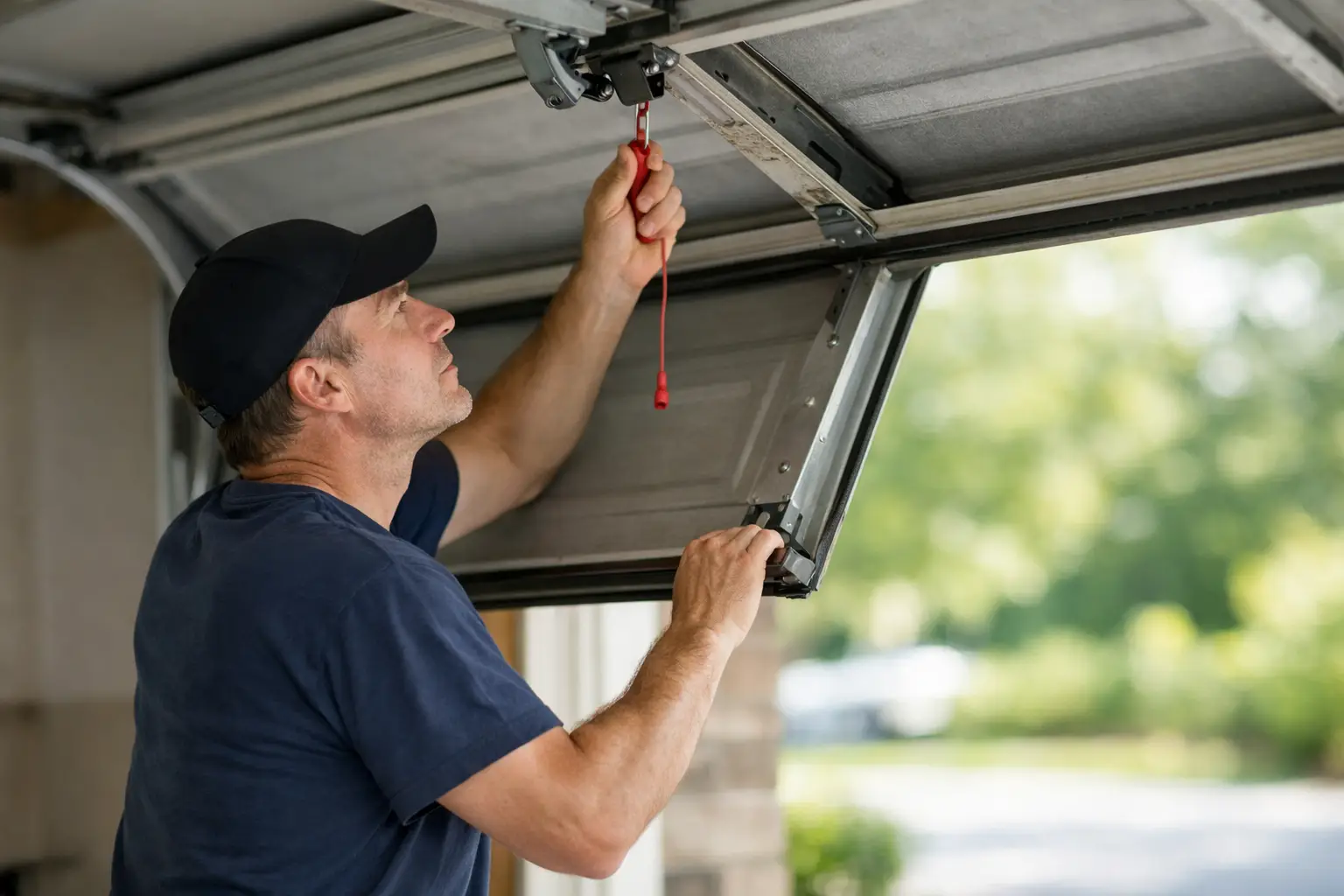
Find the emergency-release cord. It is usually a red rope with a red plastic handle hanging from the trolley on the opener rail. Pull the cord straight down, then slightly back toward the motor unit if needed. You should feel the trolley disconnect from the opener carriage.
Once released, move to the bottom of the door and lift it from a sturdy handle or the lowest solid section. Keep your hands away from the gaps between door panels, where fingers can get pinched. Lift smoothly with your legs, not your back, and keep the door balanced as it travels up the tracks.
A properly balanced door should move without a major struggle. If it feels unusually heavy, rises only a few inches, sticks, or pulls to one side, lower it carefully if you can do so safely and stop there. Forcing a door through resistance can pull cables off the drums or knock rollers out of the track.
When the door reaches the open position, make sure it is fully open and stable before walking or driving underneath it. Do not leave a manually opened door unattended for long. A weak spring, worn roller, or shifted track can allow it to move unexpectedly.
Opening the Door From Outside Without Power
Many homeowners discover the emergency release is inside the garage after a power outage. If there is no other entry door, use a house key, keypad with battery backup, or vehicle remote only if the opener still has power. Do not pry between panels, force a window, or try to pull the top section outward. That can damage the door and may create a bigger security issue.
Some garages have an exterior emergency-release lock that allows access to the release cord with a key. If your door has one and you know it is functioning, use it according to its instructions, then lift the door only after checking that the springs, cables, and tracks look normal.
If you are locked out and cannot safely reach the release, calling a garage door technician is the sensible move. A service technician can assess the door, provide access without unnecessary damage, and determine whether the original problem was the opener, a dead backup battery, a broken spring, or another mechanical failure.
How to Close and Reconnect the Door
To close a manually operated door, stand inside the garage whenever you can and pull the door down evenly. Keep your feet clear of the bottom edge and your hands clear of panel joints. Never let a heavy door free-fall. Guide it down in a controlled motion until it rests fully on the floor.
Before reconnecting the opener, check that the door is closed and the area is clear. Pull the emergency-release cord down and toward the door until the trolley mechanism resets. On many opener models, you can then run the opener with the wall button, and the trolley will automatically reconnect when it reaches the carriage. Other models require manually sliding the trolley until it clicks back into place.
After reconnection, test the door from a safe distance. It should open, close, and reverse normally when the safety sensors are blocked. If the opener hums, the chain or belt moves without the door, or the door stops and reverses, do not keep pressing the button. Repeated attempts can burn out an opener motor or worsen a binding door problem.
Common Situations That Call for a Technician
A power outage is often temporary. A garage door that suddenly will not lift is usually not. The difference matters because the wrong response can be dangerous.
Call for professional garage door repair if the door is too heavy to lift, one side is higher than the other, a cable is loose, or a spring is broken. Also call if the door has come off track, a roller has popped out, the opener rail is bent, or the door will not stay open after you lift it. These are not issues solved by pulling harder on the emergency release.
Cold Northern Colorado weather can also expose worn parts. Metal contracts, lubricant thickens, and an aging spring may finally fail after a sharp temperature change. If your door has been noisy, slow, or uneven before it stops working, treat that as a warning sign rather than a one-time inconvenience.
For commercial overhead doors, the stakes can be even higher. Rolling steel and high-cycle sectional doors are heavier, and a blocked bay can interrupt deliveries, tenant access, or daily operations. Do not ask employees to manually move a commercial door unless they have been trained for that specific system and the door is known to be safe.
A Few Steps That Prevent the Next Lockout
Once the immediate problem is handled, check whether your opener has a battery backup and whether that battery still works. Test the exterior keypad, keep a working key for a side entry door, and make sure every adult in the household knows where the emergency release is located.
Regular maintenance also gives you a chance to spot worn rollers, loose hardware, and tired springs before they leave a vehicle trapped in the garage. A balanced, well-maintained door is easier on the opener and much safer to operate by hand during an outage.
If your door is heavy, crooked, or stuck, leave it where it is and get help. Greeley Garage Door Repair by Mike provides straightforward repair service for homeowners who need the door working safely again, not a risky temporary workaround.