


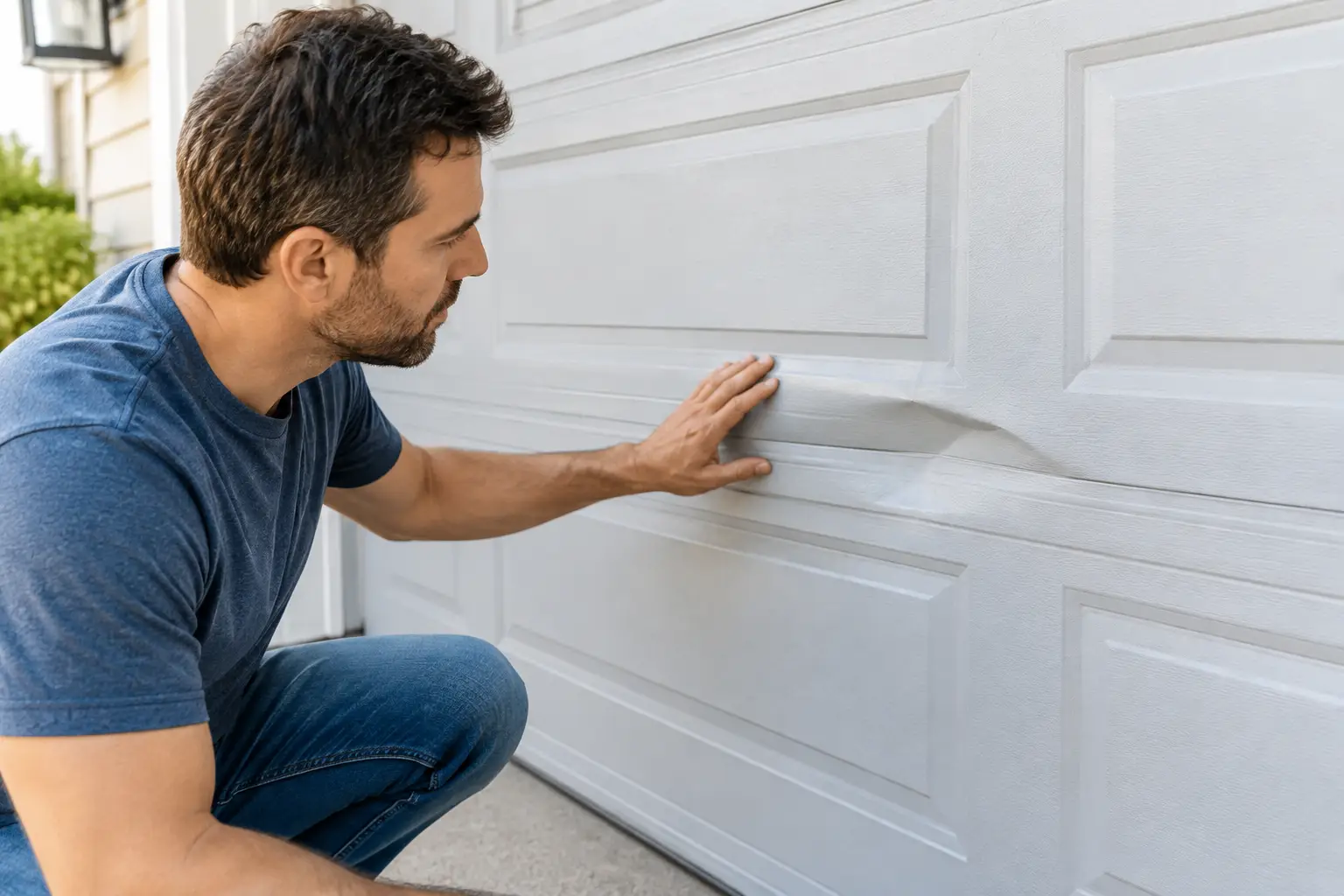
A dent in one garage door section can look like a cosmetic problem until the door starts rubbing, shaking, or refusing to close evenly. If you need to repair dented garage panel damage, the first question is not whether the dent looks bad. It is whether that damaged section is still letting the door move safely on its tracks.
A sectional garage door is a connected system. Each panel supports the next one through hinges, rollers, tracks, cables, springs, and the opener. A small bump from a car, trash bin, or basketball can sometimes be corrected. A deep crease near a hinge or roller can throw the whole door out of alignment and turn a simple panel issue into a stuck-door call.
When a Dented Garage Panel Can Be Repaired
A repair is often possible when the dent is shallow, limited to the flat center of a single steel panel, and has not bent the panel’s structural edges. The door should still open and close smoothly by hand, sit level when closed, and show no signs of rollers binding in the tracks.
For minor dents, a technician may be able to reshape the panel, reinforce the affected area, adjust hinges or rollers, and test the balance of the door afterward. This is usually the sensible option when the damage is recent, the door is otherwise in good condition, and an exact replacement panel is difficult to find.
That said, “repairable” does not always mean “worth repairing.” A dented panel can be made functional but still show a crease, paint crack, or waviness in direct sunlight. If curb appeal matters or the garage faces the street, replacement may be the better long-term answer.
Damage near hardware deserves extra caution
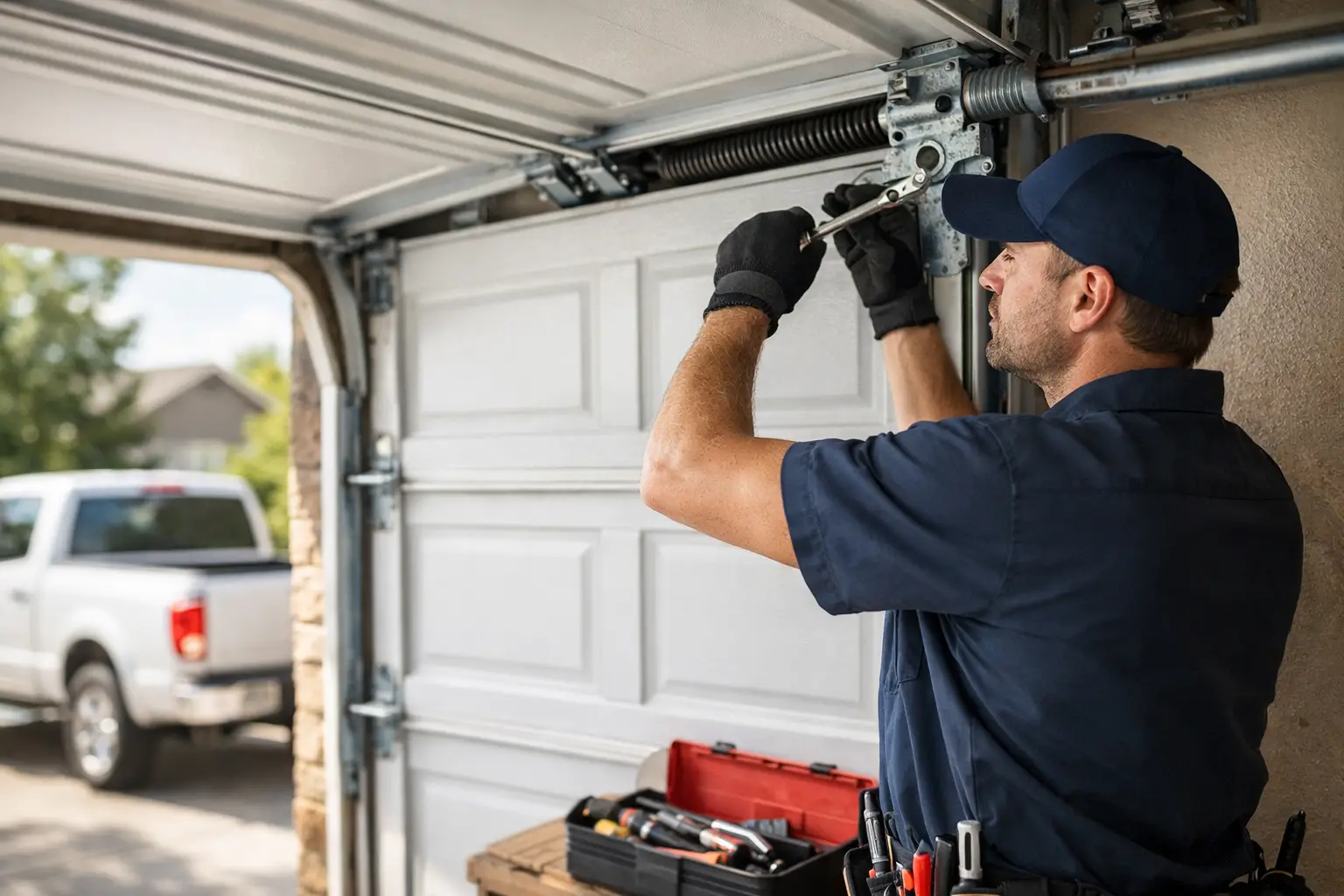
A dent beside a hinge, roller bracket, bottom fixture, or track is more serious than a dent in an open section of panel. Those areas carry force every time the door moves. Metal that has folded around hardware may continue to flex, loosen fasteners, or pull a roller out of its proper path.
The bottom panel needs particular attention. It carries weather seal, supports the door’s lower hardware, and is close to the lift cables. Do not loosen bottom brackets or cable connections to straighten a panel yourself. Garage door cables and springs are under high tension and can cause serious injury when handled incorrectly.
When Panel Replacement Is the Safer Choice
Panel replacement is usually recommended when the section is badly creased, cracked, split, rusted through, or bent along its top or bottom seam. It is also the right call when the door no longer seals against the floor, the panels no longer line up, or the damage makes the door bind during travel.
An insulated door adds another factor. A hard impact can crush the steel face and compress or separate the insulation inside. Even if the panel can be pushed back into shape, it may lose strength and insulation value. In Northern Colorado, where cold nights, wind, and temperature swings put extra pressure on a garage, that loss can be noticeable.
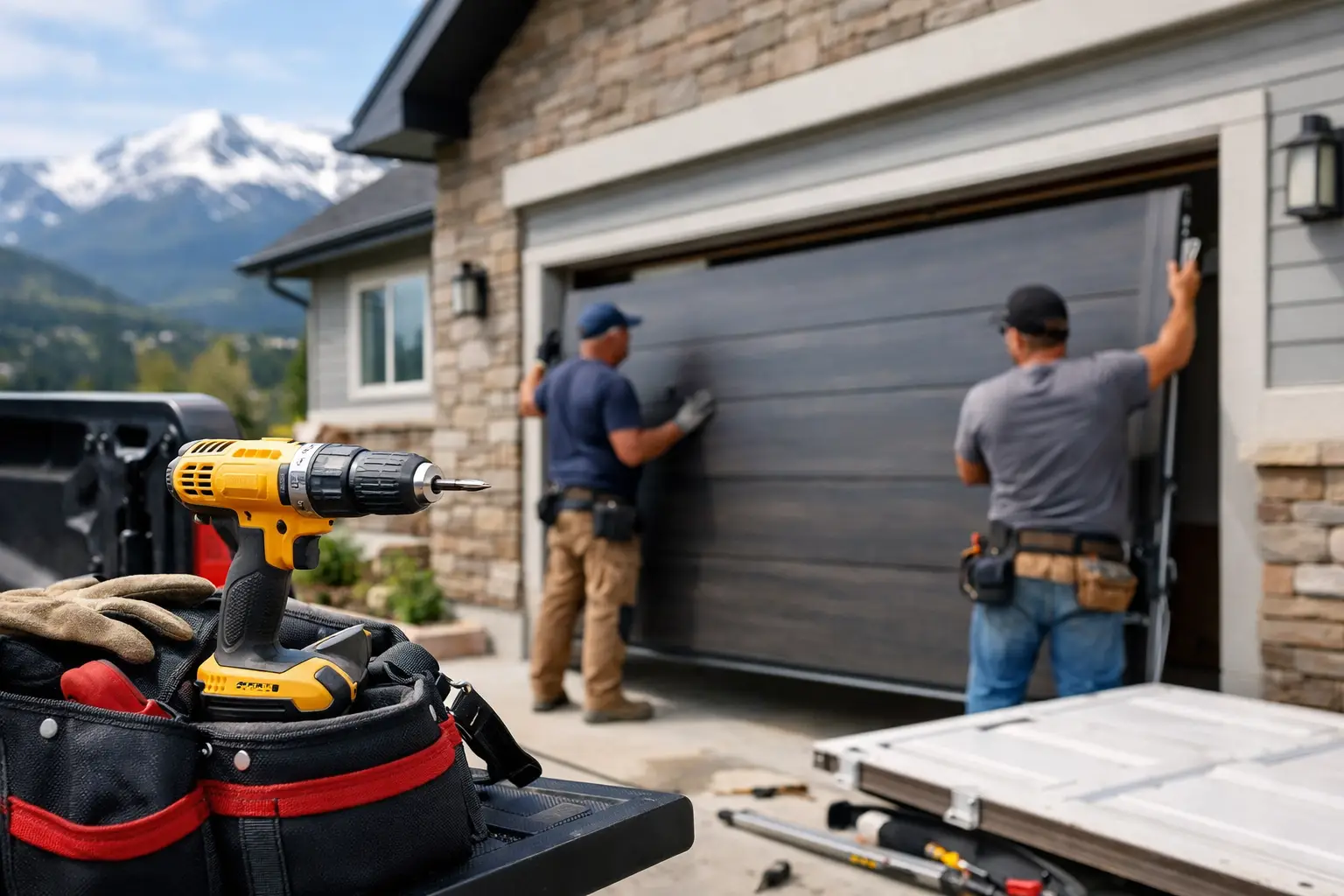
Replacement makes the most sense when a matching section is available from the original manufacturer. The technician will verify the door brand, panel profile, color, insulation thickness, window layout, and measurements before ordering. A panel that looks close but does not match the tongue-and-groove connection or hinge locations is not a proper fit.
If the door is older or several sections are dented, the math can change. Matching panels may be discontinued, shipping can be expensive, and a new section can look noticeably different next to faded older panels. At that point, replacing the full garage door may offer better value, a more consistent appearance, and a new warranty.
What Not to Do With a Dented Garage Door
Homeowners understandably want to try a quick fix before scheduling service. The problem is that many common tricks can make the panel weaker or damage the finish.
Do not hit the dent from the back with a hammer. Steel garage door panels are thin, and hammering commonly creates sharper bends or stretches the metal beyond a clean repair. Avoid drilling holes for improvised pull tools, too. Every hole invites moisture, corrosion, and a worse-looking repair.
Skip heat-and-cold tricks, especially on insulated panels. Rapid temperature changes can affect paint and adhesives without restoring the panel’s original shape. Spray foam behind a dent is not a structural repair. It can interfere with drainage, add uneven pressure, and make a later professional repair more difficult.
Most importantly, do not keep running the opener if the door is scraping, jerking, hanging crooked, or stopping partway. The opener is designed to move a balanced door, not force a damaged one through resistance. Continued use can strip gears, bend tracks, damage rollers, or leave the door stuck open when you need it closed.
A Quick Safety Check Before You Call
You do not need to take anything apart to gather useful information. With the garage door closed, look at the damaged section from inside and outside. Check whether hinges are loose, rollers are sitting squarely in the tracks, and the panel seams still line up from one side of the door to the other.
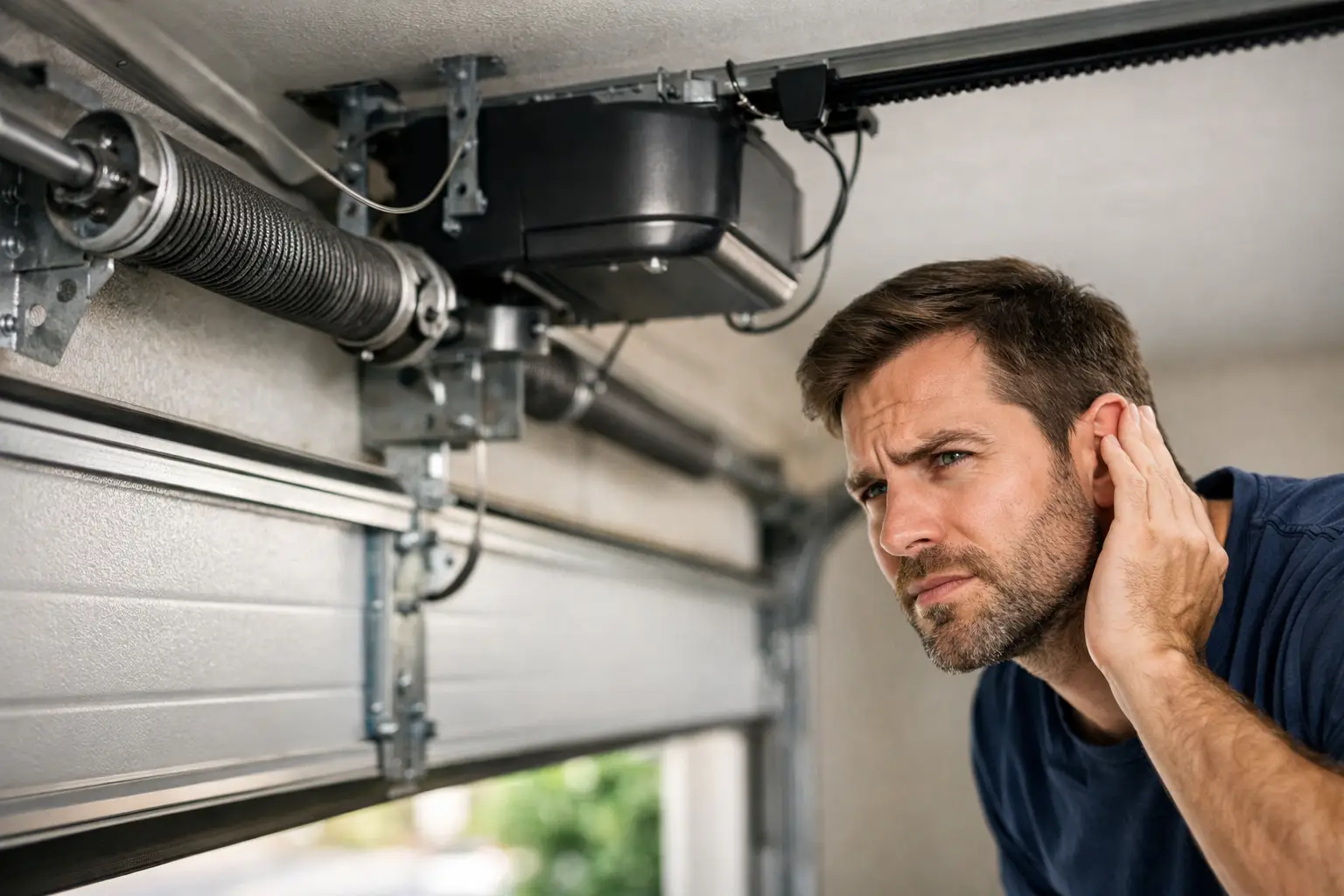
Then listen to the door during operation from a safe distance. Grinding, popping, repeated squealing, or a loud bang are signs to stop using it. If the door is crooked, a cable looks loose, or a roller has come out of the track, leave the door in place and arrange service rather than trying to force it shut.
Taking a few clear photos helps a technician assess whether you likely need a panel repair, a replacement section, or a more complete inspection. It also helps identify the manufacturer and model details when they are visible on the side of a panel or on the door hardware.
Cost Depends on More Than the Dent
The cost to repair a dented garage panel depends on the location and severity of the damage, the material of the door, and whether hardware or alignment is affected. A straightforward adjustment or reinforcement is naturally less involved than sourcing and installing a matching insulated replacement section.
Labor can also increase when an impact bends the track, damages rollers, breaks a hinge, or causes the door to come off track. That is why a real inspection matters. The visible dent may be the only issue, or it may be evidence that the door absorbed enough force to affect several components.
Ask for an upfront explanation of what is damaged, what can be repaired, and what should be replaced. A good technician should give you practical options instead of treating every dent as a reason to sell a full new door. If a replacement panel is available and makes sense, you should know the expected appearance, timing, and cost before work begins.
Get the Door Working Right, Not Just Looking Better
At Greeley Garage Door Repair by Mike, the goal is to get a damaged door moving safely and reliably, whether that means reshaping one section, replacing a matching panel, or recommending a new door when repair would only delay a bigger problem. Service trucks carry common parts for many one-visit repairs, and every repair should include checking the door’s balance, tracks, rollers, and safety reversal.
For homeowners in Greeley, Evans, Windsor, and Ault, a dented panel should not have to become a week of parking outside or worrying about an unsecured garage. If the door is binding, off track, or stuck open, treat it as a same-day repair issue rather than a cosmetic project.
The best next step is simple: stop operating a door that is moving poorly, keep people clear of damaged hardware, and have the panel evaluated before one bent section puts strain on the rest of the system.