

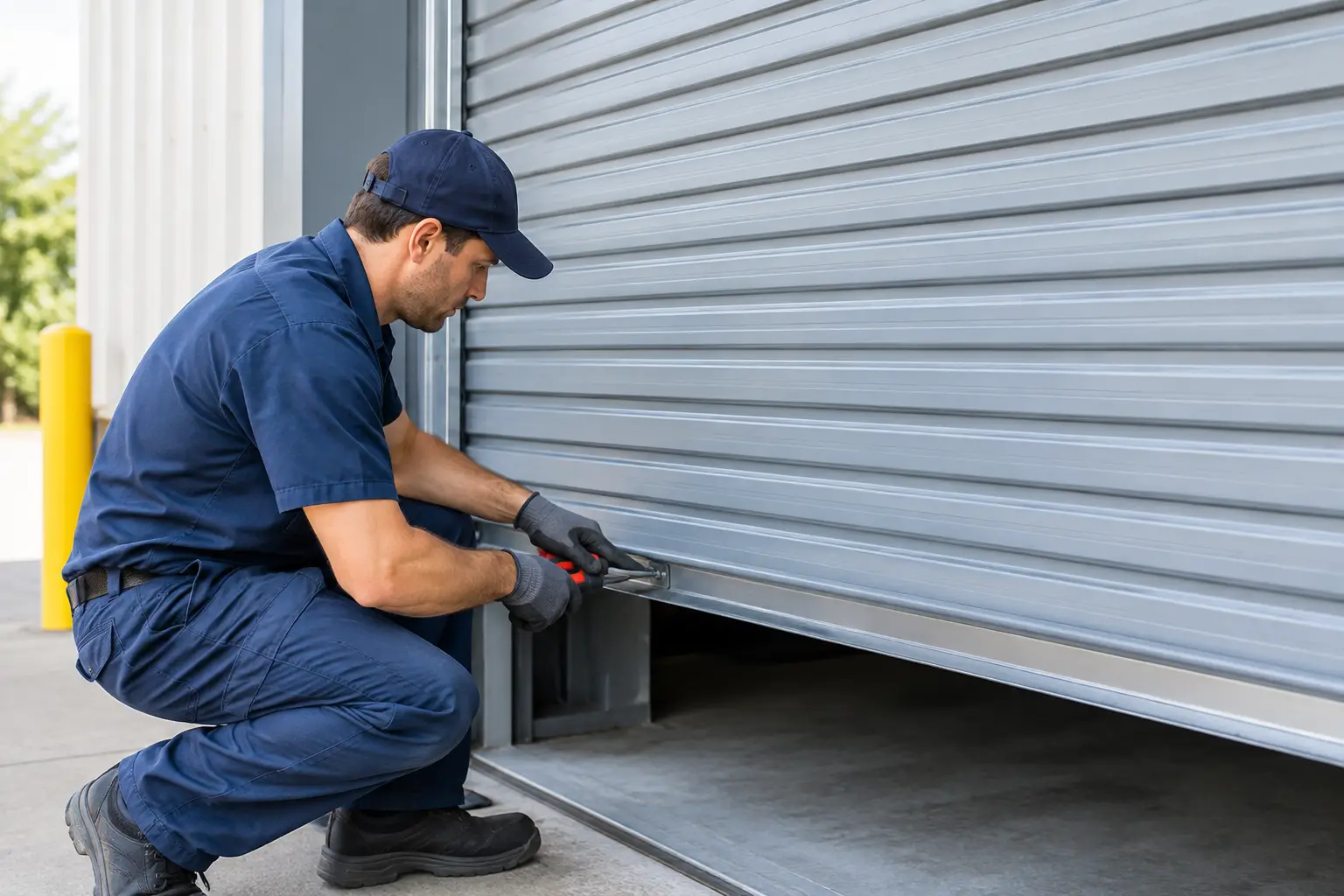
A rolling steel door that will not open can stop a business day before it starts. It can block deliveries, leave equipment inaccessible, or create a security problem after hours. Rolling steel door repair is not a job to put off when the curtain is binding, the motor is straining, or the door will not stay closed.
Unlike a lightweight residential garage door, a rolling steel door carries significant weight on a spring-loaded barrel. The curtain, guides, bottom bar, cables, operator, and locking system all have to work together. When one part fails, forcing the door can turn a manageable repair into a larger and more expensive problem.
Signs You Need Rolling Steel Door Repair
The most obvious sign is a door that will not move. But many rolling doors give clear warnings before they stop completely. A door that suddenly runs louder, moves unevenly, hesitates midway, or needs repeated button presses deserves attention before it fails at the worst possible time.
Watch for these common issues:
- The curtain catches, binds, or comes out of the side guides.
- The door opens only partway or drops instead of staying in position.
- The operator hums or runs, but the door does not move correctly.
- You hear popping, grinding, scraping, or a loud bang near the barrel.
- The bottom bar is bent, damaged, or no longer seals against the floor.
- The door closes but will not lock, leaving the building exposed.
A crooked-looking curtain is especially worth addressing quickly. It may mean the guides are damaged, the door has been hit, or the barrel and spring system are no longer carrying the curtain evenly. Continuing to operate it can tear slats, bend the bottom bar, or damage an otherwise usable operator.
Why Rolling Doors Fail
Some failures happen suddenly, such as an impact from a forklift, vehicle, pallet, or delivery equipment. Others build up slowly through daily use, weather exposure, and skipped maintenance.
Springs are one of the most common causes of trouble. They counterbalance the curtain's weight so a hand chain, crank, or electric operator can lift it safely. When a spring breaks or loses tension, the door may become very heavy, difficult to move, or unsafe to operate. This is not a DIY adjustment. Stored spring tension can cause serious injury and can damage the door if it is released incorrectly.
Guides are another frequent trouble spot. Dirt, ice, rust, loose mounting hardware, and impact damage can keep the curtain from traveling cleanly. Northern Colorado weather can add to the wear. Wind-driven debris, freezing conditions, and wide temperature swings can affect lubrication, hardware, and the way a door seals against the opening.
For powered rolling doors, the issue may be in the operator rather than the curtain itself. A failed motor, worn drive components, faulty limit settings, damaged control station, photo eye issue, or electrical problem can all leave the door stuck. A trained technician needs to determine whether the operator caused the failure or was damaged because the door was already binding.
What to Do When Your Door Is Stuck
First, stop using the door. Do not keep pressing the wall button, pulling the chain, or trying to force the curtain into the guides. Repeated attempts can strip operator parts, bend slats, and make the door harder to secure.
If the opening creates a security or safety concern, keep people away from the doorway and avoid standing beneath the curtain. A partially open door with damaged springs, guides, or cables can move unexpectedly. If the door is stuck open after business hours, move valuable equipment away from the opening if it is safe to do so and arrange emergency service.
You can do a quick visual check from a safe distance. Look for an obvious obstruction in the guides, visible impact damage, a curtain hanging unevenly, or a tripped breaker affecting the operator. Do not remove covers from the barrel, attempt spring adjustments, or disconnect an operator without knowing how the door is supported.
For businesses in Greeley, Evans, Windsor, and Ault, fast service matters because a disabled door can interrupt customer access, shipping, and building security. A properly stocked service truck can often handle common spring, guide, curtain, cable, and operator repairs in one visit, depending on the door size and parts required.
How a Technician Diagnoses the Problem
Good rolling steel door repair starts with finding the actual cause, not replacing parts based on a guess. The technician should inspect the curtain for damaged slats, check that the guides are aligned and secure, evaluate the bottom bar, and examine the barrel, springs, axle, and brackets.
If the door is motorized, the operator also needs a separate inspection. The technician checks the drive system, controls, safety devices, limits, and power supply. A door that stops short may need a limit adjustment, but it could also be binding in the guides. Adjusting the limit without correcting the binding only masks the problem.
After the inspection, you should receive a clear explanation of what failed, what the repair involves, and the price before work begins. Some damage can be repaired with a new slat, guide realignment, spring replacement, or operator adjustment. Severe impact damage, widespread corrosion, or an obsolete door may make replacement the more sensible long-term choice.
What Does Rolling Steel Door Repair Cost?
The price depends on the type and size of the door, whether it is manual or motorized, the condition of the curtain, and how accessible the damaged parts are. A simple adjustment, lubrication service, or control issue is usually less costly than replacing springs, a damaged bottom bar, multiple slats, or a commercial operator.
Emergency timing can also affect the final price, especially if a door is stuck open overnight or blocks a critical access point. The right question is not just, “What is the cheapest fix?” It is whether the repair restores safe, reliable operation without setting you up for another service call next week.
For older doors, ask about the condition of related parts. If a spring has failed after years of heavy use, the guides, bearings, curtain, and operator may also have wear worth addressing. That does not mean every part needs replacement. It means you deserve an honest assessment of what is urgent, what can wait, and what will help prevent downtime.
Repair or Replace the Rolling Steel Door?
Repair is often the right choice when the door has localized damage and the main structure is in good condition. Replacing a bent slat, worn spring, damaged guide section, or failing operator can extend the useful life of the system.
Replacement becomes more practical when the curtain has extensive damage, corrosion has weakened multiple components, parts are no longer available, or the door no longer fits the building's security and operational needs. Businesses with frequent deliveries may also benefit from a higher-cycle door or operator designed for heavier daily use.
A new rolling steel door is a larger investment, but it can improve security, weather protection, and reliability. The best choice depends on how the door is used, not just its age. A lightly used storage door may be worth repairing, while a busy loading-area door with recurring breakdowns may cost more in disruptions than a replacement would.
Preventing the Next Breakdown
Regular service is the simplest way to catch minor issues before the door becomes stuck. Maintenance should include checking spring tension, guide alignment, curtain condition, fasteners, bearings, locks, operator controls, safety devices, and appropriate lubrication.
Property managers and business owners should also pay attention to how the door is being used. Avoid pushing carts, pallets, or equipment through the opening when the curtain is not fully raised. Keep the guides clear of debris, and do not let employees force a door that is moving poorly. A quick service call after an impact is usually far less expensive than operating a damaged door until the curtain comes out of the guides.
When a rolling steel door affects your building's security, access, or safety, waiting rarely makes the repair easier. Greeley Garage Door Repair by Mike provides straightforward diagnosis, upfront pricing, and workmanship backed by a lifetime warranty. The practical next step is simple: stop forcing the door, secure the area, and have a qualified local technician inspect it before a small failure becomes a full shutdown.