
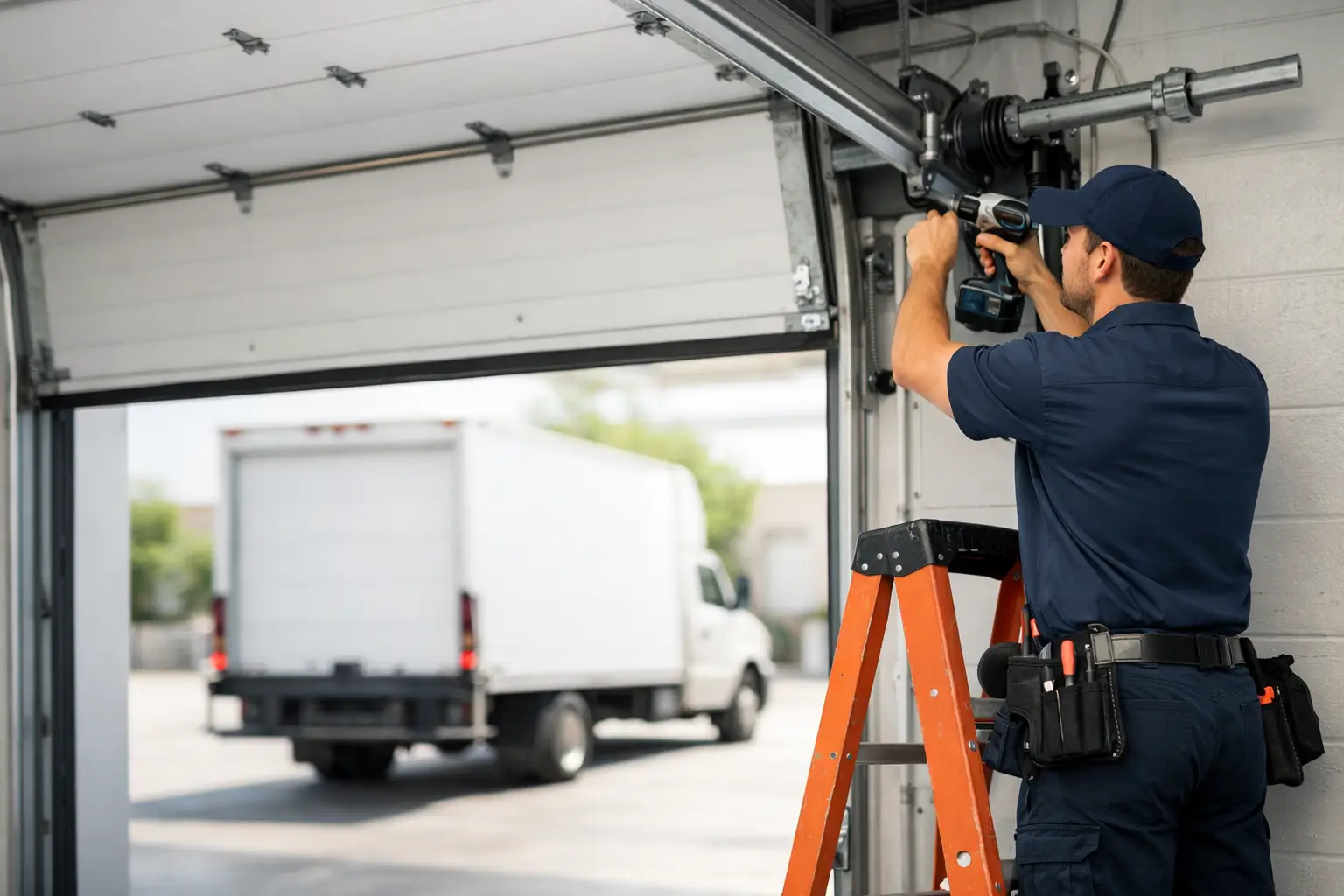
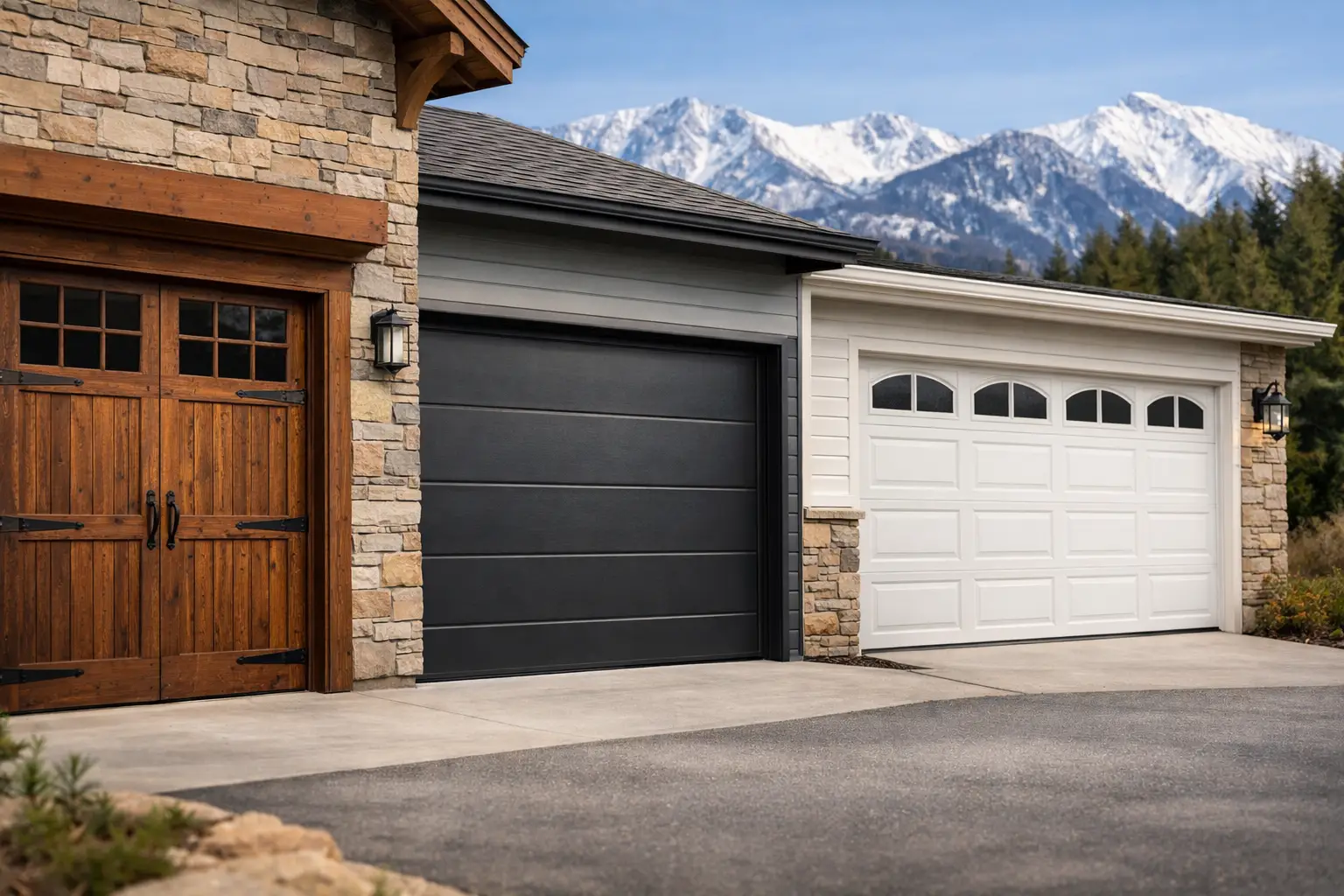
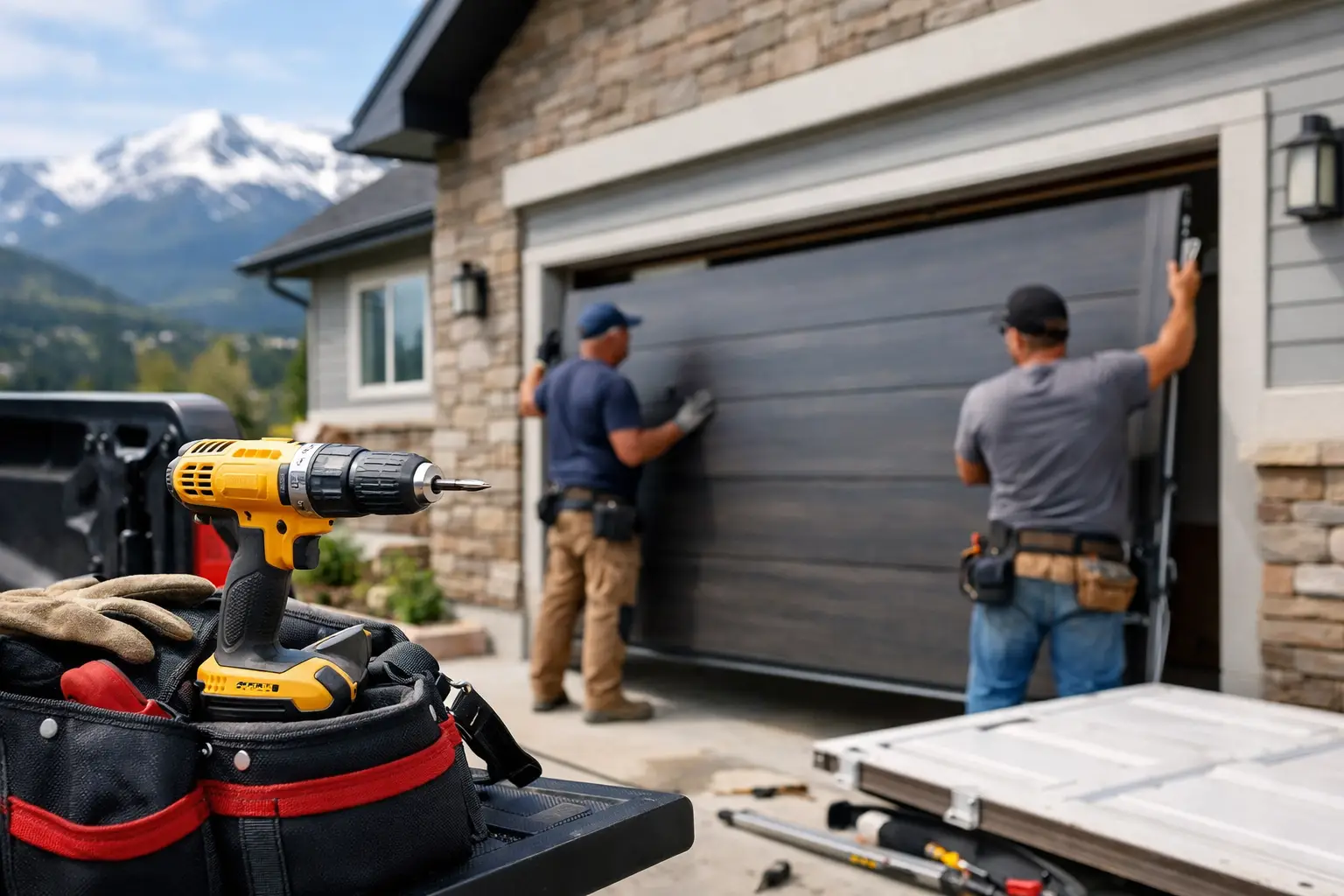



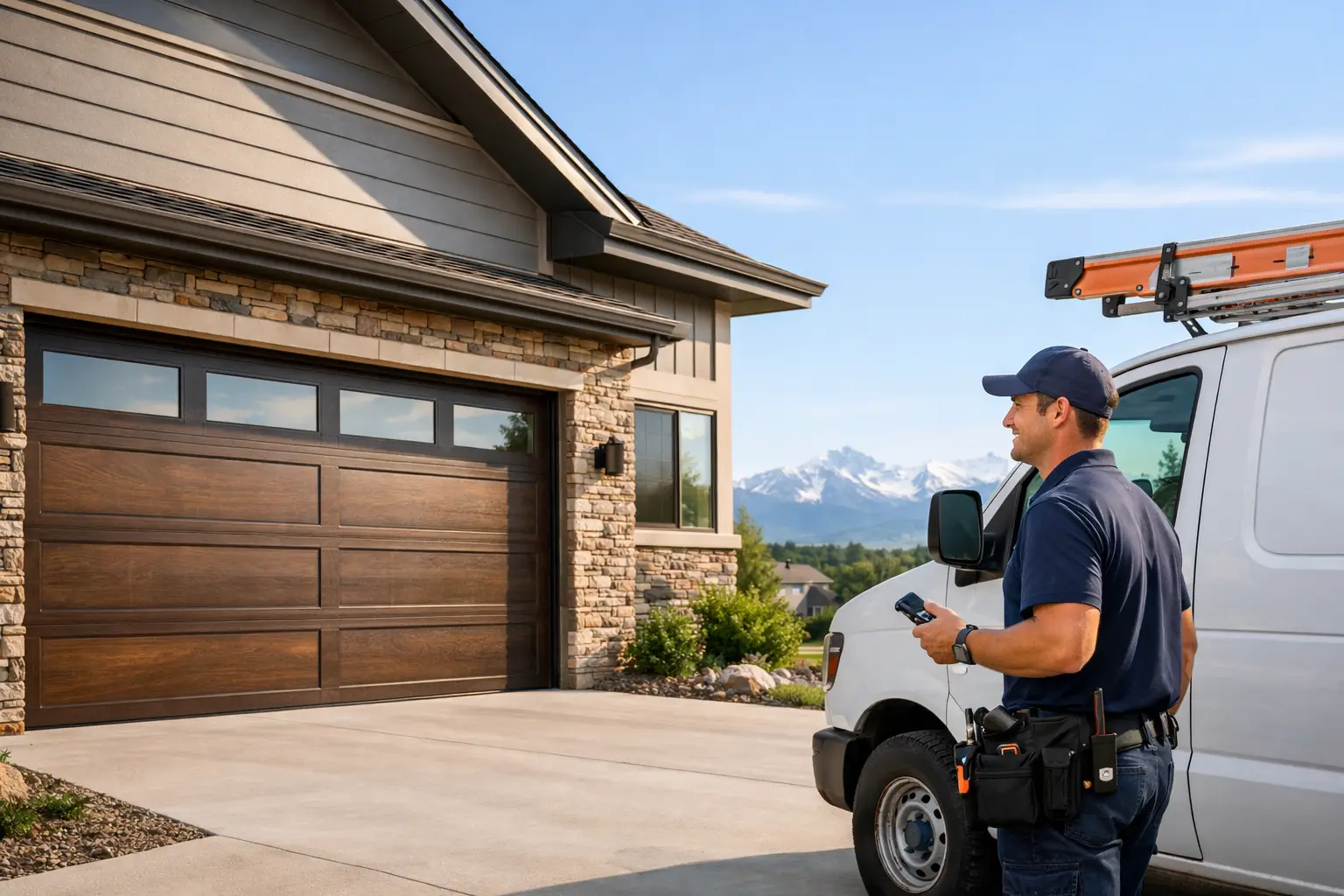



A garage door that fits the opening is not always the door that fits the building. When comparing rollup doors vs sectional doors, the right choice usually comes down to how you use the space, how much insulation you need, and whether the door is serving a home, shop, storage building, or busy commercial bay.
For most Northern Colorado homes, a sectional garage door is the practical choice. For commercial buildings, storage spaces, and openings where ceiling space is limited, a rolling steel door can make more sense. Neither style is automatically better. The details of your building matter.
How Sectional and Rollup Doors Work
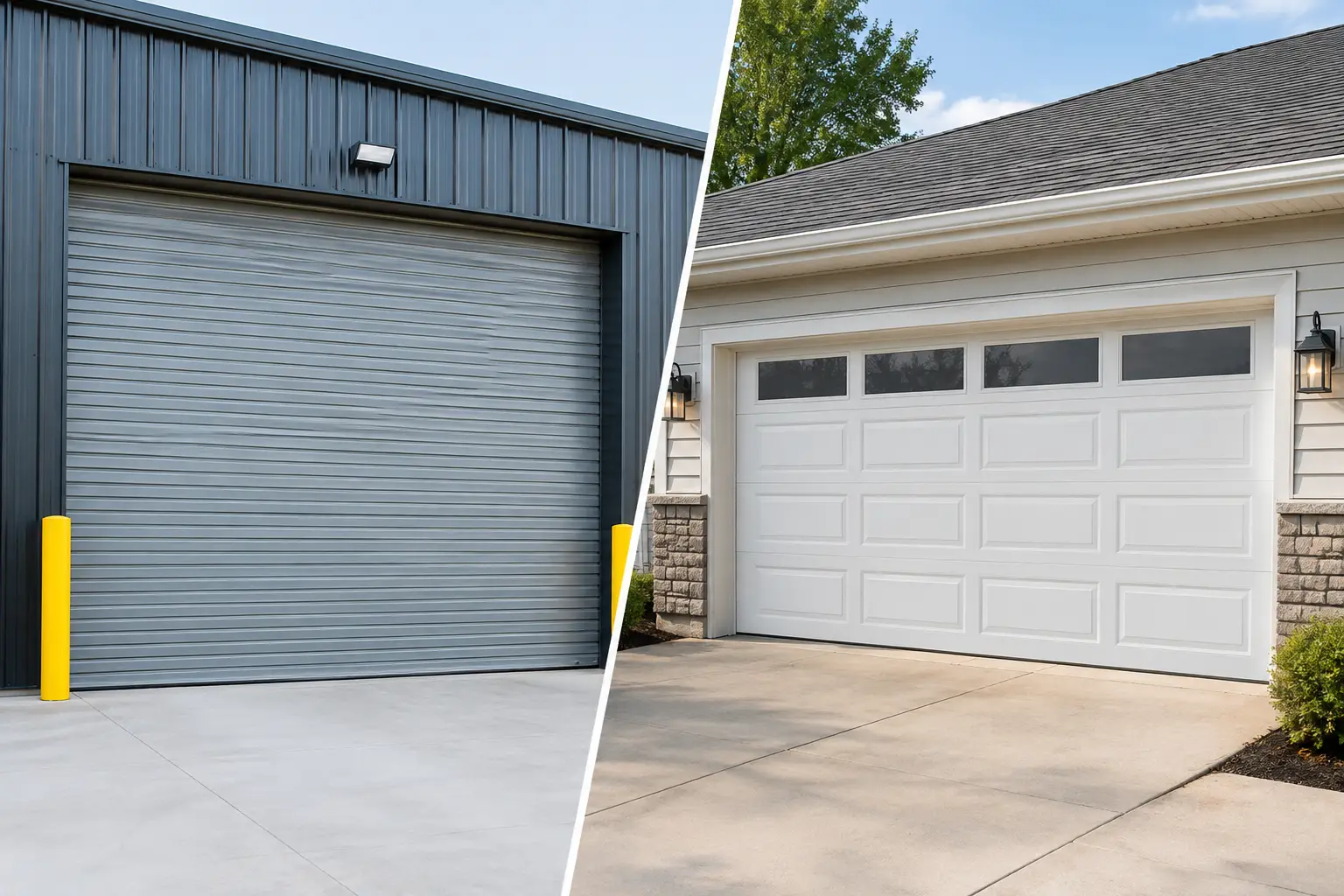
A sectional door is the familiar residential garage door made of several horizontal panels. The panels travel up vertical tracks, then curve back along horizontal tracks under the garage ceiling. Springs, cables, rollers, and an opener do the heavy lifting.
A rollup door, also called a rolling door or rolling steel door, is made of narrow metal slats that coil around a barrel above the opening. Instead of traveling across the ceiling, the door rolls into a compact coil at the header. You will often see these doors on warehouses, service bays, farm buildings, mini-storage units, and retail back rooms.
The biggest difference is where each door goes when it is open. Sectional doors need overhead track space. Rollup doors need room above the opening for the curtain and barrel.
Rollup Doors vs Sectional Doors: The Key Differences
Ceiling space and headroom
Sectional doors take up ceiling space when open. That is usually no problem in a standard two-car garage, but it can be a problem if you have low ceilings, overhead storage, a car lift, or ductwork near the tracks.
Rollup doors keep the ceiling mostly clear because they coil above the opening. That makes them useful in commercial spaces where every foot of overhead room matters. They still need enough headroom at the header, though. A rolling door cannot be squeezed into an opening without proper space for the barrel, guides, and hood.
Insulation and weather protection
An insulated sectional door is usually the better option for an attached garage, workshop, or any space that needs better temperature control. Modern sectional doors can be built with insulated steel panels, weather seals, and higher R-values that help reduce heat loss and drafts.
Basic rolling steel doors are commonly less insulated. Insulated rolling doors are available, but they cost more and may not match the thermal performance or finished appearance of a quality insulated sectional door. For a Greeley-area homeowner with a bedroom above the garage or a workspace in the garage, insulation should carry real weight in the decision.
Wind, cold snaps, and blowing snow also expose weak seals quickly. No door style can fully protect a building if the bottom seal is worn, tracks are out of alignment, or the door does not close evenly.
Appearance and curb appeal
Sectional doors offer far more residential style options. You can choose raised panels, flush panels, carriage-house designs, windows, decorative hardware, and colors that work with the rest of the home. They are designed to be seen from the street.
Rollup doors are more industrial in appearance. They can look clean and professional on a shop, detached garage, or metal building, but they are rarely the first choice for a front-facing residential garage. If curb appeal affects resale value or the look of your home, sectional doors give you more flexibility.
Durability and daily use
Rolling steel doors are built for demanding commercial use. A properly specified rolling door can handle frequent cycles and provide strong security for a business, loading area, or storage facility. Heavy-duty models are a good fit for buildings where the door opens and closes all day.
Sectional doors are also durable, especially when they have quality rollers, reinforced hardware, and the right springs. But a typical residential sectional door is not the same as a high-cycle commercial door. If a repair shop opens its bay 30 or 40 times a day, it needs commercial-grade equipment matched to that workload.
Security
A closed rollup door can be a strong physical barrier, particularly when paired with commercial-grade guides and locking hardware. That is one reason they are common for storefronts, warehouses, and storage units.
Sectional doors can also be secure, especially with a modern opener that includes rolling-code technology and a properly adjusted automatic lock or manual lock. Still, their main advantage for homeowners is convenience, insulation, and appearance rather than maximum commercial security.
Which Door Is Best for a Home Garage?
For most homes, choose a sectional door. It is easier to insulate, easier to customize, and generally works well with standard residential openers. It also provides the broadest range of replacement options if a panel is dented, a spring breaks, or the opener reaches the end of its life.
That does not mean every home needs a sectional door. A detached garage, pole barn, RV building, or workshop with limited ceiling clearance may be a good candidate for a rollup door. The decision should be based on measurements, building use, and the amount of headroom available, not just the look of the door.
One common mistake is choosing a door based only on opening width and height. The side room, headroom, ceiling layout, electrical access, and condition of the framing all affect what can be installed safely.
When a Rollup Door Makes More Sense
A rollup door is often the better fit when the building needs clear overhead space or frequent operation. Small business owners, agricultural property owners, and property managers may prefer rolling doors for service bays, equipment storage, commercial garages, and utility buildings.
They are also useful when a sectional door's horizontal tracks would interfere with lighting, sprinklers, shelving, or a lift. In a busy workspace, keeping the ceiling clear can be worth more than having extra insulation or residential styling.
For commercial applications, ask about the duty cycle. The right door should be sized not only for the opening but also for the number of times it will operate each day. A door that is underbuilt for its workload can lead to worn springs, damaged slats, opener trouble, and avoidable downtime.
Repair Differences You Should Know
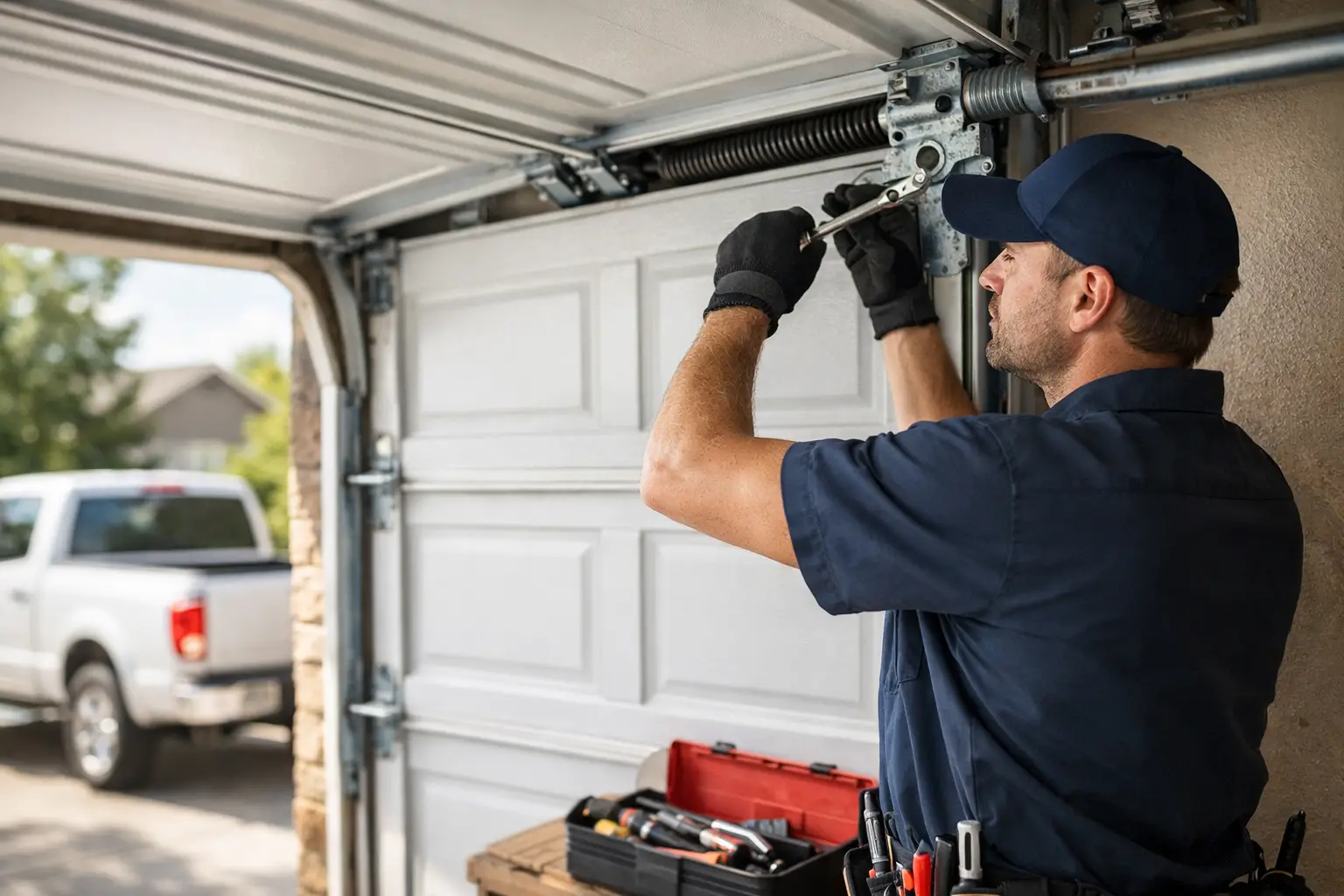
Both door styles need professional service when springs, cables, tracks, or hardware fail. A garage door carries serious spring tension, and a rolling steel door can have heavy components under load. This is not a good place for a trial-and-error repair.
Sectional door repairs commonly involve broken torsion springs, snapped cables, bent tracks, worn rollers, damaged panels, and opener problems. Many issues can be handled in one visit when the technician has the right springs and parts on the truck.
Rollup door repairs may involve damaged slats, misaligned guides, curtain issues, worn bearings, broken chains, motor problems, or a door that will not coil correctly. Because commercial rolling doors vary widely by size and construction, repairs may require more specialized parts or a closer inspection before pricing is set.
Regular maintenance helps either type of door last longer. That means checking balance, lubricating moving parts where appropriate, tightening hardware, testing safety features, and replacing worn seals before cold weather turns a small gap into a drafty, wet garage.
Cost: What Should You Expect?
A standard sectional door is often the more budget-friendly option for a typical home garage, especially in common sizes. Cost rises with insulation, windows, thicker steel, custom finishes, and upgraded openers.
Rollup doors can cost more because of their steel curtain, barrel assembly, commercial hardware, and installation requirements. A small non-insulated rollup door for a shed or storage space may be straightforward, while a large insulated, motorized commercial door is a different level of investment.
The lowest quote is not always the best value. A door needs the right spring system, track setup, safety equipment, and installation quality. Cheap hardware or poor setup can turn into repeat service calls, noisy operation, and premature wear.
Make the Choice Based on How You Use the Building
If you want a quiet, insulated, attractive door for a home garage, sectional is usually the clear answer. If you need security, overhead clearance, and dependable performance in a shop or commercial setting, a rollup door may be the better tool for the job.
Before ordering either style, have the opening measured and the building layout checked by a qualified local technician. A straightforward recommendation based on your actual space can prevent the frustration of buying a door that looks right on paper but does not work well once it is installed.