
A garage door that refuses to close when you are leaving for work is more than an inconvenience. It can leave your home exposed, trap a vehicle inside, or create a safety problem for kids and pets. Knowing the signs your garage door opener needs replacement helps you make a clear decision before a small issue turns into a door that will not move at all.
An opener does not always need to be replaced at the first sign of trouble. A worn gear, failing sensor, bad remote, or loose connection can often be repaired. But when the unit is old, unreliable, or no longer operating safely, replacement is usually the better value.
1. Your Opener Works Only When It Feels Like It
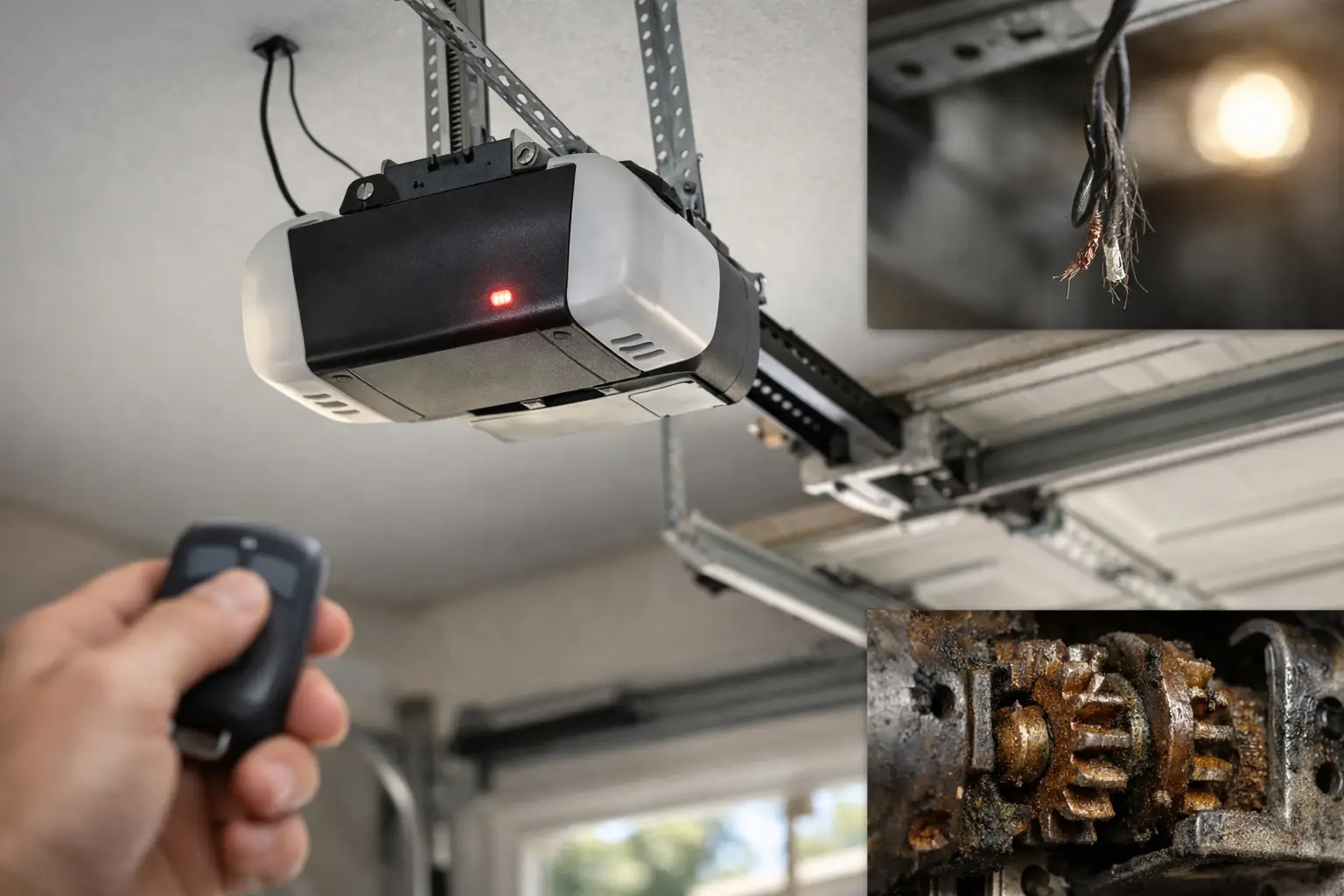
Intermittent operation is one of the clearest signs an opener needs replacement. Maybe the wall button works but the remote does not. Maybe the door opens normally in the morning and will not respond later that evening. Or perhaps it starts moving, stops halfway, and then works again after several tries.
Before assuming the motor has failed, check the simple causes. Replace the remote battery, make sure the opener is plugged in, and look for a tripped breaker or GFCI outlet. If the problem continues after those checks, the opener’s circuit board, receiver, or internal motor components may be failing.
A technician can determine whether a targeted repair makes sense. On an older unit with repeated electrical problems, putting money into another repair may only delay replacement for a few months.
2. The Door Reverses or Will Not Close Safely
Every modern garage door opener should reverse when it contacts an object and should not close when something breaks the photo-eye sensor beam near the floor. If your door closes on a box, a bike tire, or anything else in its path, stop using the opener until it has been inspected.
Start by cleaning the photo-eye lenses and checking whether both sensor lights are steady. Sensors can get bumped out of alignment, especially in busy garages. A loose wire, damaged sensor, or misaligned track can also cause the door to reverse for no obvious reason.
If the safety system cannot be adjusted or repaired reliably, replacement is the responsible choice. New openers include current safety features and better diagnostic controls. That matters when your garage is used every day by family members, tenants, employees, or delivery drivers.
3. The Motor Is Loud, Strained, or Grinding
A little noise is normal. A garage door is a heavy moving system with rollers, hinges, springs, and a motor all working at once. But new grinding, humming, clicking, or a motor that sounds like it is struggling deserves attention.
A stripped nylon gear inside a chain-drive opener can make the motor run while the door does not move. A failing capacitor may cause a loud hum before the motor finally starts. In some cases, the issue is not the opener at all. Worn rollers, dry hinges, a bent track, or a broken spring can make the door heavy enough to strain the opener.
Never keep pressing the button to force a struggling door to move. An opener is designed to guide a properly balanced door, not lift a door with broken springs or binding hardware. Continued use can burn out the motor and cause more expensive damage.
4. Your Garage Door Opener Is Near or Past Its Expected Life
Most garage door openers last about 10 to 15 years, depending on the model, maintenance, weather exposure, and how often the door runs. A door used twice a day places far less demand on an opener than one serving a busy household or commercial property with frequent cycles.
Age alone does not automatically mean replacement. A well-maintained opener may still have useful life left. Still, if an older unit needs a major motor, board, or drive-system repair, compare that cost with a new opener that includes a warranty and updated features.
Older openers can also be harder to service because replacement parts may be unavailable. If your model uses outdated remote technology, lacks reliable safety sensors, or has been repaired several times already, a new unit often makes more practical sense than chasing discontinued parts.
5. The Door Moves Slowly or Stops in the Middle
A garage door that slows down, shakes, or stops halfway is asking for an inspection. The opener may be losing power, but the door itself may be the real source of the problem.
With the door closed, disconnect the opener using the emergency release only when it is safe to do so. A properly balanced door should lift manually with reasonable effort and stay near the halfway point. If it feels extremely heavy, slams down, or will not stay in place, the springs or cables may be failing. Do not try to adjust torsion springs yourself. They are under high tension and can cause serious injury.
If the door moves smoothly by hand but the opener still stalls, the motor, travel limits, belt or chain, or internal gear assembly may need repair or replacement. A trained technician can separate an opener problem from a door-balance problem before recommending work.
6. The Remote Range Keeps Getting Worse
When you have to pull into the driveway, point the remote directly at the garage, and press it several times before the door responds, the first suspect is the battery. If a new battery does not help, interference or a failing receiver could be the issue.
LED lights, nearby electronics, damaged antenna wiring, and old receivers can all reduce remote range. Sometimes a replacement remote or receiver solves the problem. Other times, especially on an older opener with other reliability issues, it is another sign that replacement is the smarter route.
Newer openers generally offer better remote range, more dependable wireless controls, and optional app access. Those features are useful, but reliability should be the main reason to upgrade. A phone app is not much help if the opener cannot operate consistently.
7. Repairs Are Becoming a Regular Expense
One repair does not mean your opener is finished. Even good equipment can need a sensor, gear, remote, or adjustment over its lifetime. The decision changes when the same unit keeps needing service, when failures are becoming more frequent, or when one major repair follows another.
Think about the full picture: the age of the opener, the condition of the garage door, the cost of the needed repair, and how much you depend on the door every day. For a newer model with a clear, isolated problem, repair is often the best answer. For a 15-year-old opener with a noisy motor, unreliable remotes, and a failing board, replacement can prevent another surprise breakdown.
What a Proper Opener Replacement Should Include
A quality installation is more than hanging a new motor from the ceiling. The technician should inspect the door balance, springs, rollers, cables, tracks, and hinges first. Installing a new opener on a heavy or poorly balanced door can shorten the life of the new unit from day one.
The replacement should also include setting the travel limits and force settings correctly, testing the photo-eye sensors, checking the automatic reverse function, programming remotes, and explaining the emergency release. If you choose a belt-drive opener for a garage below a bedroom, expect quieter operation than a standard chain drive. A chain-drive model may still be a sensible, durable option for a detached garage or a heavier door. The right choice depends on the door, the space, and your budget.
For homeowners and property managers in Greeley, Evans, Windsor, and Ault, fast help matters when a vehicle is stuck or a door is left open. Greeley Garage Door Repair by Mike can inspect the whole system, explain whether repair or replacement is the honest recommendation, and provide upfront pricing before work begins.
If your opener is acting up, avoid forcing the door, disconnect it only when conditions are safe, and get the problem checked before the next failure happens at the worst possible time.