
A garage door rarely quits without giving you some warning first. The top signs of a garage door failing can start small - an odd noise, a slower lift, or a remote that works only when it feels like it. Paying attention early can keep your car from getting trapped, protect your family from a safety hazard, and often turn a major repair into a simpler service call.
Top Signs Your Garage Door Is Failing
It makes new, loud, or harsh noises
A working garage door is not silent, but you know what your door normally sounds like. Grinding, scraping, popping, squealing, banging, or a loud snap are reasons to take a closer look. Those sounds can come from worn rollers, dry hinges, loose hardware, a damaged track, or an opener that is struggling under too much weight.
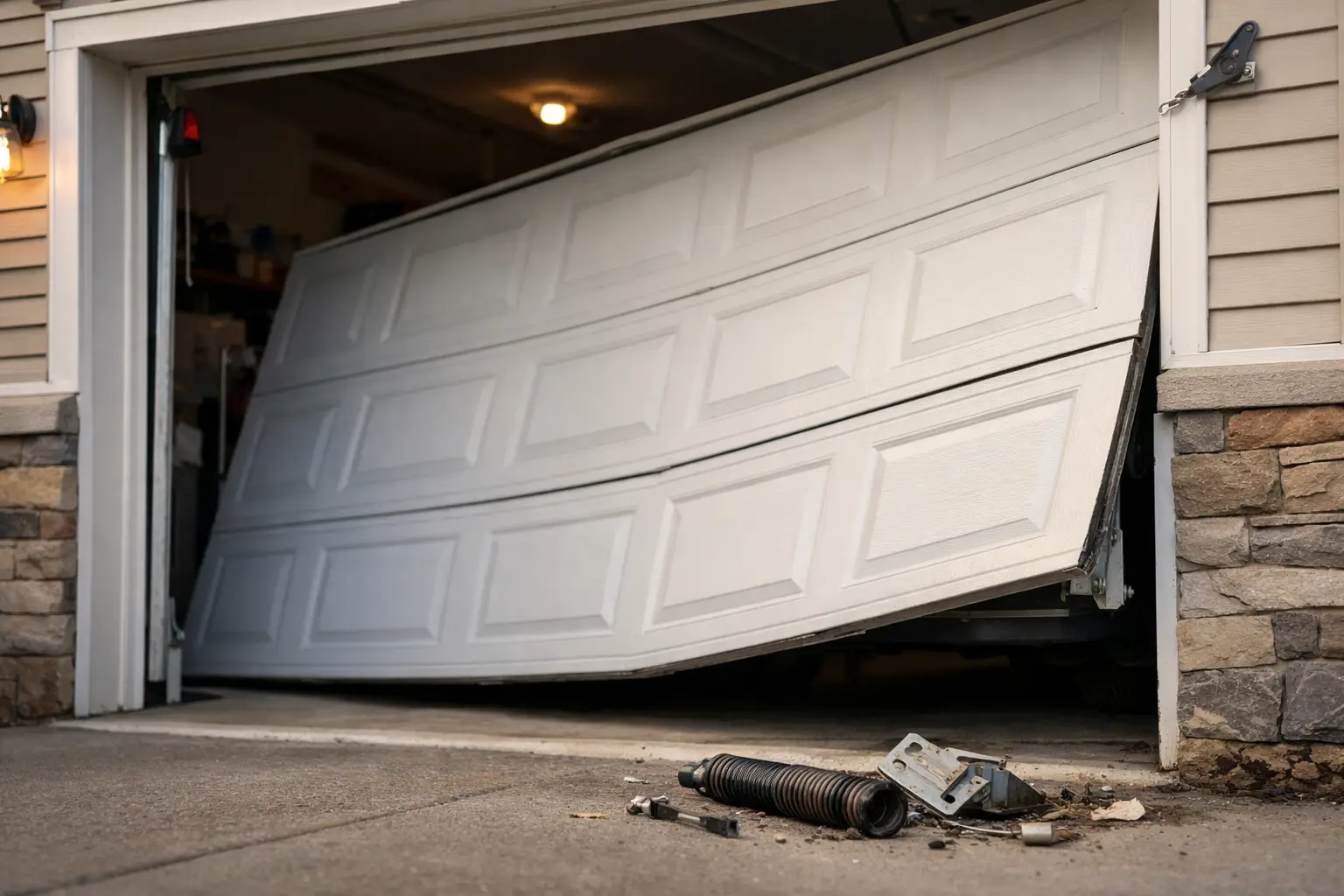
A sharp bang followed by a door that will not open is often a broken spring. Garage door springs carry most of the door's weight, so when one breaks, the opener may hum, move a few inches, or refuse to lift the door at all. Do not try to force the door or replace a spring yourself. Springs are under extreme tension and require the right tools and training to handle safely.
The door moves slowly, shakes, or jerks
A door should travel steadily from fully closed to fully open. If it shudders, jerks along the tracks, pauses unexpectedly, or seems to strain on the way up, something is out of balance or binding.
Sometimes the fix is as straightforward as replacing worn rollers or tightening track hardware. Other times, the issue is a failing spring, frayed cable, bent track, or opener problem. Continuing to run a door that is shaking can make the damage worse. A cable can come off its drum, a roller can leave the track, or the opener can burn out trying to pull a door it was never designed to lift on its own.
It will not open all the way or will not close
A door that stops halfway is more than an inconvenience. It can leave your home exposed to weather, theft, and unwanted pests. If the door opens partway and reverses, the problem may involve the opener's force setting, safety sensors, tracks, springs, or cables.
When a door will not close, check for a simple obstruction near the floor and make sure the photo-eye sensors are clean and lined up. The small sensors on either side of the opening need a clear path to communicate. If nothing is blocking them and the door still reverses or will not move, stop using it until it is inspected.
Do not disconnect the opener and try to muscle a heavy door down unless you are sure it is stable. A door with a broken spring or cable may be much heavier than expected and can fall quickly.
The opener runs, but the door does not move
You press the wall button, hear the motor, and see the opener rail moving - but the door stays put. This often points to a stripped gear, a broken trolley, a damaged belt or chain, or a disconnected emergency release. It can also happen when the door itself is too heavy because a spring has failed.
The opener is there to guide a balanced door, not lift dead weight. Repeatedly pressing the button when the motor is running without moving the door can damage the opener further. A technician can determine whether the opener needs repair or replacement and, just as importantly, whether the real problem is with the door hardware.
The door feels unusually heavy
If you have disengaged the opener using the emergency release and the door feels extremely heavy, difficult to lift, or impossible to hold open, stop there. A properly balanced garage door should stay reasonably in place when lifted halfway by hand. It should not slam to the floor or race toward the ceiling.
An unbalanced door usually means the springs are worn, improperly adjusted, or broken. This is not a DIY adjustment. Torsion springs and extension springs store enough energy to cause serious injury when handled incorrectly. A professional repair restores balance so the door, cables, rollers, and opener can work as they should.
You see loose cables, gaps in a spring, or damaged tracks
A quick visual check can reveal problems before the door becomes stuck. Look for a visible gap in the spring above the door, loose or frayed cables near the sides, rollers sitting outside the track, or tracks that are bent away from the wall. You may also notice cracked hinges, missing bolts, or sections of the door that are separating.
Do not touch cables, drums, or springs. Even when the door is closed, these components can be under tension. If a cable has slipped or the door is off track, avoid operating the opener. One more cycle can pull the door farther out of alignment and turn a repair into a more involved job.
The remote, keypad, or wall button is unreliable
An intermittent opener does not always mean the motor is failing. Start with the simple possibilities: replace the remote battery, confirm the opener has power, and check whether the wall button works consistently. If the remote works only at close range, interference or a weak receiver could be involved.
Still, unreliable operation can be a warning that the opener's logic board, wiring, safety sensors, or internal motor parts are wearing out. Older openers may also lack current safety features, including photo-eye reversal protection and secure rolling-code technology. Repair can make sense when the unit is newer and the issue is isolated. Replacement is often the better value when an older opener has recurring electrical or mechanical problems.
Signs You Should Stop Using the Door Right Away
Some garage door problems can wait for a scheduled appointment. Others call for immediate caution. Stop operating the door and arrange service promptly if you notice any of the following:
- A broken spring, loose cable, or cable that has come off its drum
- A door hanging crookedly, off track, or stuck partway open
- A door that slams shut, falls when released, or will not stay open
- Smoke, a burning smell, or repeated tripping at the opener or outlet
- Damage after a vehicle impact, wind event, or attempted break-in
If the door is open and cannot be secured, treat it as a home-security concern. Keep people and pets clear of the opening, do not stand underneath the door, and avoid trying to brace it with improvised materials. For businesses, a disabled overhead door can also interrupt deliveries, employee access, and building security. Quick service is usually the safest path.
Why Small Garage Door Problems Get Expensive
Garage doors are connected systems. Worn rollers make the door drag. That extra drag puts stress on the opener. A door that is out of balance strains the springs, cables, bearings, and motor at the same time. What begins as a noisy roller or loose hinge can eventually lead to an off-track door or failed opener.
Northern Colorado weather can add to that wear. Cold temperatures can make old rollers and hardened lubrication noisier, while wind and temperature changes can expose weak hardware, damaged panels, and poor weather seals. Seasonal maintenance helps catch these issues before a freezing morning or a busy workday leaves you unable to get in or out.
A professional tune-up generally includes checking spring balance, inspecting cables and rollers, tightening hardware, lubricating the moving parts that need it, testing safety sensors, and confirming the opener reverses correctly. It is a practical way to extend the life of the door and get a clear answer about parts that are nearing the end of their service life.
Repair or Replacement: What Makes Sense?
The right answer depends on the condition of the door, the age of the opener, and the extent of the damage. A broken spring, worn rollers, damaged cable, or misaligned sensor can usually be repaired. Those are common service issues, and with a properly stocked truck, many can be handled in one visit.
Replacement may be smarter when the door has severe panel damage, repeated track failures, extensive rust, poor insulation, or repairs that keep adding up. Homeowners also choose a new door when they want better curb appeal, quieter operation, or improved insulation for an attached garage. For commercial properties, high-cycle hardware and the right door type can matter more than a short-term patch.
A good technician should explain what failed, show you the condition of the affected parts, and give you clear options before work begins. You should not have to guess what you are paying for or be pushed into replacing equipment that can be repaired safely.
When your garage door starts acting differently, trust that change. A fast call can prevent a small mechanical issue from becoming a stuck door, a damaged opener, or a safety problem. Greeley Garage Door Repair by Mike provides straightforward repair help for homeowners and businesses that need a door working safely again - without call-center runaround or guesswork.