
A garage door usually does not fail all at once. More often, it gives you a warning first - a jerk when it starts moving, a grinding sound you have not heard before, or a door that suddenly feels heavier than it should. If you are wondering about the top signs your garage door is unsafe, the biggest thing to know is this: small changes in how the door moves can point to a real safety problem.
For most homeowners, the garage door is the largest moving part on the property. It is also one of the most used. When something is off, the risk is not just inconvenience. An unsafe door can trap a vehicle, damage the opener, slam shut, or put stress on springs and cables that are already close to failing.
Top signs your garage door is unsafe
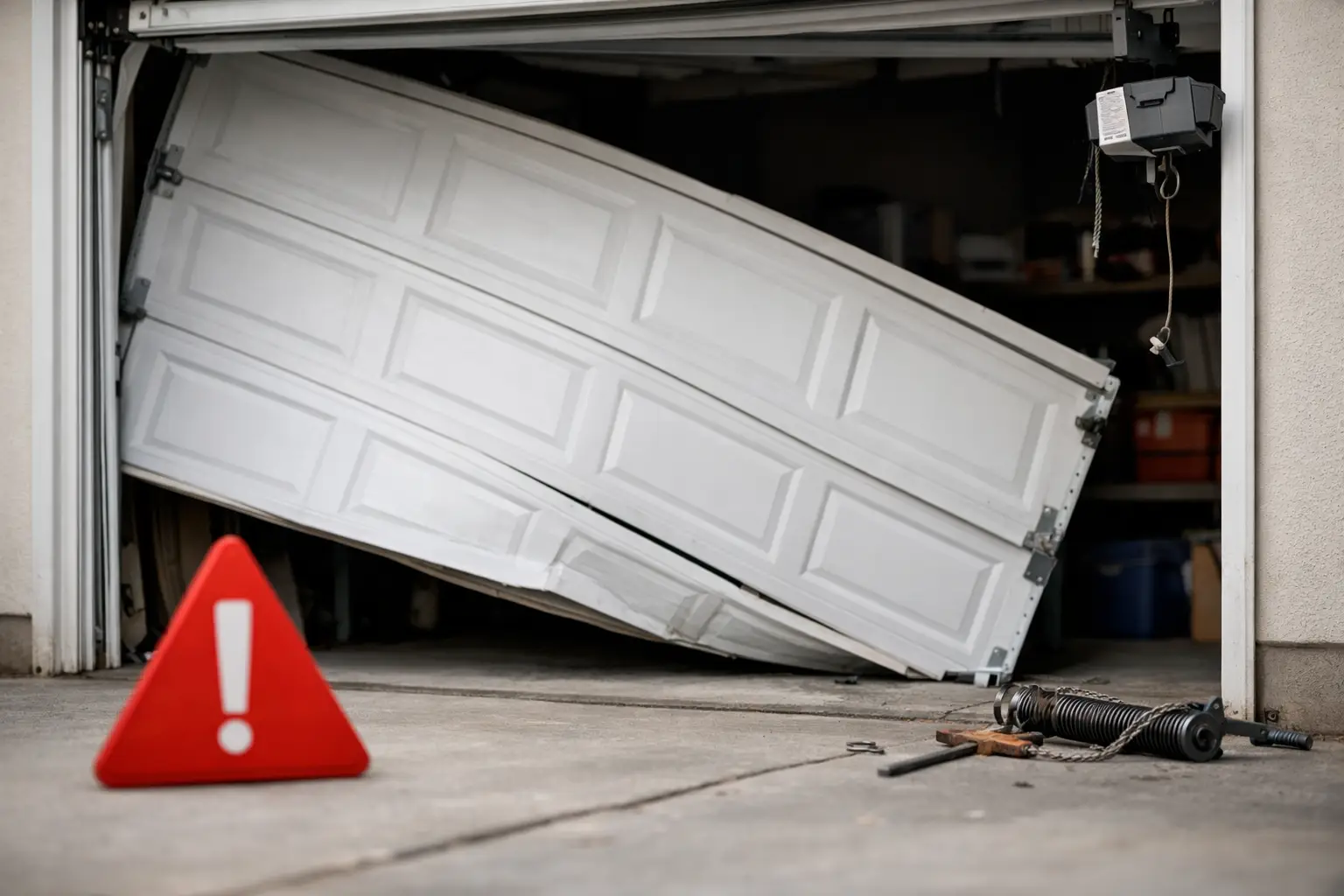
One of the clearest warning signs is a door that looks uneven while opening or closing. If one side rises faster than the other, or the door appears crooked in the tracks, there may be a problem with the cables, springs, rollers, or track alignment. This is not the kind of issue to watch for a few more days. A door that is out of balance can shift more suddenly than people expect.
Another major sign is loud, sharp, or unusual noise. Garage doors are never silent, but they should not bang, snap, screech, or grind. A popping sound can point to a spring issue. Grinding can mean worn rollers or opener strain. A loud slam at the bottom often means the door is no longer being controlled evenly. Noise by itself is not always an emergency, but noise combined with rough movement usually means something mechanical is wearing out or already damaged.
A door that starts and stops for no clear reason should also get your attention. If it hesitates halfway, reverses unexpectedly, or shudders while moving, that can mean the opener is struggling, the safety sensors are misreading, or the door itself is too heavy because a spring is failing. Sometimes people assume the opener is the whole problem. In reality, the opener may just be the first part showing stress from a larger issue.
When the door becomes dangerous to use
A garage door that feels unusually heavy is one of the biggest red flags. If you pull the emergency release and the door is difficult to lift by hand, stop there. A properly balanced door should not feel like dead weight. In many cases, that heavy feeling means a torsion spring or extension spring is broken or no longer doing its job. That matters because the spring system is what carries most of the door's weight, not the opener.
You should also treat a door that will not stay open as unsafe. If it slides down on its own, even a little, the balance is off. That can happen with worn springs, damaged hardware, or poor adjustment. It may seem manageable if the door still opens with the remote, but it is not a safe condition to ignore.
Broken or hanging cables are another stop-using-it-now problem. Cables help control the door's movement under tension. If one is frayed, loose, or visibly off the drum, the door can bind, twist, or drop unevenly. This is especially risky if someone keeps trying to force the opener to run. That can turn one repair into several.
Visible damage matters more than people think
Sometimes the sign is right in front of you. Bent tracks, cracked hinges, dented panels near connection points, and loose brackets all affect how safely the door moves. A panel dent in the middle might be cosmetic. A bend near the hinges or track area is different because it changes how the door carries weight and flexes during travel.
Rust is worth watching too, especially on springs, bottom fixtures, and cable attachment points. Surface rust alone does not always mean immediate danger, but deep corrosion weakens metal over time. In Northern Colorado, changing temperatures and moisture can speed that process up more than many homeowners realize.
Safety features that are no longer working right
Modern garage doors have basic safety systems, and if those systems fail, the door should not be trusted.
The auto-reverse feature is a big one. If the door touches an object on the floor and does not reverse, that is a serious safety issue. The same goes for photo-eye sensors that do not detect movement across the opening. Dirty sensors can sometimes cause the problem, but not always. If cleaning them and checking alignment does not fix it, the system needs attention before regular use continues.
Remote or wall button delays can also be a sign of trouble. If you press the button and the door responds several seconds later, or only after multiple tries, the issue may be electrical, opener-related, or a symptom of a door that is dragging. It depends on the pattern. The key point is that delayed response should not be brushed off as normal aging.
Signs the opener is under too much strain
Many people replace an opener when the real problem is the door. If the opener hums but the door barely moves, strains to lift, or leaves the rail shaking, the system may be compensating for a broken spring, seized rollers, or poor balance. Openers are designed to guide the door, not muscle up all its weight.
You may also notice the opener light flashing, the motor sounding louder than usual, or the unit stopping before the door fully closes. Those can be opener issues, but they can also be warning signs that the mechanical side of the door is no longer safe. That is why a proper inspection matters instead of guessing and swapping parts.
What homeowners should never try to force
If the door is off track, do not keep pressing the remote. If a spring is broken, do not try to lift the door alone. If a cable is loose, do not attempt to rewind it with basic tools. Garage door systems store a lot of tension, and the dangerous part is that the risk is not always obvious until something slips.
This is where a little caution saves money as well as injury. A door that might have needed one spring replacement can end up with damaged panels, bent tracks, and a burned-out opener if it is forced through repeated cycles.
For families with kids or pets, the threshold for caution should be even lower. If the door is behaving unpredictably, that is enough reason to stop using it until someone qualified checks it.
A few problems are urgent, and a few can wait a day
Not every issue means the door is about to collapse. Worn rollers, mild track noise, or sensor misalignment can sometimes start as smaller repairs. But the line between minor and unsafe is whether the door is still moving smoothly, evenly, and under control.
Here is a practical way to think about it. Stop using the door and arrange repair quickly if you notice a broken spring, frayed cable, crooked movement, a door that drops fast, an opener that strains, or safety reverse failure. On the other hand, a squeak from dry rollers or a remote battery issue is usually less urgent, though still worth fixing before wear spreads.
In Greeley and nearby areas, weather swings can make these symptoms show up fast. Cold snaps can expose weak springs, and wind or shifting hardware can make an already stressed door start binding. A door that seemed mostly fine last week can become unsafe with one more cycle.
If you are not sure whether the problem is serious, trust the pattern instead of hoping for the best. Doors do not usually get safer on their own. They usually get harder on the opener, more expensive to repair, and riskier to operate.
The safest next step is simple: if the door is heavy, crooked, noisy in a new way, or failing basic safety functions, stop using it and have it checked. A good technician should be able to tell you clearly what is wrong, what can wait, and what needs immediate repair without turning it into a sales pitch. That kind of straight answer is what most homeowners actually need when a garage door starts acting up.