

A garage door that suddenly feels too heavy, stops halfway, or will not open at all often has a spring problem. In the torsion spring vs extension spring decision, the right answer depends on your door’s weight, available headroom, usage, and budget. More than anything, it depends on safe, correct installation. Springs carry the lifting force for a door that can weigh several hundred pounds.
For homeowners in Greeley and nearby Northern Colorado communities, both systems can work well when they are properly sized and maintained. But they are not interchangeable parts, and choosing based on the lowest upfront price can create more repair costs later.
Torsion Spring vs Extension Spring: The Main Difference
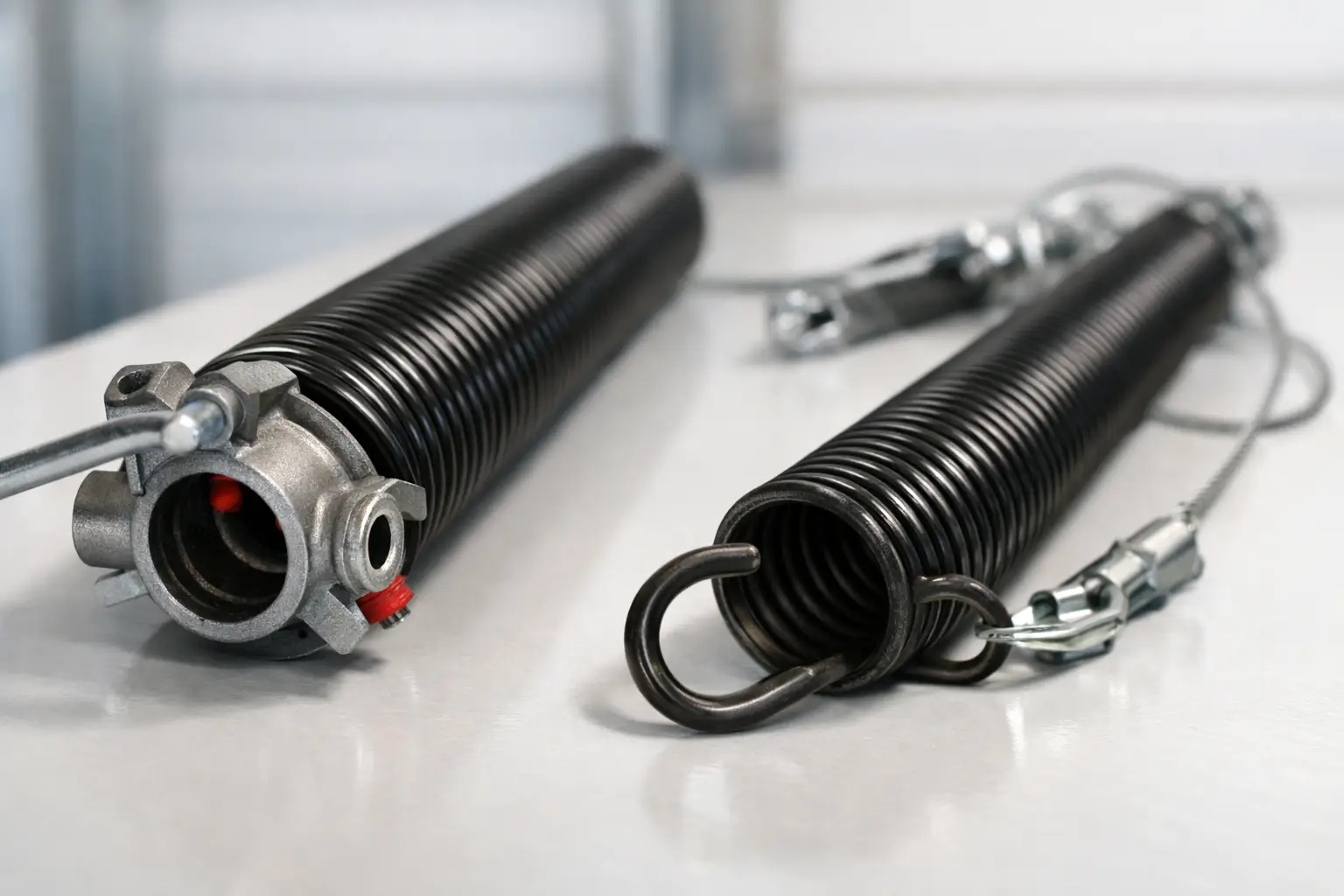
A torsion spring is mounted on a steel shaft directly above the garage door opening. As the door closes, the spring winds tightly and stores energy. When the door opens, it unwinds in a controlled motion, helping lift the door through cables and drums at each end of the shaft.
Extension springs are mounted along the horizontal tracks, usually one on each side of the door. They stretch as the door closes and contract to help pull the door open. You may see them running above the tracks toward the back of the garage.
Both systems counterbalance the door. Your opener is not designed to lift the full weight of the door by itself. It is designed to guide a balanced door up and down. When a spring breaks or loses tension, the opener may strain, the door may become uneven, or the door may stay firmly on the floor.
The biggest practical difference is how each system manages force. Torsion springs use a shaft and cable drums to distribute lifting power more evenly. Extension springs pull from the sides, which makes them a common fit for certain lighter doors and garages with limited space above the opening.
Why Many Homeowners Choose Torsion Springs
Torsion systems are the preferred option for many modern residential garage doors, especially insulated steel doors, wood doors, and wider double doors. They typically offer smoother movement, better balance, and a longer service life than standard extension springs.
A properly matched torsion spring helps the door rise evenly from both sides. That reduces stress on rollers, tracks, cables, hinges, and the opener. It can also make the door quieter, though worn rollers or a noisy opener may still need separate attention.
Torsion springs are usually installed above the door, keeping the spring hardware more contained than an extension system. They are still under extreme tension and are never a safe do-it-yourself repair, but their design does not involve a stretched spring running alongside the tracks.
Another advantage is cycle life. One cycle means the door opens and closes once. Standard torsion springs are commonly rated for around 10,000 cycles, while higher-cycle options can be selected for households that use the garage as the main entrance. If your family opens the door six to eight times a day, a higher-cycle spring can be a smart long-term choice.
The trade-off is upfront cost. Torsion spring replacement generally costs more than replacing a basic extension spring because the parts and setup are more involved. The exact price depends on door size, door weight, spring type, accessibility, and whether cables, bearings, or other worn components also need attention.
When Extension Springs Make Sense
Extension springs are not automatically a bad choice. They are a practical, proven system for many single-car doors, lighter garage doors, and garages without enough headroom for a standard torsion setup.
They are often less expensive to install or replace, which can matter when a homeowner needs to get a car out of the garage quickly. Extension systems can also be a sensible match when the existing tracks, framing, and door were designed around them. A technician can determine whether replacing the existing springs is the best option or whether a conversion would deliver real value.
The downside is that extension springs tend to have a shorter life expectancy than torsion springs, particularly on a frequently used door. They can also allow the door to lift less evenly if one side wears differently or if cables and pulleys are not in good condition.
Safety cables are essential with extension springs. These cables run through the center of each spring and are anchored at both ends. If a spring breaks, the safety cable helps prevent it from flying across the garage. If you have extension springs without safety cables, that is worth correcting promptly.
Door Weight and Garage Space Matter More Than Preference
The best spring system is the one engineered for your specific door. A lightweight, non-insulated single door has very different needs from a 16-foot insulated double door with windows. Adding insulation, decorative hardware, or replacement panels can also change the door’s weight enough that the springs need to be recalculated.
Headroom is another deciding factor. A standard torsion setup needs room above the garage opening for the shaft, springs, and brackets. Low-headroom torsion systems are available in some situations, but they are not the right answer for every garage. Extension springs may fit better when overhead clearance is limited.
Door condition matters too. If the tracks are bent, rollers are worn, cables are frayed, or the door is off track, installing a new spring alone will not fix the whole problem. A good repair includes checking how the door runs, not just swapping the part that failed.
For commercial doors, the calculation becomes even more specific. Rolling steel doors, heavy sectional doors, and high-cycle business doors may require specialized torsion assemblies designed for frequent operation. Choosing the wrong spring can lead to downtime, worn opener parts, and an unsafe door.
Safety: Why Spring Repairs Are Not a Weekend Project
Garage door springs can cause serious injury when handled without the right training and tools. A torsion spring is wound under heavy tension. An extension spring can release stored energy suddenly if it breaks or comes loose. Improvised tools, incorrect winding, or the wrong spring size can damage the door and put anyone nearby at risk.
If you suspect a broken spring, do not pull the emergency release and try to lift the door by hand unless there is no other safe option. A door without spring support is much heavier than most people expect. Keep children and pets away from the area, avoid operating the opener repeatedly, and do not park beneath a door that is stuck open.
Common signs of a spring issue include a loud bang from the garage, a visible gap in a torsion spring, loose cables, a crooked door, or an opener that hums but cannot lift the door. On extension systems, one spring may hang loose or appear stretched differently from the other side.
A trained technician can weigh and balance the door, identify the correct spring size, inspect the cables and brackets, and test the system after repair. That work protects the door, the opener, and the people using the garage every day.
Should You Convert From Extension to Torsion?
A conversion can be worthwhile, but it is not always necessary. Homeowners often consider converting when they replace an aging door, install a heavier insulated door, use the garage frequently, or want smoother operation and a longer-lived spring system.
Conversion may also be a good option after recurring extension spring, pulley, or cable issues. Instead of repeatedly repairing an older setup, you may get better long-term value from a torsion system that matches the door and garage layout.
Still, a well-maintained extension system with safety cables can serve many homes reliably. If the door is light, the garage has limited headroom, and the existing setup is in good condition, replacing the extension springs may be the sensible repair. There is no one-size-fits-all answer, and a trustworthy technician should explain both paths without pushing an unnecessary upgrade.
What to Ask Before Approving a Spring Repair
Ask whether the quoted spring is correctly sized for your door’s actual weight, not just its width. Confirm whether both springs should be replaced together when your door uses a pair. Springs installed at the same time usually have similar wear, so replacing only one can leave you with another service call soon after.
It also helps to ask about the spring’s cycle rating, whether safety cables are included on an extension system, and whether the technician will check the door’s balance after installation. Clear answers matter more than a vague low price.
At Greeley Garage Door Repair by Mike, the goal is to explain what failed, what the repair includes, and what the door needs to operate safely before work begins. Whether your door needs torsion springs, extension springs, or a larger repair, you should know the plan and the price upfront.
If your garage door is stuck, unusually heavy, or making a new loud noise, treat it as a safety issue rather than an inconvenience. A quick professional inspection can get your door moving again and help prevent a small spring problem from turning into damaged cables, a burned-out opener, or a door you cannot safely use.