


A garage door that will not open is not always an opener problem. In many cases, torsion springs have broken, leaving the door too heavy for the opener to lift safely. That can mean a car trapped inside, a door stuck partly open, or a security problem that cannot wait until next week.
For homeowners in Greeley and nearby Northern Colorado communities, spring trouble is one of the most common garage door repair calls we see. The good news is that a qualified technician can often replace a broken spring the same day. The part that matters most is recognizing the issue early and not turning a repair into an injury or a damaged door.
What Torsion Springs Do for Your Garage Door
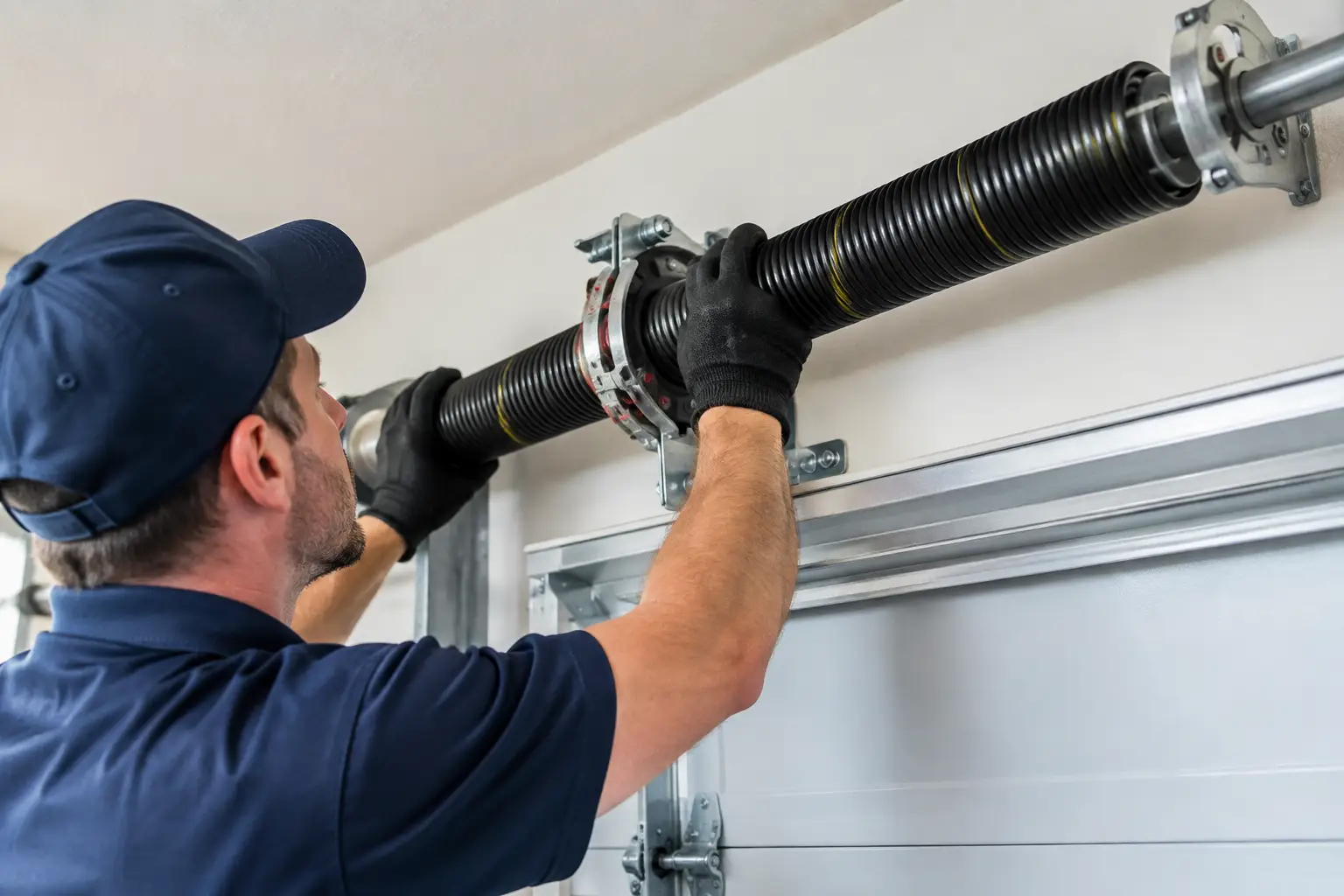
Torsion springs are mounted on a steel shaft above the garage door opening. When the door closes, the springs wind tightly and store energy. When you open the door, that stored energy helps lift hundreds of pounds of door weight.
That balance is why a properly working garage door can be raised with one hand even though the door itself is heavy. The opener does not do all the lifting. Its job is mainly to guide the door through its travel. The springs do the hard work.
Most residential doors use one or two torsion springs, depending on the width, height, weight, and design of the door. Heavier insulated doors, wood doors, and many commercial overhead doors may require larger or multiple springs. A spring has to be matched to the specific door. Installing a spring that is too weak, too strong, or the wrong length can create new problems quickly.
Signs a Torsion Spring May Be Broken
A broken spring often makes a loud bang in the garage. Homeowners sometimes describe it as a gunshot, a metal snap, or something hitting the door. That sound comes from the spring releasing its stored tension when it breaks.
You may also notice a visible gap of about two inches in the spring coil above the door. A torsion spring is one continuous coil when intact. If there is a clean gap in the middle, it has failed.
Other warning signs are less obvious. The garage door may open only a few inches and stop, or the opener may strain, hum, or reverse. The door can feel extremely heavy when you pull the emergency release and try to lift it by hand. It may also rise unevenly, especially if a two-spring system has lost only one spring.
Do not assume the opener is the problem just because the remote no longer opens the door. Continuing to run an opener against a door with a failed spring can burn out gears, bend the top section, damage the rail, or snap cables. A spring repair is usually far less expensive than replacing both the spring system and the opener.
Why Torsion Spring Replacement Is Not a DIY Job
There are plenty of household repairs that make sense for a careful homeowner. Replacing torsion springs is not usually one of them. These springs are under significant torque, and the winding process requires the right tools, the right technique, and a clear understanding of garage door balance.
The risk is not limited to the spring itself. A winding bar can slip, the shaft can move unexpectedly, cables can come loose, and a heavy door can fall if it is not secured. Improvised tools such as screwdrivers, rebar, or socket extensions are especially dangerous. They are not made to control spring tension.
There is also a performance issue. A door with incorrectly installed springs may still move at first, but it will not be balanced. That puts unnecessary stress on the opener, rollers, cables, and tracks. It can also make the door unsafe for anyone standing nearby.
If you suspect a broken spring, leave the door closed if possible, keep people away from it, and avoid repeatedly pushing the opener button. If the door is stuck open, do not try to force it down by yourself. Call for service so the door can be secured correctly.
What a Professional Spring Repair Should Include
A proper torsion spring repair is more than swapping one broken part for another. A technician should first identify the door's weight, track condition, spring configuration, and overall hardware condition. That determines the correct spring size and cycle rating.
Standard springs are commonly rated for around 10,000 cycles, with one cycle meaning the door opens and closes once. For a garage used several times each day, a higher-cycle spring can be a smart upgrade. It costs more upfront, but it can provide a longer service life and reduce the chance of another inconvenient breakdown.
The technician should also inspect the cables, drums, bearings, center bracket, rollers, hinges, and opener settings. Springs work as part of a system. For example, frayed cables or worn rollers can make a new spring work harder than it should.
Once the replacement is installed, the door should be carefully balanced. A correctly balanced door stays near the halfway point when disconnected from the opener instead of crashing down or racing upward. The opener travel limits and force settings should then be checked so the door closes and reverses as designed.
At Greeley Garage Door Repair by Mike, our service trucks are stocked for common spring repairs, which helps us complete many jobs in one visit instead of leaving your garage unsecured while waiting on a part.
How Long Do Garage Door Springs Last?
Spring life depends on cycle rating, door weight, maintenance, weather exposure, and daily use. A typical 10,000-cycle spring may last roughly seven to 10 years for a household that uses the garage a few times daily. A busy family that uses the garage as the main entrance may wear through that rating sooner.
Colorado temperature swings can also expose weak points. Cold weather does not usually cause a healthy spring to fail by itself, but metal becomes less forgiving when temperatures drop. If a spring is already near the end of its service life, a cold morning may be when it finally breaks.
Rust, poor lubrication, and an unbalanced door can shorten spring life. Regular maintenance helps because it gives a technician a chance to catch worn parts before they become an emergency. Still, springs are wear items. Even well-maintained springs eventually reach the end of their cycle life.
Should You Replace One Spring or Both?
If your door has two torsion springs and one breaks, replacing both is often the practical choice. The second spring has carried the same workload for the same amount of time, so it may not be far behind. Replacing both at once can prevent another service call in the near future and keeps the door operating with evenly matched springs.
There are exceptions. If the other spring was replaced recently, has a different cycle rating, or is still in excellent condition, replacing only the broken spring may be reasonable. The right answer depends on the condition and specifications of the existing hardware, not a one-size-fits-all rule.
A trustworthy technician should explain the options clearly, show you what failed, and give you upfront pricing before work begins. You should not have to agree to surprise add-ons just to get your door working again.
What to Do When Your Spring Breaks
If the door is closed, do not open it manually unless a trained technician tells you it is safe to do so. Use another entrance to the home and move appointments or vehicles as needed. If your car is trapped inside, same-day service can often get you back on the road without risking damage to the door or opener.
If the door is open, keep children, pets, and vehicles clear of the opening. Avoid standing or walking beneath the door. If you need emergency help after hours, call a local garage door technician who can secure the door and assess the spring system safely.
A broken spring is frustrating, especially when it happens before work, school, or a late-night arrival home. But the safest next step is simple: leave the high-tension hardware alone, get a clear diagnosis, and have the door balanced correctly. Your garage door should lift smoothly, close securely, and stay out of the way of your day.