
A garage door that was easy to open yesterday can become a 300-pound problem overnight. Knowing when to replace garage door springs helps you avoid a trapped vehicle, a door stuck open during bad weather, or an unsafe door that drops without warning. Springs do the heavy lifting. When one wears out or breaks, the opener and the door are both under more stress than they were built to handle.
For homeowners in Greeley, Evans, Windsor, and Ault, spring trouble often shows up when you are trying to leave for work, pick up kids, or secure the house for the night. The good news is that the warning signs are usually clear once you know what to look for.
When to Replace Garage Door Springs
Garage door springs should be replaced when they are broken, stretched out, badly rusted, or no longer balancing the door correctly. Most standard torsion springs are rated for a set number of open-and-close cycles, often around 10,000. For a door used twice a day, that can mean several years of service. For a busy family garage, it may happen much sooner.
There is no calendar date that works for every home. Spring life depends on the door's weight, how often it operates, the quality of the original springs, maintenance history, and Northern Colorado temperature swings. A heavier insulated door or a door used as the main entrance to the home puts more demand on its springs.
A broken spring needs replacement right away. A spring that still works but shows heavy wear deserves a professional inspection before it becomes an emergency. Waiting can damage cables, rollers, the opener, or the door itself.
You hear a loud bang from the garage
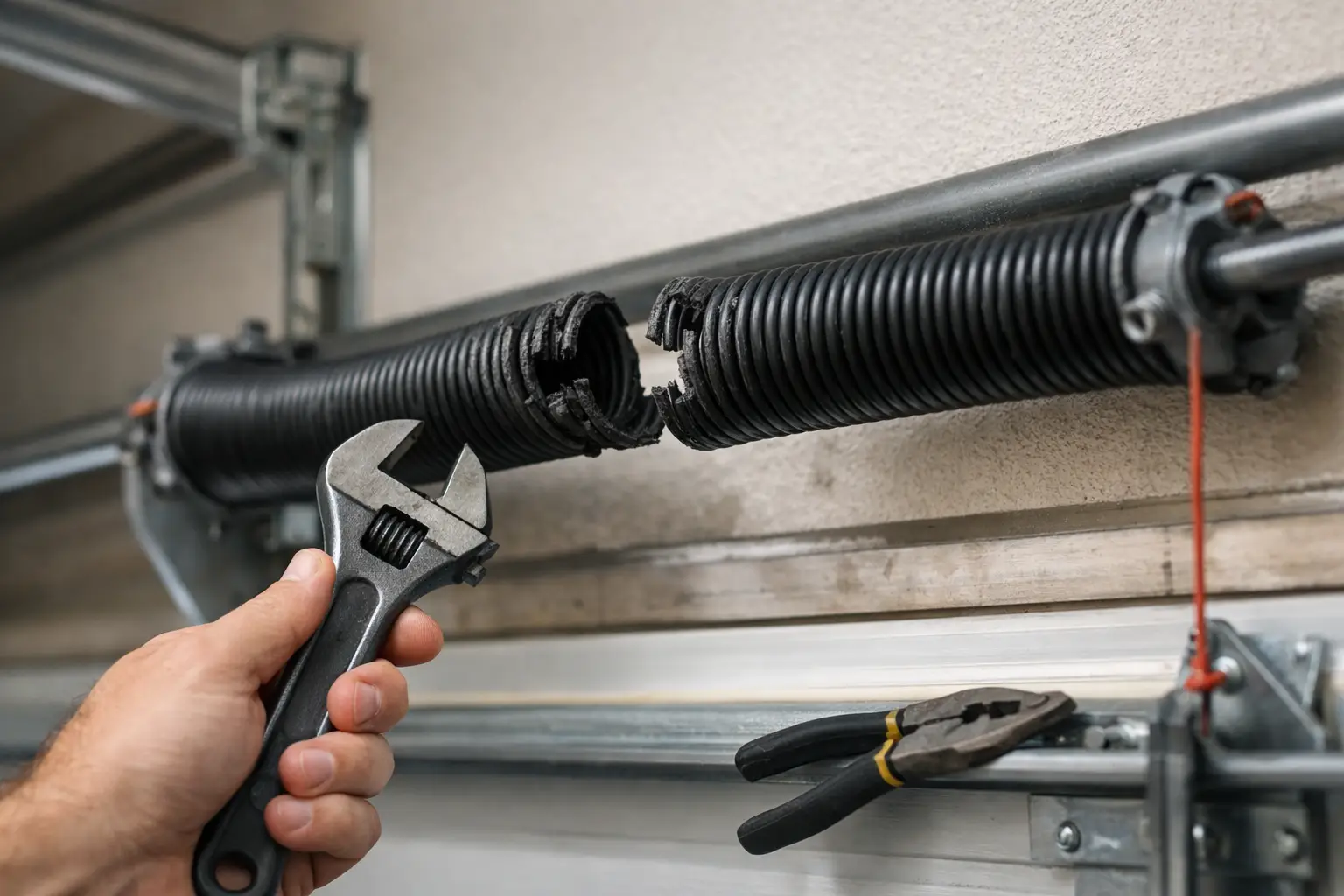
A loud pop or bang from inside the garage is one of the most common signs of a broken torsion spring. People sometimes assume the sound came from a fallen object or a problem with the opener. In many cases, it is the spring snapping under tension.
Check from a safe distance. On a torsion spring system, you may see a visible gap in the coil above the door. Do not touch it, try to wind it, or operate the opener repeatedly. The door is now much heavier than normal, and forcing it can create a larger repair.
The door will not open, or only lifts a few inches
An opener may hum, strain, or lift the door just a short distance before stopping. This is not always an opener failure. The opener is designed to guide a balanced door, not lift its full weight without spring assistance.
If the door starts up and reverses, stays on the floor, or feels extremely heavy when disconnected from the opener, a failed spring is a likely cause. Stop using the system until it can be checked. Continuing to press the remote can burn out the opener motor or strip internal gears.
The door feels heavy or will not stay halfway open
A properly balanced garage door should stay near the halfway point when it is disconnected from the opener and moved by hand. If it slams down, shoots upward, or takes real effort to lift, the springs may be worn, improperly adjusted, or the wrong size for the door.
This test is best left to a technician if you are not comfortable releasing the opener. A door that is out of balance can move quickly, and the risk is not worth a quick home experiment.
The door opens crooked or cables look loose
When one spring in a two-spring system breaks, the remaining spring may pull unevenly. The door can rise at an angle, a cable can come loose from its drum, or the door can bind in the tracks. At that point, do not try to straighten the door by hand.
A crooked door can come off track, bend panels, and put extra strain on the remaining hardware. A same-day repair is usually less costly than fixing a spring, cable, track, and panel problem after the door has been forced.
Your opener is suddenly working much harder
Slower movement, grinding, jerking, or an opener that reverses for no obvious reason can all point to a balance problem. The opener may still be the issue, but springs should be checked before replacing an otherwise serviceable motor.
This is especially true if the opener worked normally for years and the change happened quickly. The door hardware and opener work as one system. A spring problem often shows up first as an opener complaint.
You can see rust, gaps, or stretched coils
Surface rust can accelerate spring wear, particularly when moisture, road salt, and seasonal temperature changes are part of the picture. Rust does not guarantee immediate failure, but deep corrosion, pitting, gaps between coils, or a visibly stretched spring call for service.
During a maintenance visit, a technician can determine whether lubrication and adjustment are enough or whether replacement is the safer choice. Catching wear early gives you time to schedule the repair instead of dealing with it after hours.
One spring broke, even though the other still looks fine
If your door uses two torsion springs and one breaks, replacing both is often the practical choice. They were installed at the same time, have carried the same workload, and are likely near the same point in their service life.
Replacing only the broken spring can cost less today, but the older matching spring may fail soon afterward. There are exceptions, such as when the other spring was replaced recently or is clearly a different age. A good technician should explain the trade-off plainly rather than pressure you into parts you do not need.
Replace the Spring, Not the Whole Door
A broken spring does not automatically mean you need a new garage door. In many cases, the door, tracks, and opener are in good shape, and a correctly matched replacement spring restores safe operation in one visit.
Replacement becomes part of a larger conversation when the door has severe panel damage, chronic track problems, rotten wood sections, or poor insulation that no longer fits the property. A technician should separate the immediate safety repair from optional improvements, so you can make a clear decision without surprise upselling.
The right spring matters as much as the replacement itself. Spring size is matched to the door's weight, height, cable drum setup, and hardware. Installing a generic spring or using the wrong size may make the door operate poorly, shorten the life of the opener, and create a repeat service call.
What to Do When a Spring Breaks
First, keep people and pets away from the door. Do not stand beneath it, pull on loose cables, or attempt to lift it if it is partially open. A door with failed springs can be difficult to control even for a strong adult.
Next, stop using the opener. If your vehicle is trapped inside, explain that when you call for service. A local repair team can prioritize the situation and determine the safest way to get the door operating again. If the door is stuck open, secure the garage from inside if possible and avoid leaving the home unattended.
Do not try to replace torsion springs yourself. They are tightly wound and can cause serious injury if a winding bar slips or the hardware is handled incorrectly. Extension springs also carry risk, especially if safety cables are missing or damaged. This is one repair where professional tools, training, and the correct replacement parts matter.
At Greeley Garage Door Repair by Mike, the goal is straightforward: inspect the whole system, explain what failed, give you the price before work begins, and complete the repair with parts carried on the truck whenever possible. Spring replacement should also include a balance check, cable and roller inspection, and opener test so the door is safe to use when the technician leaves.
How to Help New Springs Last Longer
You cannot prevent every spring from eventually wearing out, but regular care can help avoid early failure. Keep the tracks clear of debris, listen for new noises, and avoid running the door when ice, snow, or an object is blocking its path. Do not spray heavy grease into the tracks. The tracks need to stay clean so rollers can move freely.
A yearly professional tune-up is useful for doors that see frequent use. The technician can lubricate appropriate moving parts, check spring balance, tighten hardware, inspect cables, and spot worn rollers before they create a bigger problem. If you use the garage as your main entry, that small checkup can prevent a very inconvenient morning.
When your garage door starts acting different, trust the change. A quick call while the door is still moving can be the difference between a scheduled spring replacement and an urgent repair with your car stuck inside.