



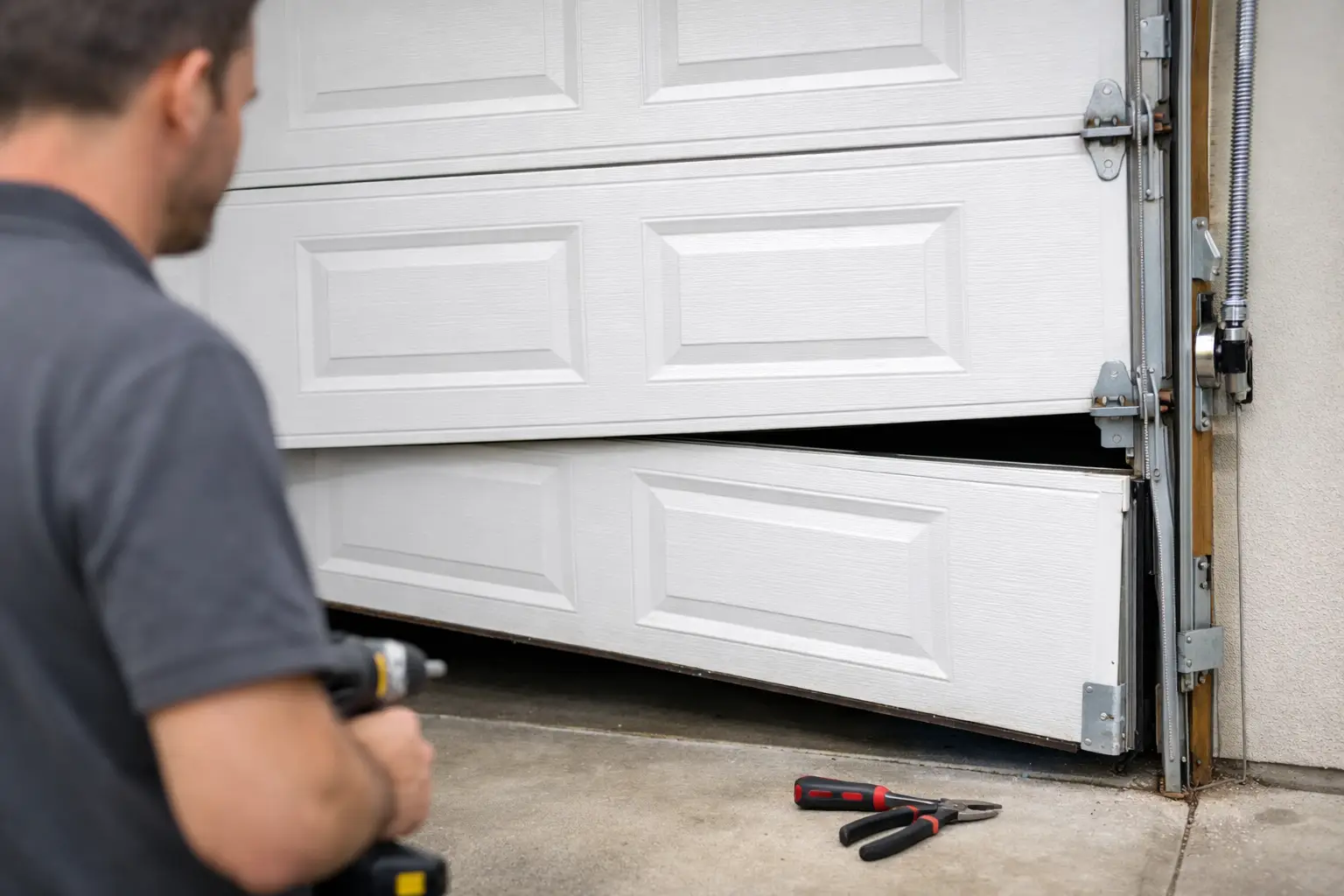
A garage door should move in one steady, controlled path. When it shudders, jumps, or stops and starts on the way up or down, it is more than an annoyance. If you are wondering why garage door jerks, the answer is often a worn moving part, a balance problem, or an opener that is working harder than it should. Ignoring it can turn a manageable repair into a door that will not open at all.
The good news is that a jerking door does not always mean you need a new door. A quick look at when and where the movement happens can point toward the real problem. Just do not try to force the door or take apart spring and cable components yourself. Those parts are under serious tension.
Why Garage Door Jerks During Opening or Closing
Garage doors are heavy, even when they look lightweight from the street. Springs carry most of that weight, while rollers, tracks, cables, hinges, and the opener work together to guide the door. A jerk in the motion usually means one of those parts is no longer moving freely or sharing the load correctly.
The timing matters. If the door jerks only at the beginning of travel, the opener, springs, or bottom rollers may be involved. If it catches in the same place every time, look toward the track, rollers, hinges, or a damaged door section. If the entire door shakes from bottom to top, a balance or hardware issue is more likely.
Worn, cracked, or dirty rollers
Rollers ride inside the tracks every time the door moves. Older steel rollers can become noisy, dry, worn down, or bent. Plastic rollers may crack after years of use. When a roller cannot turn smoothly, it can drag through the track and make the door jump or shake.
You may hear scraping, squealing, or a rhythmic clicking sound along with the jerking. A technician can inspect the rollers and replace worn ones with quality replacements designed for smoother, quieter operation. Do not spray heavy grease inside the tracks. It collects dust and grit, which can make the problem worse. Tracks should generally be kept clean, while moving joints and rollers need the correct garage-door-rated lubricant.
Bent, loose, or misaligned tracks
A garage door track does not have to be badly crushed to cause trouble. A small dent, loose mounting bracket, or section that has shifted out of alignment can interrupt roller movement. The door may hesitate at one spot, pull to one side, or shake hard as it passes the damaged area.
This can happen after a vehicle bumps the door, a ladder hits the track, or hardware loosens over time. Northern Colorado temperature swings can also expose existing wear as metal parts expand, contract, and lose their ideal alignment.
Avoid hitting or bending a track back into place with a hammer. A track that looks straight can still be out of position, and forcing it may cause a roller to come out. If the door is leaning, rubbing badly, or appears off track, stop using it and arrange repair promptly.
Broken or weakening springs
Torsion springs or extension springs counterbalance the weight of the door. When they wear out, break, or lose tension, the opener has to pull far more weight than it was designed to handle. That extra strain can make the door jerk, move slowly, or stop partway.
A broken torsion spring often leaves a visible gap in the spring above the door. You may also hear a loud bang from the garage when it breaks. With extension spring systems, a loose or damaged spring may be harder to spot, but the door can feel unusually heavy and uneven.
Never attempt a spring repair without proper tools and training. Springs can release enough force to cause serious injury or damage. A professional repair includes checking the door balance and setting the replacement spring correctly for your door's actual weight.
Frayed cables or uneven cable tension
Cables lift and lower the door in coordination with the springs. If one cable begins to fray, slips off a drum, or loses tension, one side of the door may rise faster than the other. That uneven pull creates a jerking or crooked movement and can quickly lead to an off-track door.
Stop operating the door if you see a loose cable, cable loops near the drum, or a door that is visibly crooked. Continuing to use the opener can bend tracks, damage panels, or pull the door completely out of place.
Loose hinges, brackets, and other hardware
Your door cycles through thousands of openings and closings. Vibration gradually loosens bolts, roller brackets, hinges, and track supports. A loose hinge can make one panel bind as the door curves through the track. Loose track hardware can let the track shift under the weight of the door.
A visual inspection can reveal obvious loose fasteners, but do not tighten or remove bottom brackets. The bottom brackets are connected to the cables and springs, which means they are under tension even when the door is closed. Leave those adjustments to a trained garage door technician.
A damaged panel or a door that is binding
A bent panel can be more than cosmetic. When a section is bowed, cracked near a hinge, or pushed out of shape, it may not fold through the track curve correctly. The door can jerk at the same point on every cycle, especially when moving between vertical and horizontal track sections.
A single damaged panel may be repairable or replaceable, depending on the door model and condition. But if the door is older, has multiple failing sections, or lacks replacement parts, full replacement can sometimes be the safer long-term value. A good technician should explain both options clearly rather than pushing a replacement you do not need.
Opener problems and incorrect force settings
The opener is not always the root cause, but it can contribute to jerking. A worn drive gear, failing motor, loose chain or belt, damaged trolley, or incorrect force setting can cause erratic movement. An opener that strains because the door is unbalanced may also jerk or reverse as its safety system responds to resistance.
Do not keep increasing the opener force setting to make a rough door move. That can mask a mechanical problem and reduce the safety protection that should stop the door when it meets resistance. First, the door itself needs to roll smoothly and remain properly balanced.
Safe Checks You Can Make Before Calling
Start by watching the door from a safe distance during one normal cycle. Notice whether it jerks in the same location, leans to one side, makes new sounds, or reverses unexpectedly. Look for visible dents in the track, damaged rollers, loose hardware above the door, a broken spring, or frayed cables.
If the door is fully closed and the opener is not struggling, you can also check the photo-eye sensors near the floor. Wipe the lenses gently and make sure they face each other. Misaligned sensors more often cause a door to reverse near the floor than a true jerking motion, but they are easy to rule out.
Do not pull the emergency release and lift the door by hand if you suspect a broken spring, loose cable, or off-track condition. A heavy door can drop unexpectedly. When in doubt, leave it closed, unplug the opener if the door is behaving unpredictably, and call for service.
When a Jerking Garage Door Needs Same-Day Repair
A rough-moving door deserves attention soon, but some signs call for same-day help. Stop using the door if it is stuck open, off track, crooked, hanging by one side, making a grinding noise, or has a broken spring or loose cable. These issues can leave your home unsecured, trap a vehicle, and create a real safety hazard.
For homeowners in Greeley, Evans, Windsor, and Ault, Greeley Garage Door Repair by Mike can inspect the full system, explain what failed, and provide upfront repair options. A properly stocked service truck often means worn rollers, cables, springs, hinges, or opener issues can be handled in one visit instead of leaving you with a door you cannot safely use.
Keep the Problem From Coming Back
Most jerking doors give warning signs before a major failure. Schedule maintenance if the door gets louder, begins shaking, or takes longer to open. Regular service can catch worn rollers, loose hardware, weakening springs, and opener strain before they leave you stuck in the driveway.
Use the door gently, keep tracks clear of debris, and avoid hanging heavy items from the track or opener rail. If a car, bike, or tool bumps the door, inspect it before the next cycle. A small impact can shift a track or damage a roller without leaving obvious exterior damage.
A garage door that jerks is asking for attention. Addressing the cause early protects the opener, prevents bigger damage, and helps keep the largest moving part of your home safe for the people who use it every day.