
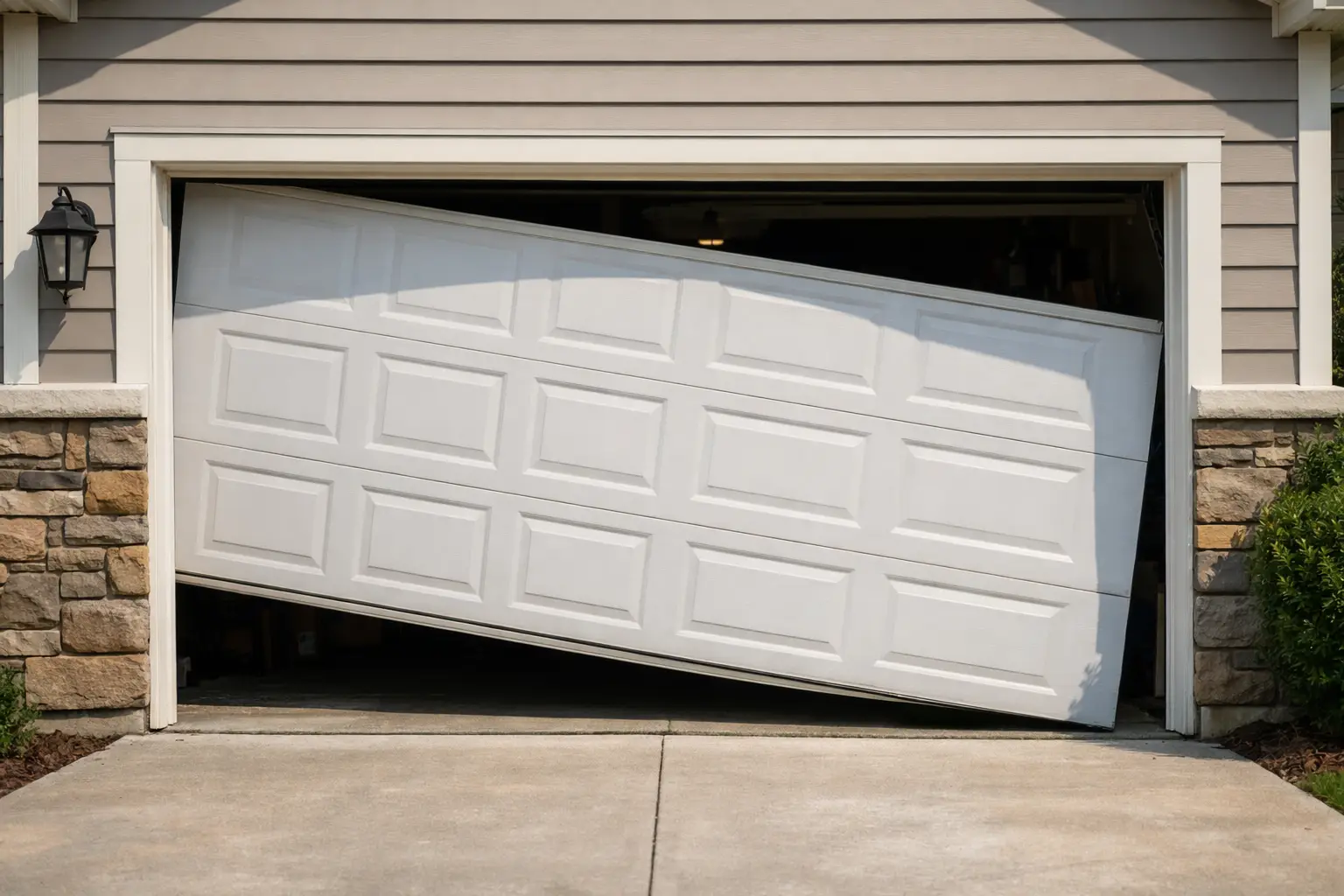
A crooked garage door usually shows up at the worst time - when you're leaving for work, trying to get the kids inside, or closing up for the night and noticing the door looks uneven. If you're asking, why is my garage door crooked, the short answer is this: something on one side is no longer moving the same way as the other. That could be a cable, a spring, a roller, a track, or even the door itself.
The good news is that a crooked door is often repairable. The bad news is that it can go from annoying to dangerous pretty fast. A garage door is heavy, and when the weight shifts unevenly, it puts extra strain on the parts still hanging on.
Why is my garage door crooked in the first place?
Most garage doors are designed to rise and lower evenly, with both sides sharing the load. When one side lags, drops, binds, or lifts higher than the other, the whole door starts to look tilted. Sometimes the problem starts suddenly with a loud bang. Other times it sneaks up over weeks as parts wear down.
In plain terms, a crooked garage door usually means one of four things. A lifting component has failed, the door has come partly off track, the panels or hardware are damaged, or the system is under uneven tension. The exact cause matters because the fix for a loose roller is very different from the fix for a broken torsion spring.
The most common reasons a garage door goes crooked
Broken or stretched lift cable
This is one of the most common causes. Your garage door cables help lift and lower the door evenly. If one cable frays, slips off the drum, or snaps completely, one side of the door can drop lower than the other.
When that happens, the door may look slanted, jam halfway, or hang awkwardly in the opening. You might also hear scraping or popping as the remaining side tries to carry the load. If a cable issue is the cause, keep the door closed if possible and avoid forcing it with the opener.
Broken torsion or extension spring
Springs do the heavy lifting. If one spring breaks or loses tension, the door can rise unevenly or feel much heavier on one side. In some systems, a broken spring can make the door appear crooked even if the tracks and panels are still fine.
This is not a small problem. Springs are under high tension, and a DIY repair can go bad fast. If you heard a sharp snap from the garage and then noticed the door sitting unevenly, spring failure is a strong possibility.
Rollers out of track or worn hardware
Rollers guide the door through the tracks. If a roller pops out, seizes up, or wears down badly, one side may drag while the other continues moving. That can twist the door and make it look crooked during travel or when fully open.
Sometimes this starts after the door bumps into something. Other times it's just wear and tear. Loose brackets, worn hinges, and bent roller stems can all create the same uneven movement.
Bent track or track misalignment
A garage door track does not need to be wildly bent to cause trouble. Even a small shift can make one side bind, especially as the door passes a certain point. If the track is pulled away from the wall, dented by impact, or loosened at the mounting points, the door may tilt or stop unevenly.
This is one of those cases where the symptom is obvious but the cause is not always easy to spot. The door looks crooked, but the deeper issue is that the path is no longer straight.
Damaged door panels or impact damage
If a car bumper clipped the bottom section or something hit the side of the door, the panel itself may be bent. That changes how the sections fold and move in the tracks. A visibly damaged section can throw off balance and make the whole door sit crooked.
Wood doors can also warp over time, and older steel doors may twist if the frame weakens. Not every damaged panel means full door replacement, but sometimes a badly compromised section makes repair less practical.
What a crooked garage door can lead to
A tilted door is more than a cosmetic issue. It usually means the system is under stress. The opener may strain harder than it should, the remaining cable or spring can wear out faster, and the tracks can take extra abuse every time the door moves.
That is why a crooked garage door often turns into an off-track door, a burned-out opener, or a jammed door that will not open at all. If the door is stuck partially open, there is also the security and weather problem. In Colorado, that matters quickly.
What you can safely check before calling for service
There are a few things a homeowner can look at without getting into risky territory. Start with the door fully closed if possible. Step back and see whether one side is visibly lower. Then look at the cables near the drums above the door. If one cable is loose, hanging, or missing from the drum, that points to the issue right away.
Next, check the tracks for obvious bends or gaps where the track has pulled away from the wall. Look at the rollers to see if one has popped out. Also inspect the door panels for fresh dents, bowing, or separation around hinges.
What you should not do is loosen hardware on the spring system, reset cables under tension, or keep hitting the opener to "see if it clears." That usually makes the damage worse.
When you should stop and call a pro
If the door is hanging crooked in the opening, one cable is loose, a spring is broken, or the door has come off track, it is time to stop using it. The same goes for doors that jerk, slam, or make harsh grinding noises when moving.
This is especially true if your car is trapped inside and you're tempted to force the door open. A garage door may weigh a few hundred pounds, and when it is out of balance, it does not move predictably. One wrong pull can cause the other side to slip or drop.
For most homeowners, the safe move is simple: disconnect the opener only if the door is fully down and stable, keep people clear of the area, and get it inspected.
Why is my garage door crooked after I tried to open it?
If the door looked normal when closed but went crooked during opening, that often points to a movement problem rather than a panel problem. A roller may be binding, a cable may be slipping on the drum, or one side may be getting less spring assistance than the other.
If it became crooked right after a power outage, manual release use, or opener issue, there may also be a reset problem with the opener pulling against an already stressed door. The opener does not cause most crooked-door issues on its own, but it often reveals them.
Repair or replace? It depends on the cause
Many crooked garage doors can be repaired the same day if the problem is a cable, roller, track adjustment, or spring replacement. That is the best-case scenario and usually the most cost-effective one.
Replacement becomes more likely when the door has severe panel damage, widespread rust, a twisted frame, or multiple worn-out parts at once. Age matters too. If the door is already near the end of its life and now has a crooked track, worn rollers, and failing springs, a repair may only buy limited time.
A good technician should explain that trade-off clearly. Not every crooked door needs a new system, and not every old door is worth patching again.
How to reduce the odds of it happening again
Most crooked door problems start with wear that went unnoticed. A basic tune-up can catch frayed cables, loose hardware, tired rollers, and track issues before the door tilts or jams.
You do not need to become a garage door expert. Just pay attention to changes. If the door starts sounding rougher, closes unevenly, shakes more than usual, or leaves a gap on one side, that is your warning sign. Getting ahead of it is almost always cheaper than dealing with an emergency call after the door goes off track.
For homeowners in Greeley and nearby areas, this is one of those repairs where local experience matters. Weather swings, wind, and daily use all take a toll on garage doors here, and a straightforward diagnosis saves time.
If your garage door looks crooked, trust what you're seeing. Doors do not tilt for no reason, and they rarely fix themselves. The sooner you deal with it, the better the odds of a simpler repair and a safer garage tomorrow.