
Your car is in the garage, you are already running late, and the wall button or remote suddenly does nothing. If you are asking, “why wont garage opener respond,” the answer may be as simple as a dead remote battery. It can also be a warning that the garage door itself is too heavy or unsafe for the opener to move.
Start with the simple checks, but do not force the door or keep pushing the button if it strains, hums, or moves only a few inches. A garage door is the largest moving part of most homes, and the opener is not designed to overcome a broken spring, damaged cable, or door that has come off track.
Why Won’t My Garage Opener Respond?
An opener needs power, a working command signal, clear safety sensors, and a balanced door. A failure in any one of those areas can make it seem like the entire system has quit. The fastest way to narrow it down is to notice what happens when you press the remote and then the wired wall control.
If neither control does anything - no light, click, hum, or movement - start with electrical power. If the wall control works but the remote does not, the problem is usually with the remote, its programming, or signal interference. If the motor runs but the door will not move, the issue may be the trolley connection or the door hardware rather than the opener motor.
Check the outlet, breaker, and opener cord
Look at the opener unit on the ceiling. Is its light on? Make sure the power cord has not been knocked loose from the outlet. Test that outlet with a lamp or a charger if you can do so safely. Garage outlets can trip, especially after a storm, moisture exposure, or use of a power tool.
Check the breaker panel and any GFCI outlets in the garage, laundry room, bathroom, or exterior area. One tripped GFCI can cut power to a garage outlet. Reset it once, then test the opener again. If the breaker trips again or you smell burning, stop there and have an electrician or garage door technician inspect the issue.
A power surge can also leave an opener unresponsive even though the outlet is working. Unplug the opener for about a minute, plug it back in, and try the wall button. That simple reset can clear a minor electronic glitch. It will not fix a failed circuit board, but it is a safe first step.
Try the wall button before blaming the remote
When the wall button works but the handheld remote does not, replace the remote battery first. Batteries can weaken during cold Northern Colorado weather, and a remote may still light up without sending a strong enough signal to the opener.
If a new battery does not help, stand close to the garage and try again. Range problems can come from LED bulbs, nearby electronics, metal storage cabinets, or a failing opener antenna. Make sure the small antenna wire hanging from the opener motor is not tucked up inside the housing or damaged.
Some wall controls also have a lock or vacation setting. When that feature is on, the wall button may work while all remote controls are disabled. Look for a lock symbol or indicator light on the wall station. Turn off the lock setting and test the remote again.
If only one remote has stopped working, it may need to be reprogrammed. If every remote and the keypad quit at once but the wall control works, the receiver or antenna may need professional attention.
Inspect the Safety Sensors at the Bottom of the Door
Photo-eye safety sensors sit near the floor on both sides of the garage door opening. They send an invisible beam across the opening. If that beam is blocked or the sensors are out of alignment, most openers will refuse to close the door or will close it briefly and reverse.
Check for leaves, cobwebs, dirt, snow melt, boxes, or a broom blocking either sensor. Wipe each lens gently with a soft cloth. Then look at the small indicator lights. On many systems, both lights should be solid. A blinking or unlit sensor usually means an alignment, wiring, or power problem.
Do not bend the sensor brackets aggressively. A small adjustment is often enough, but damaged brackets or cut sensor wires need repair. If you have to hold down the wall button to make the door close, treat that as a sensor warning, not a long-term workaround. The door may close, but its automatic safety protection is not functioning correctly.
Watch what the opener does when you press the button
The opener’s behavior provides useful clues. A completely silent unit points toward power, control wiring, or an electronic issue. A single click with no movement can mean the motor is receiving the command but cannot start or is disconnected from the door.
A humming motor, grinding noise, or repeated clicking should not be ignored. The opener may be straining against a jammed door, broken spring, worn gear, or damaged drive system. Continuing to activate it can turn a manageable repair into a damaged motor or stripped internal gear.
If the opener runs and the chain, belt, or screw moves but the door stays put, check whether the emergency release has been pulled. The red release cord disconnects the door from the opener trolley so the door can be moved manually during an outage. Reconnect it only with the door fully closed if possible, then run the opener until the trolley re-engages.
Make Sure the Garage Door Is Not the Real Problem
Many homeowners call it an opener problem when the door is actually too heavy for the opener to lift. Garage door springs carry most of the door’s weight. When a torsion spring breaks, the opener may hum, lift the door a few inches, or refuse to move it at all.
With the door closed, look above the door for a visible gap in the torsion spring. You may also notice a loud bang from the garage, a door that feels unusually heavy, or cables hanging loose near the tracks. Extension springs along the sides of the door can break as well.
Do not try to replace springs, reset cables, or force the door down by hand. Springs are under extreme tension, and loose cables can cause the door to shift suddenly. Keep people and vehicles clear of the opening until it is inspected.
A door that is crooked, rubbing hard against a track, or sitting partly off track also needs service before the opener is used again. The opener pulls the door along its path, but it cannot safely correct bent tracks, bad rollers, or a door that has lost cable tension.
Cold Weather Can Cause a Temporary Failure
In Greeley and nearby communities, freezing temperatures can create problems that look like an opener failure. A bottom seal can freeze to wet concrete, thickened lubricant can slow rollers, and snow or ice can obstruct the sensor beam. Trying to open a frozen door with the remote can strain the opener and damage the door’s bottom seal.
Clear snow and ice from the threshold carefully. If the door is frozen down, do not pull hard on the emergency release or keep cycling the opener. Gentle warming and a professional inspection are safer when the door will not release normally.
Cold can also expose a worn spring or aging opener capacitor that was already near failure. If the problem repeats every cold snap, it is worth having the system checked instead of waiting for a full breakdown.
When to Stop Troubleshooting and Call for Repair
A few checks are reasonable. Garage door repairs become a safety issue when the door is heavy, crooked, noisy, or stuck open. Call for service if you see a broken spring, loose cable, bent track, damaged rollers, burning smell, or an opener that hums without lifting the door.
The same applies if your vehicle is trapped or the door will not secure. A door stuck open leaves your home, tools, and belongings exposed. For commercial properties, an unresponsive overhead door can interrupt deliveries, restrict employee access, and create an avoidable security problem.
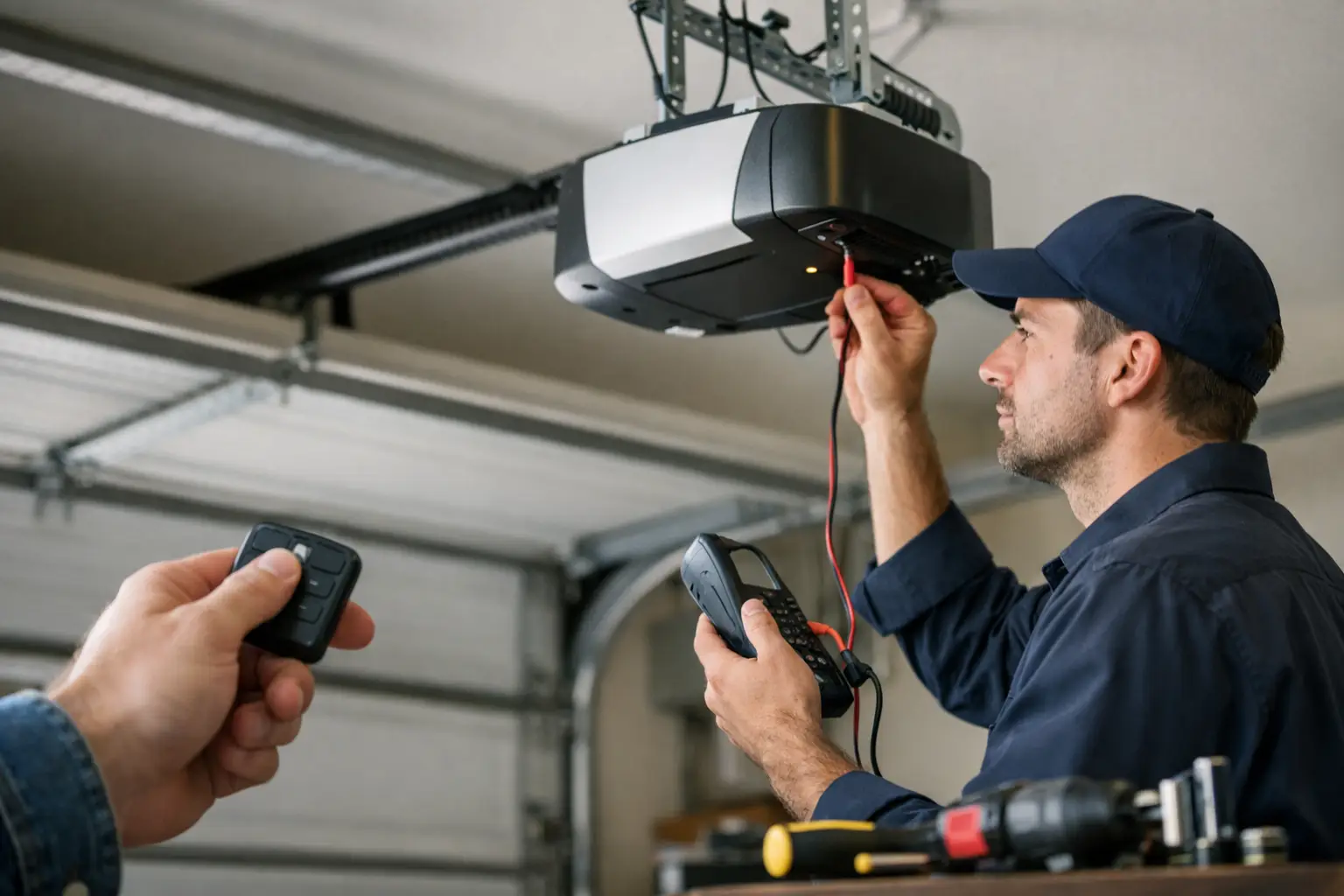
A local technician can test the power supply, wall control, sensors, remote receiver, travel limits, and door balance in one visit. At Greeley Garage Door Repair by Mike, the goal is straightforward: explain what failed, provide clear upfront pricing, and repair the actual problem rather than selling work you do not need.
If your opener will not respond, protect the door and the people around it first. A quick battery, power, and sensor check may get you moving again. If the door is straining or its hardware looks wrong, leave it alone and get it repaired before a small access problem becomes a dangerous one.